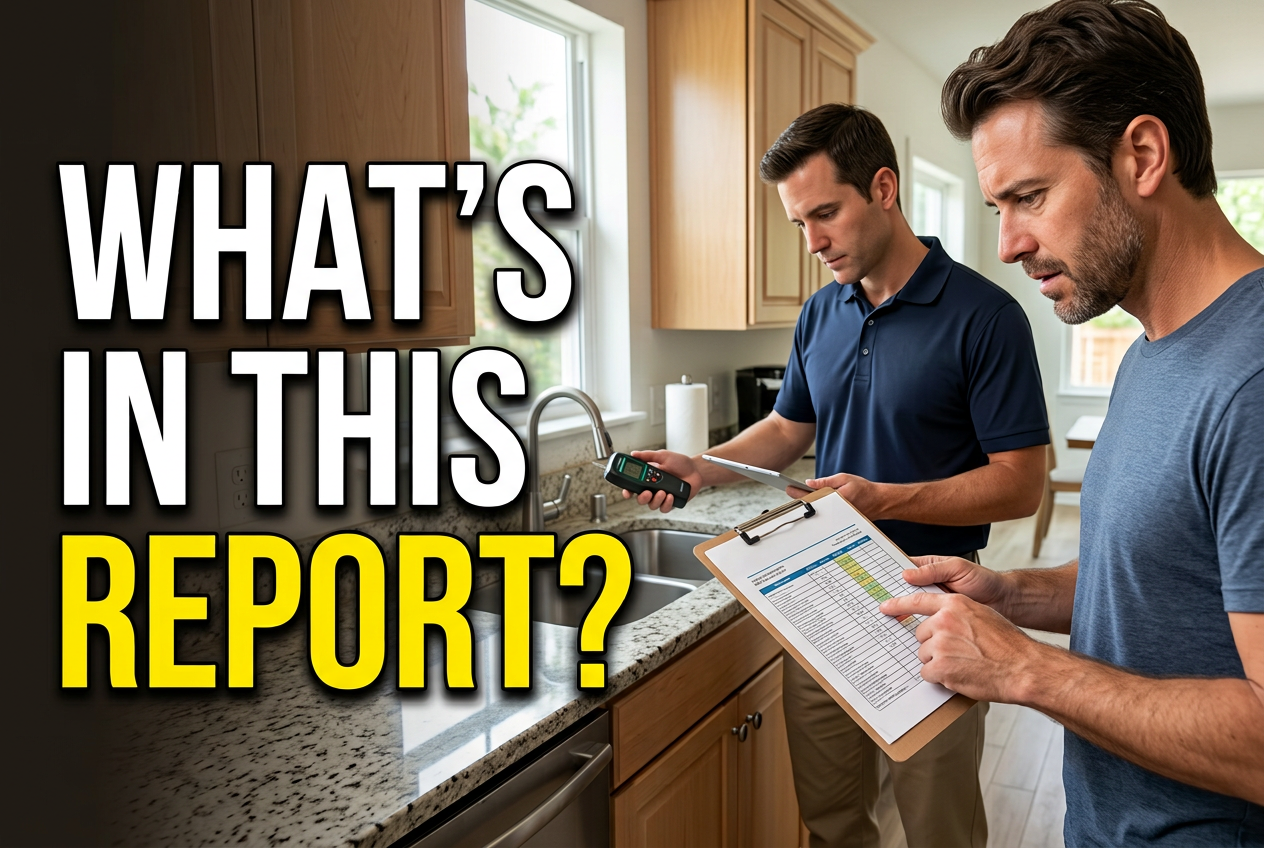
How to Read a Mold Testing Report in Plantation, FL
A mold testing report can provide useful information about the samples collected at a Plantation property, but it does not tell the whole story by itself. Results need to be read in context: where and when samples were taken, what conditions were present, and whether there are signs of moisture or building damage. Understanding those limits can help homeowners, buyers, sellers, and landlords decide whether a follow-up inspection or other evaluation is appropriate.
Key Takeaways
- A mold report describes samples collected at particular locations and times; it is not a complete map of a property.
- Air and surface samples answer different questions, and results should be interpreted alongside the inspection findings and sampling conditions.
- A laboratory result alone cannot identify the source of moisture, confirm the condition of every room, or determine whether a building is safe for a particular person.
- Visible growth, water damage, musty odors, or unresolved leaks may warrant a closer look, even if a limited sample result appears unremarkable.
- Ask the inspector to explain the findings, limitations, and whether additional inspection or testing would be useful.
Start with the scope of the testing
Before focusing on numbers, check the report’s basic details: the property address, inspection date, rooms or areas evaluated, sample locations, and the type of samples collected. Note whether the report describes a visual inspection, moisture observations, thermal imaging, or other assessment in addition to laboratory sampling. If you are reviewing a report for a purchase or rental, confirm that it applies to the correct property and that you understand which areas were accessible.
In Plantation and across South Florida, indoor conditions can change with weather, air-conditioning operation, recent leaks, and how a home has been used. A report reflects conditions at the time of the visit. It may not describe what happened before sampling or what could occur after a plumbing leak, roof intrusion, or other moisture event.
Understand the sample types
Air samples collect airborne particles from a specific location during a defined period. Reports may list types of spores identified and quantities, sometimes with an outdoor sample used as a comparison. The location and conditions matter: a closed room, a running air-conditioning system, recent cleaning, or activity that disturbs settled dust may affect what is captured. One sample is not a continuous record of indoor air.
Surface samples are collected from a particular material or area, such as a swab or tape lift. They can help identify what was present on that sampled surface. They do not establish the condition of nearby or concealed materials, and a result from one spot should not automatically be applied to the whole room.
Some reports also include samples from materials or dust. Read the description of the method and its intended use rather than assuming that all sample types provide the same information. If the report uses terms or units you do not recognize, ask the inspector or laboratory to explain them.
How to interpret the findings
Look for the report’s explanation of the laboratory results and how the inspector interpreted them. If indoor air results are compared with an outdoor sample, consider whether the samples were collected under reasonably comparable conditions. Outdoor air can contain mold spores, and levels and types may vary with season, weather, landscaping, and nearby activity. A comparison can offer context, but it is not a stand-alone pass-or-fail test.
There is no single number in a mold report that, by itself, proves a home is safe or unsafe for every occupant. A report may identify spores or other findings in collected samples, but it should not be treated as a medical diagnosis or as a substitute for evaluating visible growth, water damage, or moisture conditions. Health concerns should be discussed with a qualified healthcare professional.
Also check for limitations. The report may state that certain rooms were inaccessible, that no samples were taken from a particular concern, or that results represent only the locations sampled. These qualifications matter. A low or unremarkable result from a limited set of samples does not rule out a problem elsewhere or in a concealed wall, ceiling, or cabinet.
What a mold testing report cannot confirm
- The source of moisture: Lab results do not identify whether moisture came from a roof leak, plumbing issue, condensation, drainage, or another source.
- The condition of every part of the building: Sampling covers selected locations, not every surface or hidden cavity.
- Future conditions: Results describe a particular inspection and sampling period, not what may happen after later water intrusion or changes in building use.
- A complete health assessment: A mold report does not diagnose symptoms or establish an individual’s response to a building.
- Whether repairs were successful: Post-work evaluation requires an appropriate scope and sampling plan; a prior report cannot verify later conditions.
When to ask about follow-up
Consider asking for clarification or a follow-up evaluation if the report identifies findings you do not understand, the sampled area does not match your concern, or the inspection noted damp materials, staining, a musty odor, or visible growth. Follow-up may also make sense when a known leak has not been resolved, when moisture returns after drying, or when a buyer or property owner needs more information about a specific area before making a decision.
Ask the inspector what the results mean in relation to the property observations, what was not evaluated, and whether additional sampling would answer a clearly defined question. More samples are not automatically more useful; the purpose and locations should be explained first. If repairs or removal work are needed, consult an appropriate remediation professional. MoldXperts provides independent mold inspection and testing and does not perform mold remediation or mold removal.
What an independent inspector may evaluate
An independent mold inspector can review the report with you, assess accessible areas for visible signs of moisture or damage, and consider whether further sampling is appropriate. An inspection may include moisture measurements and thermal imaging as tools to help investigate suspected moisture patterns. Thermal imaging can show temperature differences, but it does not identify mold and should be interpreted alongside other observations and measurements.
For people searching for mold testing Plantation FL, the most useful next step is often a conversation about the specific concern: an odor, a prior leak, a buyer’s question, or a result that seems unclear. The goal is to understand what the evidence supports and what additional evaluation, if any, would be useful—not to draw conclusions from a number without context.
Watch: MoldXperts on YouTube
For more information about mold inspection and testing, visit the MoldXperts YouTube channel.
Need help understanding a report in Plantation?
MoldXperts provides independent mold inspection, mold testing, indoor air quality testing, and thermal imaging as part of mold and moisture inspections in Broward, Miami-Dade, and Palm Beach counties. If you have questions about a report or want a professional evaluation of a property in Plantation, call (954) 464-4538 or contact MoldXperts to discuss your concern.


Leave a Reply