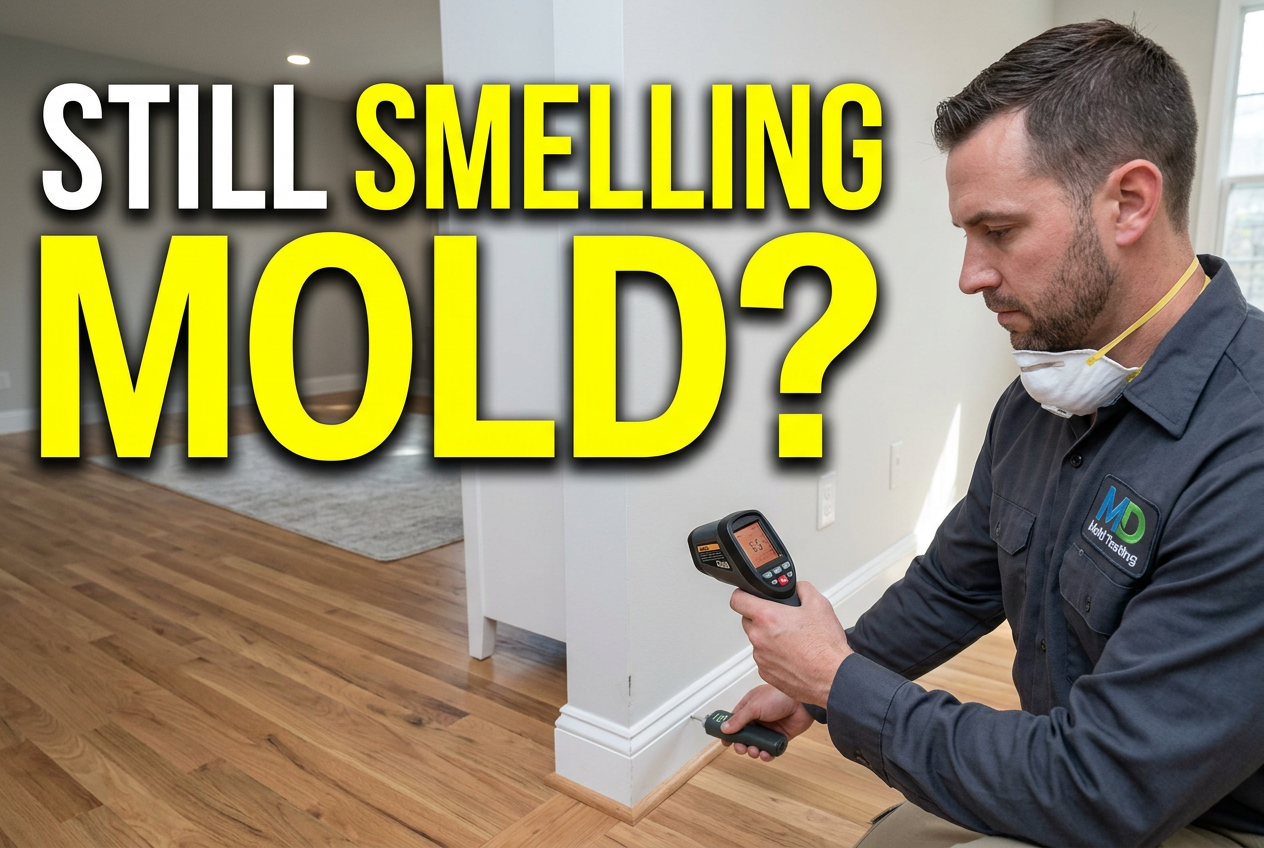
After mold cleanup in a Cabin John home, it is reasonable to wonder whether testing is needed to check the work. The answer depends on what prompted the cleanup, whether the moisture source was corrected, and whether the affected area appears dry and free of visible mold or musty odors. Post-remediation mold testing in Cabin John, MD may provide useful information in some situations, but it is not automatically necessary after every cleanup.
What Post-Cleanup Mold Testing Can—and Cannot—Tell You
Post-remediation testing generally means collecting samples after mold cleanup and having them analyzed, often by a laboratory. Depending on the concern, samples may be collected from the air or a surface. The results can offer information about what was detected in the samples at that time and location.
Testing is not a guarantee that a home is completely free of mold. Mold spores can be present in ordinary indoor and outdoor environments, and results can vary with sampling location, conditions, and method. A laboratory result also does not, by itself, explain whether a moisture source was fixed or whether cleanup was thorough throughout an affected area.
For that reason, testing is best considered alongside a visual assessment and moisture investigation. The U.S. Environmental Protection Agency explains that moisture control is central to mold management in its guide to mold, moisture, and the home.
When Testing After Mold Cleanup May Make Sense
There is no single testing rule that fits every home. An inspection or testing may be worth discussing when there is a specific question that results could help address, such as:
- Visible growth has returned. Recurrence may point to remaining moisture, an unrepaired leak, condensation, or another condition that needs investigation.
- A musty odor persists. Odor alone does not confirm mold, but a continuing odor can be a reason to look for concealed moisture or remaining affected materials.
- The original problem involved concealed areas. A leak behind a wall, under flooring, or above a ceiling can leave uncertainty about the extent of the affected area. A professional can assess accessible areas and advise whether sampling would help answer the question.
- The cleanup scope or outcome is unclear. If you need an independent perspective after work is completed, an inspection may help document observable conditions and identify concerns for follow-up.
- A property transaction or other decision calls for more information. A buyer, seller, landlord, or owner may want an assessment to better understand a known moisture or mold concern. The purpose and scope should be agreed upon before testing.
Testing may be less useful when there is no defined concern, the affected area has been addressed, and there are no signs of continuing moisture or visible growth. Asking what decision the results will inform can help determine whether sampling is worthwhile.
Start With the Moisture Source and the Conditions After Cleanup
Mold growth is associated with moisture. Cleaning or removing affected material without correcting the underlying water problem can allow the issue to return. Before arranging testing, consider whether the original source—such as a plumbing leak, water intrusion, or persistent condensation—was identified and addressed.
Look for changes rather than relying on a single observation. Check whether the area remains dry, whether staining or visible growth has reappeared, and whether an odor persists. Do not open walls or disturb materials just to investigate. If the concern may be behind a finished surface, a qualified professional can help determine an appropriate next step.
The EPA’s mold cleanup guidance for homeowners also emphasizes addressing the moisture problem. It can help readers understand general cleanup considerations, but it does not replace an assessment of a particular Cabin John property.
Inspection, Moisture Investigation, and Testing Are Different
These terms are related, but they describe different parts of an assessment:
- Visual inspection: A review of accessible areas for visible conditions, staining, water damage, or other signs that may warrant further attention. Appearance alone cannot confirm that a substance is mold.
- Moisture investigation: An effort to identify dampness or conditions that may be contributing to a problem. It helps focus attention on the source and affected areas.
- Mold testing: Collection and analysis of samples when there is a clear question that sampling may help address. The method and locations should be selected for the situation.
Not every inspection needs to include sampling. A professional can discuss what can be assessed visually, whether moisture checks are appropriate, and whether testing would add useful information. Results should be interpreted in context, rather than treated as a simple pass-or-fail verdict on the whole home.
What to Ask Before Arranging Testing in Cabin John
Before scheduling an assessment, it can help to gather basic information about the cleanup and the original moisture event. Note when and where the issue occurred, what materials were affected, what work was completed, and whether the water source was repaired. Photos or records may also help explain the timeline.
Ask the provider:
- What specific question will the inspection or testing address?
- What areas and conditions will be assessed?
- What type of samples, if any, are being considered and why?
- How will results be explained, including their limitations?
- What follow-up may be appropriate if moisture or visible growth is found?
MD Mold Testing offers mold testing and mold inspection. To learn more about the company, visit its website or view its BestMoldTestingUSA directory listing.
Frequently Asked Questions
Is mold testing required after every cleanup?
No single approach applies to every situation. Whether testing is useful depends on the original problem, the condition of the area after cleanup, and what question you need answered.
Does a negative sample prove there is no mold anywhere in the home?
No. A sample represents the material or air collected at a particular place and time. It cannot establish that every area of a home is free of mold.
Should I test if I still notice a musty smell?
A musty odor does not confirm mold, but a persistent odor can justify investigating for moisture or concealed affected materials. An inspection may help determine whether sampling is appropriate.
What should I do if growth returns after cleanup?
Consider whether the moisture source was corrected and whether the affected area needs another assessment. Avoid disturbing suspect materials while deciding on next steps.
Considering Post-Cleanup Mold Testing in Cabin John?
MD Mold Testing can discuss mold testing or inspection for a Cabin John home and help you understand what an assessment may address. Contact the company to talk through your concerns and possible next steps.
MD Mold Testing
Call: (301) 717-1454



Leave a Reply