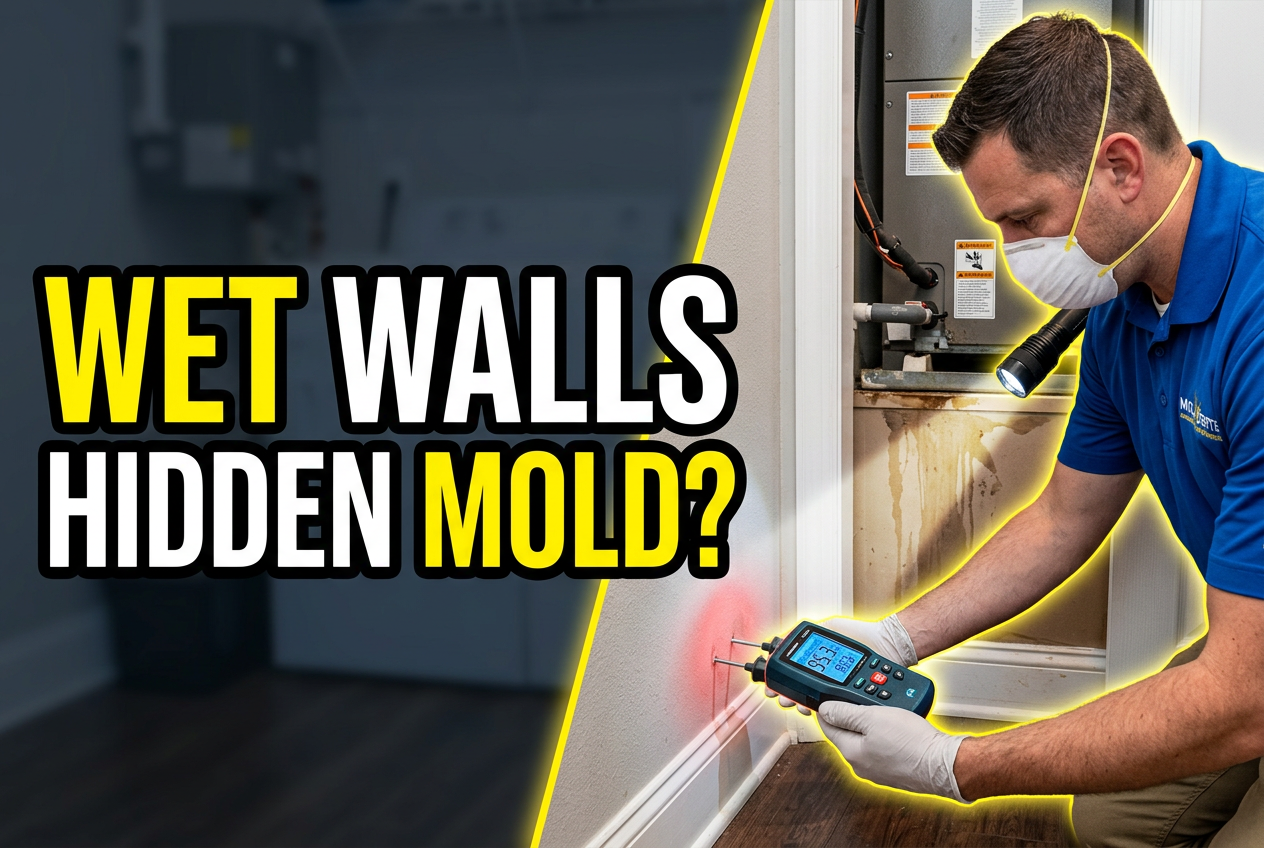
A clogged drain line, damaged drain pan, or other air-handler problem can allow condensate to escape into a closet, attic, ceiling, or nearby room. In Pompano Beach, where warm, humid conditions can slow drying, water that reaches building materials deserves prompt attention. A mold inspection Pompano Beach FL homeowners arrange after a leak may help assess whether nearby materials remain damp or show signs of a possible mold issue.
Key Takeaways
- Stop the source of the leak and arrange for the HVAC system and condensate drainage to be checked.
- Look beyond visible puddles: water may travel under flooring, behind trim, or into wall and ceiling cavities.
- A mold inspection can assess visible conditions and moisture concerns, but it cannot confirm what is inside every concealed space.
- Sampling may be useful in some situations, but results need to be interpreted alongside the inspection findings.
- MoldXperts provides independent mold inspection and testing, not mold remediation or mold removal.
What a condensate leak may mean for nearby materials
Air conditioners remove moisture from indoor air. The resulting condensate is normally directed through a drain system. If the system is blocked, disconnected, damaged, or overflowing, water can collect near the air handler and spread to surrounding materials. The affected area depends on the equipment’s location and the route the water takes.
Potentially affected materials include drywall, insulation, wood framing, baseboards, carpet, underlayment, and items stored in an air-handler closet. In an attic, water may stain or soften ceiling materials below the unit. A small puddle near the equipment does not necessarily show how far moisture has traveled; water can move along seams and surfaces before becoming visible.
Condensate is not automatically moldy, and a leak does not prove that mold has developed. However, wet materials that stay damp can support microbial growth. The amount of time materials remain wet, their composition, the extent of the leak, and indoor conditions all matter.
First steps after discovering the leak
If water is still escaping, avoid contact with wet electrical equipment. If it is safe to do so, turn off the affected HVAC equipment and contact a qualified HVAC professional to identify and correct the cause. Addressing the drain line or other equipment problem is important: an inspection of nearby materials cannot prevent another leak.
Keep people away from any area where water is near electrical components, and do not enter an unsafe attic or ceiling space. If water has reached a light fixture, wiring, or other electrical equipment, seek appropriate professional help before using the affected area. Move dry belongings away from the leak if doing so is safe, and take photographs to document visible damage.
Drying and cleanup should begin promptly. The right approach depends on the amount of water and the materials involved. Avoid covering damp materials or relying on fragrance or surface cleaning to address a moisture problem. If the affected area is extensive, materials are saturated, or the source has not been resolved, consult qualified professionals about appropriate next steps.
Warning signs to watch for
After the source has been addressed, check the area and nearby rooms for signs that moisture may remain. Relevant clues include:
- New or spreading water stains on ceilings, walls, or trim.
- Soft, swollen, bubbling, or peeling drywall and paint.
- Warped flooring, damp carpet, or a persistent musty odor.
- Visible growth or discoloration on surfaces near the air handler.
- Recurring moisture or unexplained dampness after the HVAC system runs.
These signs can have more than one cause, and their absence does not establish that concealed materials are dry. An odor alone cannot identify a particular substance or confirm the extent of a problem. If symptoms are a concern, speak with a medical professional; an inspection is not a medical evaluation.
When a mold inspection may help
A professional inspection may be worth considering if water reached drywall, insulation, flooring, or other porous materials; if stains or odors persist after the leak is repaired; if the affected area is hidden or difficult to assess; or if a property owner needs documented information to guide decisions. It may also help when the visible damage appears limited but there is reason to suspect water traveled into a wall, ceiling, or floor assembly.
During a mold inspection, an inspector may review the reported leak history, examine accessible areas, look for visible moisture or conditions consistent with water intrusion, and use moisture-measuring tools where appropriate. Thermal imaging may help identify temperature patterns that warrant closer evaluation, but it does not directly detect mold or prove that a surface is wet. Any finding should be confirmed and interpreted in context.
An independent inspector can provide an assessment without also selling remediation work. That independence may be useful to property owners seeking an evaluation separate from cleanup or repair recommendations. It does not mean that every company offering both inspection and remediation has a conflict; consumers can ask any provider how its services and recommendations are structured.
When testing may be considered—and what it can establish
Mold testing is not necessary in every leak situation. An inspector may recommend sampling when the results could help answer a specific question, such as whether airborne or surface samples are appropriate for the conditions observed. The choice of sampling method and locations matters, and results should be considered with the site history and inspection findings.
A sample is a snapshot from a particular place and time. It cannot map every hidden area, prove that a leak caused a health condition, or guarantee that no mold is present elsewhere. A negative result does not rule out concealed growth, and a positive result alone does not determine the full scope of a moisture problem. Inspection and testing can inform decisions, but they do not replace repairs to the HVAC system or establish that all building materials are dry.
Choosing next steps in Pompano Beach
Keep a record of when the leak occurred, which areas became wet, what was done to correct the source, and whether the area was dried. Share that information with the HVAC professional and, if you arrange an inspection, with the inspector. Ask what areas will be evaluated, whether testing is recommended and why, and what the findings can and cannot tell you.
MoldXperts offers independent mold inspection and testing in Broward, Miami-Dade, and Palm Beach counties, including Pompano Beach. Its approved services include mold inspection, mold testing, indoor air quality testing, and thermal imaging as part of mold and moisture inspections. MoldXperts does not provide mold remediation or mold removal.
Watch: MoldXperts on YouTube
Visit the MoldXperts YouTube channel for educational information. No specific video is embedded here because a verified, relevant video URL is not available.
Request an independent assessment
If a condensate leak has affected materials in your Pompano Beach home and you are unsure whether moisture remains or whether testing may be useful, contact MoldXperts to discuss a professional mold inspection. Call (954) 464-4538 or visit MoldXperts.com to learn more about independent inspection and testing in South Florida.



Leave a Reply