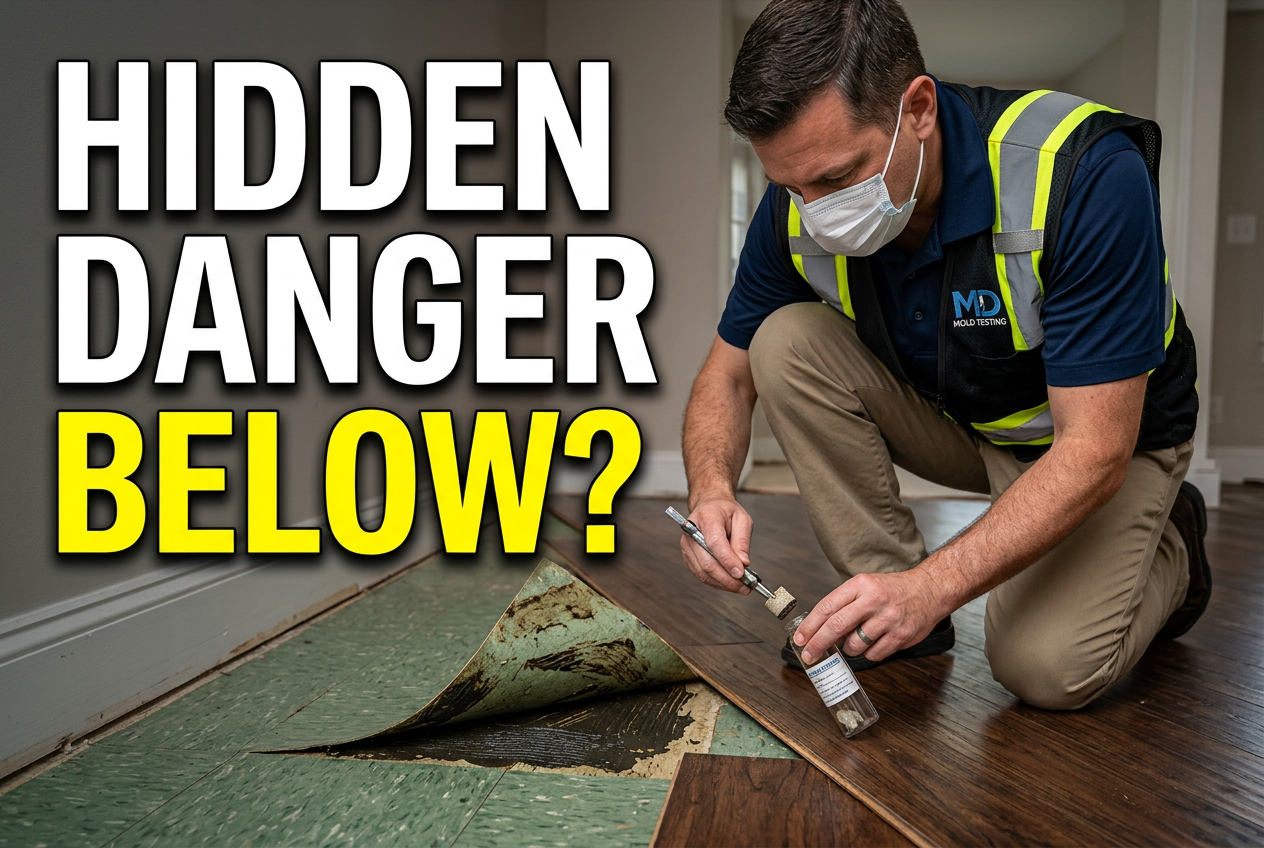
Planning to replace older flooring in a Potomac home? Before work begins, asbestos testing for flooring in Potomac, MD can help clarify whether flooring materials or related layers contain asbestos. Some older flooring products and adhesives may contain asbestos, but appearance and age alone cannot confirm what a material is made of.
Why check flooring before a renovation?
Asbestos was used in some building products, including certain types of resilient flooring and flooring adhesives. If those materials are intact and left undisturbed, they may not release fibers into the air. Renovation work can change that: removal, sanding, scraping, or other disturbance may release fibers if asbestos is present.
Testing can help you make an informed plan before a flooring project proceeds. It may help determine whether a sampled material contains asbestos, so you and your contractor can discuss suitable next steps. It does not, by itself, provide a renovation plan or confirm that every hidden layer in the room has been tested.
Flooring can have multiple layers, such as a finished surface, backing, adhesive, or underlayment. A visible surface may not tell you what is underneath it. Likewise, a particular color, pattern, or product type is not enough to identify asbestos.
When asbestos testing for flooring in Potomac, MD may make sense
Consider arranging an assessment before work if you plan to remove, cut, grind, or otherwise disturb flooring or associated materials and are unsure what they contain. Testing may also be worth discussing when flooring is damaged, when several layers are present, or when renovation plans change to include work on materials that will be disturbed.
Testing is not automatically necessary for every flooring project. The decision depends on the materials involved, their condition, and the planned scope of work. If you are unsure whether a planned task could disturb a material, pause and ask an appropriate professional before proceeding.
For general guidance on asbestos in residential materials and avoiding disturbance, see the U.S. Environmental Protection Agency’s information on protecting your family from asbestos exposure.
What to do before work begins
- Describe the planned work. Note which rooms and materials the contractor expects to remove or alter, and whether the scope includes adhesive, underlayment, or transitions between flooring types.
- Don’t take a sample yourself. Avoid disturbing suspected material. Scraping, cutting, drilling, sanding, breaking, or pulling up flooring can create avoidable exposure if asbestos is present.
- Arrange appropriate testing. A qualified professional can advise on sampling and whether laboratory analysis is appropriate for the materials in question.
- Share the findings. Provide the results to your contractor before work starts. Ask how the findings affect the project scope and whether further professional guidance is needed.
If material is unexpectedly exposed or damaged during a project, stop work in the affected area and avoid disturbing it further. Ask the contractor how to proceed and seek qualified professional guidance. Do not sweep or vacuum debris that may contain asbestos.
What to expect from an asbestos flooring assessment
The professional will typically discuss the renovation plans and identify which accessible materials may need to be evaluated. If sampling is appropriate, the process may involve collecting small samples from selected materials for laboratory analysis. Sampling should be handled by a professional using appropriate procedures; homeowners should not collect suspected material themselves.
Results apply to the samples analyzed, not automatically to every flooring material or concealed layer in the home. If different materials or areas are involved, ask whether additional sampling is needed to address the full project. A clear scope can help you understand what was assessed and what remains uncertain.
Testing can identify asbestos in a sample, but it does not determine every factor relevant to how renovation work should be managed. Discuss the results with your contractor and, where appropriate, an asbestos abatement professional. MD Mold Testing offers asbestos testing; do not assume the testing provider also performs removal or remediation.
Questions to ask before choosing a flooring plan
Before authorizing work, consider asking:
- Which specific flooring materials and layers will be disturbed?
- Does the testing scope cover each material that the project may affect?
- Will the results be documented and shared before work starts?
- If asbestos is identified, who can advise on the appropriate next steps for the project?
For Potomac property owners comparing service options, the MD Mold Testing directory listing provides a way to review the company’s profile. You can also learn more through the MD Mold Testing website.
Frequently Asked Questions
Can I tell whether flooring contains asbestos by looking at it?
No. Appearance alone cannot confirm whether flooring, adhesive, or another layer contains asbestos. Appropriate sampling and laboratory analysis may be needed.
Should I remove a small piece of flooring to have it tested?
No. Don’t cut, scrape, pull up, or break suspected material to obtain a sample. Contact a qualified professional to discuss appropriate testing.
Does one negative sample mean all flooring in the home is asbestos-free?
Not necessarily. A result applies to the material sampled and analyzed. Other rooms, products, or concealed layers may not have been included in the testing scope.
What if asbestos is found?
Share the results with your contractor and seek appropriate professional guidance before disturbing the material. The right next step depends on the material, its condition, and the planned work.
Planning Flooring Work in Potomac? Ask About Asbestos Testing
MD Mold Testing can help you explore asbestos testing before older flooring is disturbed. Call to discuss the materials and renovation plans you want assessed.
MD Mold Testing
Call: (301) 717-1454




Leave a Reply