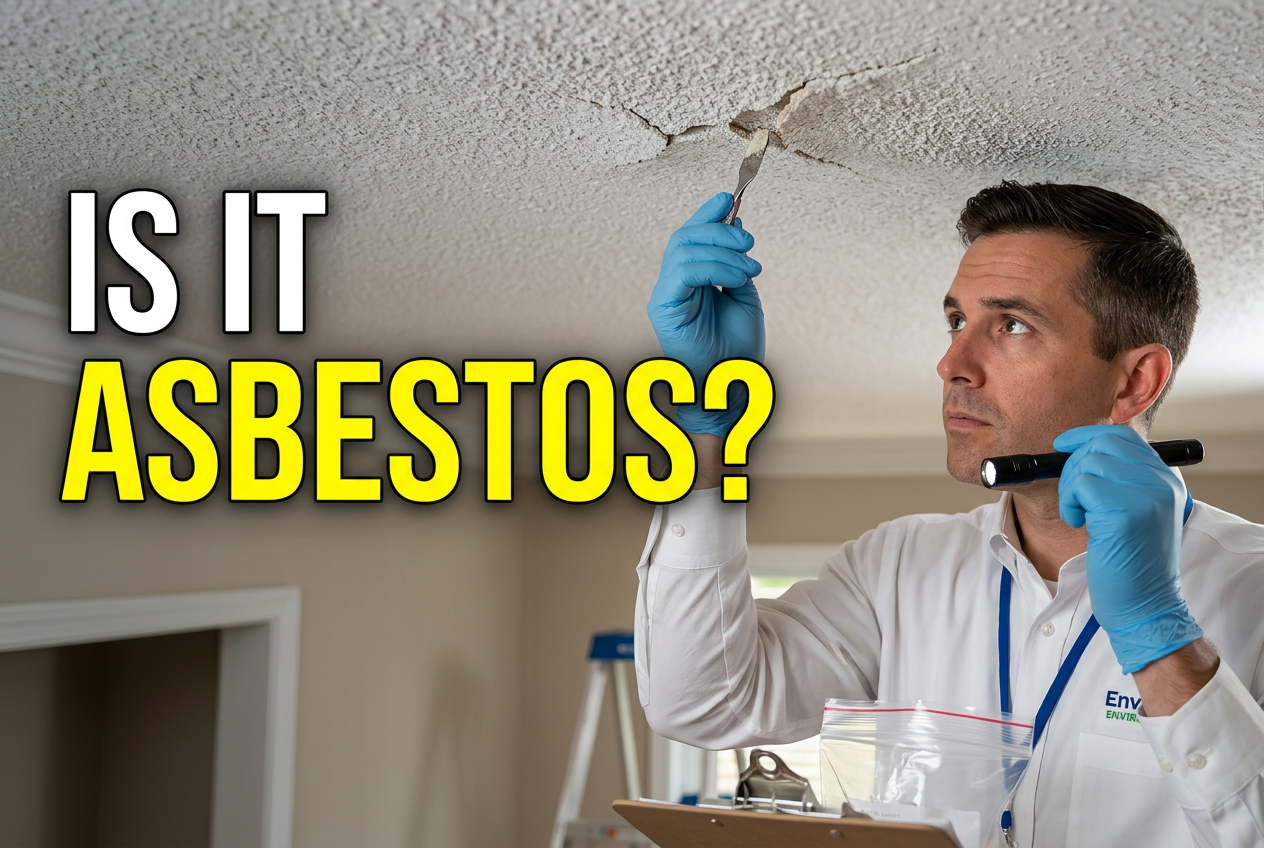
A textured ceiling, old-looking finish, or ceiling tile may raise questions about asbestos, especially before a renovation or repair. But appearance alone cannot establish whether a material contains asbestos. For homeowners considering asbestos testing in Kensington, MD, the key distinction is that visual observation can flag a material for caution, while appropriate testing can identify asbestos in the specific sample analyzed.
What ceiling materials may prompt an asbestos question?
People often ask about textured or “popcorn” ceilings, decorative finishes, ceiling tiles, and materials around ceiling joints. Some products used in buildings in the past contained asbestos, but similar-looking products may not. A smooth surface is not proof that a material is asbestos-free, either.
A building’s age can help explain why someone might ask about asbestos, but age does not confirm what a particular product contains. Materials may have been installed, replaced, or covered at different times. Without reliable product documentation or appropriate testing, visual clues remain clues—not a diagnosis.
For that reason, do not scrape, cut, drill, sand, break, or remove a material simply to inspect it. Disturbing a suspect material can release dust. If you are planning work, pause that part of the project until you have obtained suitable guidance.
What asbestos testing in Kensington, MD can confirm
When a sample is collected appropriately and analyzed by a qualified laboratory, the result can indicate whether asbestos was identified in that specific sample. This can help a property owner make a more informed decision about a particular ceiling finish or other building material.
The result applies to the material represented by the sample. It does not automatically establish what is present in every ceiling, room, or material in the property. Different layers or areas may have different compositions, so the scope and location of sampling matter. A test of one surface should not be treated as a blanket clearance for the entire building.
Asbestos testing of a material also differs from an air test. A material result identifies what was found in the sample; it does not, by itself, measure airborne fibers or determine whether someone has been exposed. If you have questions about a specific property or planned work, ask the testing professional what the proposed sampling and report will—and will not—address.
What visual inspection can and cannot tell you
A visual review can document accessible conditions, note damage, and identify materials that may warrant further evaluation. It can help you decide where questions need answering, but it cannot reliably identify asbestos based on color, texture, or appearance.
Likewise, a ceiling that looks intact is not proof that it contains no asbestos. Conversely, a damaged or unattractive surface is not proof that it does. Avoid relying on online photographs or comparisons with a neighbor’s home to make the determination.
The EPA’s guidance on protecting your family from asbestos exposure advises leaving suspected asbestos-containing materials undisturbed when they are in good condition and seeking professional guidance when they are damaged or may be affected by renovation.
When testing may make sense before work
Consider asking about professional assessment when a planned project could disturb a ceiling or related material and you do not know its composition. This may include work such as removing a ceiling finish, making openings for wiring or plumbing, or repairing a damaged area. The relevant question is not whether the ceiling looks old; it is whether the planned activity could disturb an unverified material.
Testing may also be useful when a property transaction, maintenance decision, or documented condition calls for more certainty about a specific material. If no work is planned and the material is intact, testing may not be necessary in every situation. A qualified professional can help explain the options based on the material, its condition, and your goals.
What to expect from a professional asbestos testing service
Before sampling, discuss which materials or locations are included and why. Ask how the sample will be collected, what laboratory analysis is involved, when you can expect a report, and whether the findings apply only to the sampled material. Do not collect a sample yourself unless a qualified professional has specifically advised you on an appropriate, safe process.
After the results are available, review them in context. A positive result for one sample does not tell you the full extent of similar material elsewhere. A result that does not identify asbestos in one sample does not clear untested materials. If the findings affect renovation plans, consult qualified professionals about the next steps and any applicable requirements.
MD Mold Testing offers asbestos testing among its approved property services. You can learn more about the company through its BestMoldTestingUSA directory listing or visit the MD Mold Testing website.
Frequently Asked Questions
Can a popcorn ceiling be identified as asbestos by sight?
No. The texture may be a reason to ask questions, but appearance cannot confirm whether asbestos is present. Appropriate testing of the material is needed for identification.
Does a negative result mean every ceiling in the home is asbestos-free?
No. A result applies to the sample analyzed. Other areas or layers may not be represented, so make sure the sampling scope matches the question you need answered.
Should I remove a small piece for testing?
Do not break, scrape, or cut into suspect material to obtain a sample. Contact a qualified professional to discuss appropriate sampling and avoid disturbing the material in the meantime.
Should I test before renovating a ceiling?
If the planned work may disturb a material whose composition is unknown, ask a qualified professional whether testing is appropriate before work begins. The need depends on the material and the planned work.
Considering Asbestos Testing in Kensington?
If you have questions about a ceiling material before maintenance or renovation, MD Mold Testing can help you explore asbestos testing for the property. Contact the company to discuss your situation and the appropriate next step.
MD Mold Testing
Call: (301) 717-1454



Leave a Reply