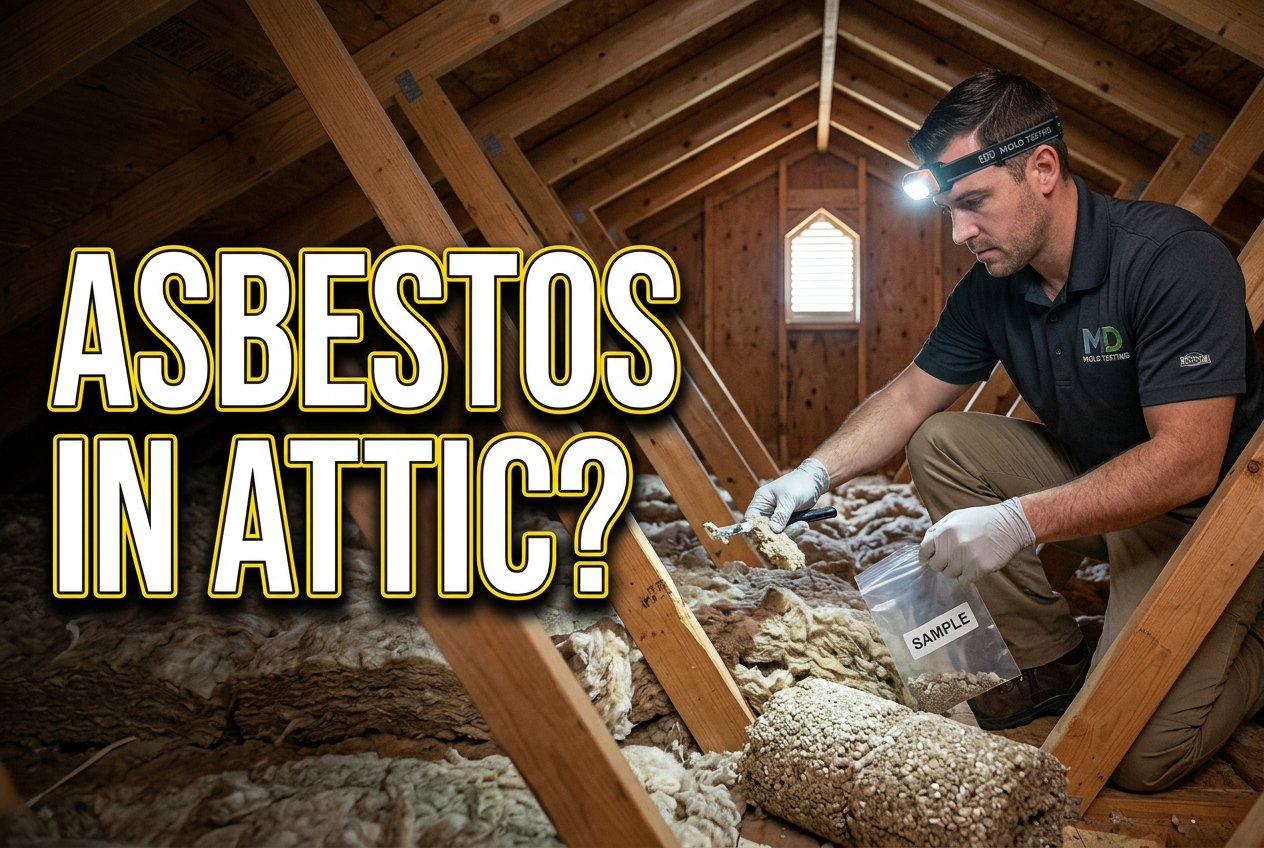
If attic work is planned at a Rehoboth Beach property, unfamiliar insulation can raise an important question: could it contain asbestos? Appearance and age alone cannot confirm whether a material contains asbestos. Testing may help clarify what is present before work begins, so property owners can make informed decisions about next steps.
Why attic insulation may need to be checked before work
Attics can contain several types of insulation and other building materials, sometimes installed during different projects. Some materials used in older buildings may contain asbestos, but not every older material does. Newer-looking material cannot be confirmed asbestos-free by sight, either. A visual impression is not a substitute for appropriate testing.
The question becomes especially relevant when a project could disturb insulation or nearby materials. Examples include adding or replacing insulation, running wiring, repairing a roof or ceiling, or accessing parts of the attic for other work. Disturbance can release fibers if asbestos-containing material is damaged. The practical first step is to determine whether the planned work will affect suspect material and whether testing is appropriate.
The U.S. Environmental Protection Agency’s guidance on asbestos exposure advises people not to disturb material they suspect may contain asbestos. That means avoiding actions such as pulling it apart, scraping it, cutting into it, or collecting a sample yourself.
What should you look for in an attic?
There is no reliable do-it-yourself visual checklist that can confirm asbestos. Unusual texture, color, loose fill, or a product that seems old may prompt a question, but none of these features proves what the material contains. A photo or product name may be useful background for a professional, but it does not replace testing when identification is needed.
Instead of handling the insulation, note what you can observe without disturbing it:
- Where the material is located and whether planned work would affect that area.
- Whether it appears damaged, displaced, or covered by later work.
- Whether contractors have identified a material they want to disturb.
- Any available renovation records or product documentation.
Keep access limited if reaching the material would require walking through or moving insulation. If you see damaged material, avoid the area and ask a qualified professional how to proceed. Do not sweep, vacuum, or otherwise clean suspect debris yourself.
When asbestos testing may make sense
Testing may be worth discussing when renovation, repair, or removal could disturb a material that has not been identified. It may also be useful when a contractor needs reliable information to plan work, or when a property owner is evaluating an attic before a purchase or major project. Testing is not automatically necessary for every attic; the decision depends on the material, its condition, and what work is planned.
Consider contacting a qualified professional before work begins if:
- A contractor plans to cut, drill, remove, or otherwise disturb suspect material.
- The insulation is damaged or has been displaced during earlier work.
- You need to make a decision about a renovation based on what the material is.
- You are buying or managing a property and want to understand a specific material before altering it.
If no work is planned and the material is intact and undisturbed, avoid disturbing it just to investigate. A professional can help assess whether testing is warranted for your situation.
What asbestos testing may involve
A typical testing process begins with a discussion of the concern: which material is in question, where it is located, and what work is planned. A qualified professional can explain the proposed scope and whether sampling is appropriate. When a sample is collected, it should be handled using suitable precautions and submitted for laboratory analysis. The result can help identify whether asbestos was found in the sample tested.
Ask what areas and materials are included, how sampling will be handled, and how results will be communicated. A result applies to the sample and material represented; it should not automatically be treated as an answer about every material throughout the attic. If multiple distinct materials are involved, ask whether each needs separate evaluation.
Testing identifies a material; it does not, by itself, determine the best way to complete a renovation. Share the findings with the contractor planning the work and ask whether the project scope needs to change. If asbestos is identified, get qualified guidance before any disturbance or removal.
Planning attic work in a Rehoboth Beach property
Before scheduling a project, tell the contractor that the attic contains material you have not identified and ask whether the proposed work could affect it. Avoid allowing work to proceed through suspect insulation until the question has been addressed. If you are purchasing a property, you can ask the seller or relevant professionals about any available material testing or renovation records, while recognizing that records may not cover every area.
MD Mold Testing offers asbestos testing. Property owners can learn more through the MD Mold Testing directory listing or visit MD Mold Testing’s website. Discuss the specific attic material and planned work when asking about testing so you can understand the appropriate next step.
Frequently Asked Questions
Can I identify asbestos insulation by looking at it?
No. Appearance alone cannot establish whether insulation contains asbestos. Appropriate testing may be needed to identify a suspect material.
Should I collect a sample before calling about testing?
No. Do not cut, scrape, pull apart, or otherwise disturb the material to take a sample. Ask a qualified professional about safe assessment and sampling.
Does an asbestos test cover every material in the attic?
Not necessarily. Results relate to the material and sample evaluated. Ask which areas and materials are included and whether other distinct materials require separate assessment.
What should I do if a renovation is already scheduled?
Tell the contractor about the unidentified material before work begins and ask whether the planned work could disturb it. Pause work affecting the material until you have appropriate guidance.
Need Asbestos Testing for a Rehoboth Beach Attic?
MD Mold Testing can help you discuss asbestos testing for suspect attic insulation before planned work. Contact the company to talk through the material and your project questions.
MD Mold Testing
Call: (301) 717-1454


Leave a Reply