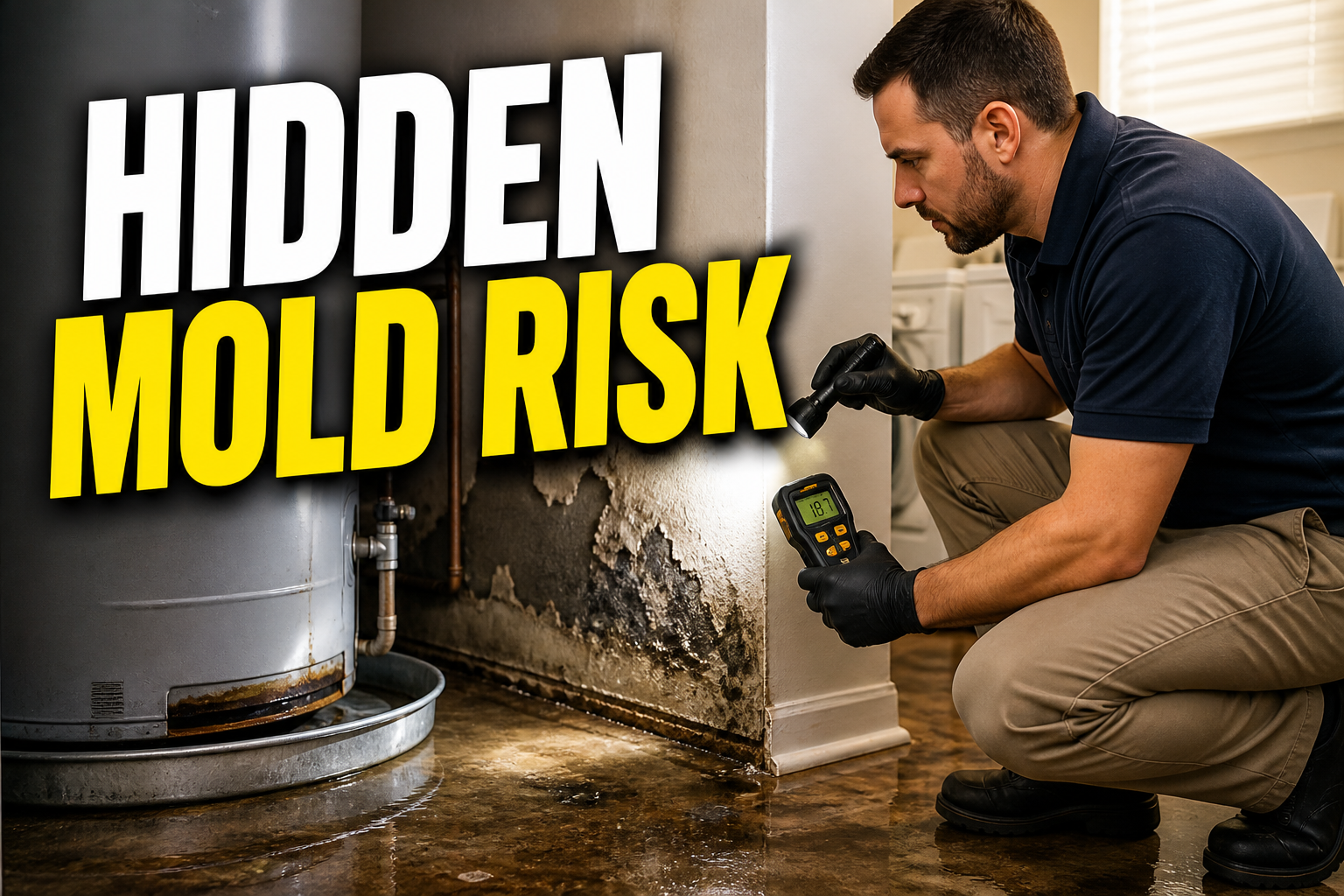
If a water heater leak has affected flooring, baseboards, a wall, or a nearby storage area, consider a mold inspection if materials stayed damp, the leak went unnoticed, or moisture may have spread out of sight. A small, quickly dried spill does not automatically mean mold is present. The key questions are how much water escaped, where it traveled, and whether affected materials dried thoroughly.
Stop the leak and arrange appropriate drying first. Consider a mold inspection if the water reached concealed or porous materials, remained for an extended period, or you continue to notice dampness or a musty odor after cleanup.
Why a water heater leak can lead to hidden moisture
Water from a leaking tank, fitting, or nearby connection can spread beyond the spot where it first appears. It may seep under flooring, into the edge of carpet, behind baseboards, or into an adjoining wall. A dry-looking surface does not always show whether water reached materials underneath.
In a Phoenix home, water heaters may be located in a garage, closet, utility area, or another part of the house. Wherever the unit sits, check the surrounding area and any nearby rooms or storage spaces that could have been affected. The location of the leak and the construction around it matter more than the size of the visible puddle.
Moisture can support mold growth when materials remain damp, but a leak alone does not prove mold has developed. The EPA’s guide to mold, moisture, and homes explains why controlling moisture is central to addressing mold concerns.
Signs that a mold inspection may be appropriate
Some signs call for closer investigation, especially if they persist after the leak has been stopped and cleanup has begun. None confirms mold by itself, but each can help identify where to look for lingering moisture.
- Flooring, carpet, or baseboards remain damp, swollen, or discolored.
- A wall or cabinet near the water heater has staining, bubbling paint, or a change in texture.
- A musty odor continues in the affected area after drying.
- The leak was hidden behind the unit or went unnoticed, and the extent of the wet area is unclear.
- There is visible growth or recurring dampness near materials affected by the leak.
Surface stains can result from water damage without indicating mold, and odor alone cannot identify a mold species. If you see or smell something concerning, avoid disturbing suspected growth and focus on finding out whether moisture remains. The EPA’s information on how to tell if you have a mold problem can help explain what visual signs can—and cannot—tell you.
What to do after discovering a water heater leak
Address the source and the water damage in a sensible order. If the leak is active, contact a qualified plumbing professional to assess and repair it. Do not attempt work around electrical equipment or wiring if the area is wet; keep clear and seek qualified help.
- Stop the water source safely. Follow the water heater or home manufacturer’s guidance if you can do so without entering a hazardous area. If you are unsure, contact a qualified professional.
- Document what you can see. Photograph the leak area, affected flooring, walls, and belongings before cleanup when practical.
- Arrange prompt drying. Drying methods depend on the materials and extent of the water. Porous or concealed areas may need further assessment if they remain damp.
- Check nearby areas. Look for signs of water beyond the immediate spot, including adjacent flooring and the lower portions of nearby walls.
- Monitor for continuing moisture. If dampness returns or the affected area does not dry, investigate further rather than covering or repainting it.
Avoid pulling apart walls or flooring just to look for mold. Unnecessary disturbance can spread dust and may not reveal the full extent of moisture. A qualified inspection can help determine whether there is a reason to investigate concealed materials.
What a mold inspection can clarify
A mold inspection generally involves looking at visible conditions and investigating possible moisture sources or affected areas. Depending on the situation, the inspector may check accessible materials and use moisture-measuring tools to help identify areas that warrant further attention. A visual inspection and moisture investigation are not the same as mold testing.
Mold testing may be considered when the results could help answer a specific question about the property. It is not necessary for every leak, and sampling does not replace finding and addressing the water source. For a general overview of mold testing services, see the BestMoldTestingUSA directory category.
ALM Services offers mold testing and mold inspection in Phoenix. You can review the ALM Services directory listing for provider information. An inspection may help when the leak’s path is uncertain, wet materials are concealed, or moisture concerns remain after the initial cleanup.
If mold is found, address the moisture problem too
If an inspection identifies mold, the next steps depend on the affected area, materials, and moisture conditions. Mold remediation may be appropriate, but the process should also account for the source of moisture. Otherwise, the underlying water problem may continue to affect the property.
Not every finding requires extensive demolition. The extent of affected materials and the conditions behind or beneath them help determine what response is appropriate. Avoid disturbing suspected mold while you arrange qualified guidance.
Frequently Asked Questions
Does every water heater leak require a mold inspection?
No. A small leak that is stopped and followed by thorough drying may not call for one. Consider an inspection if water reached concealed materials, remained for an extended period, or dampness or odor persists.
Can I tell whether mold is present by looking at a stain?
No. A stain can show that water affected a surface, but it does not confirm mold or identify its type. Further inspection may be useful if the area remains damp or there are other signs of a moisture problem.
Should I get mold testing after a water heater leak?
Not automatically. Testing may be useful when it can help answer a specific property-related question, but an inspection and moisture investigation may be more relevant for locating wet materials or a continuing water source.
What if the leak was behind the water heater and I do not know how long it lasted?
Check the surrounding and adjacent areas for dampness or water damage, and arrange appropriate drying. If the leak’s extent is unclear or materials may have stayed wet, consider a mold inspection.
Need Mold Testing in Phoenix?
ALM Services provides mold testing and mold inspection in Phoenix for homeowners assessing possible hidden moisture after a water heater leak. Contact the company to discuss your property’s situation and possible next steps.
ALM Services
Call: 602-257-8000




Leave a Reply