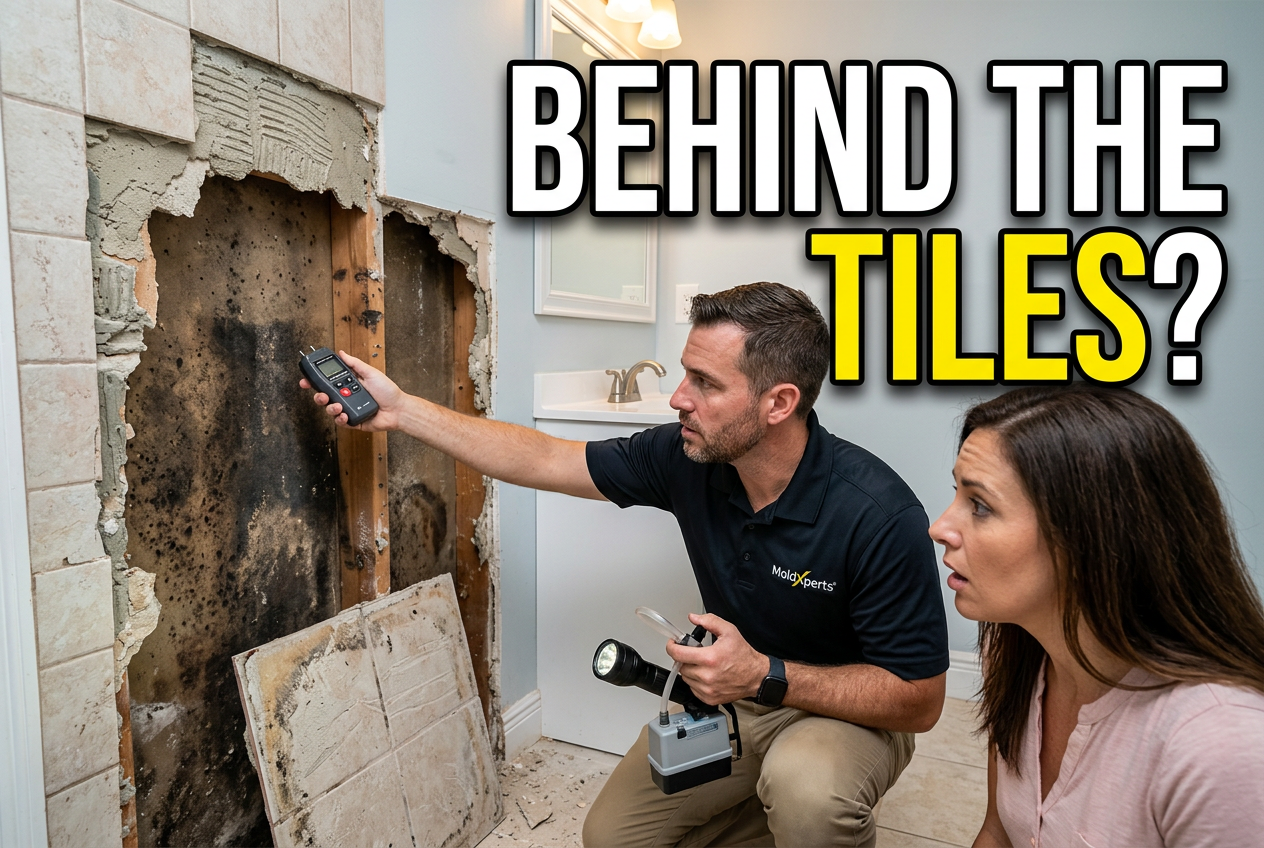
During a bathroom renovation in Hollywood, Florida, removing tile can reveal dark spots, staining, or other discoloration on the wall or nearby materials. That finding can be unsettling, but discoloration alone does not confirm mold. It may be related to past or ongoing moisture, staining, deteriorated materials, or another condition. The next steps depend on the extent of the affected area, whether materials feel damp or damaged, and whether there are signs of a continuing leak.
Key Takeaways
- Discoloration behind tile can signal past or current moisture, but appearance alone cannot identify mold or its extent.
- Pause unnecessary disturbance and document what is visible before the area is covered or further altered.
- A mold inspection can assess visible conditions and potential moisture concerns; testing may be useful when it addresses a specific question.
- Sampling has limits and should be interpreted alongside the inspection, building history, and moisture findings.
- MoldXperts provides independent mold inspection and testing in Broward, Miami-Dade, and Palm Beach counties, but does not perform remediation.
What Could Discoloration Behind Bathroom Tile Mean?
Bathrooms are exposed to frequent humidity and water. A failed grout or caulk joint, plumbing leak, fixture connection, or water intrusion from an adjoining area can allow moisture to reach materials behind the tile. In South Florida’s humid climate, materials that remain damp may take longer to dry, particularly when ventilation is limited.
However, a stain does not establish when or how moisture entered, whether the source is still active, or whether mold is present. Discoloration could also remain after an old leak has been repaired. The visible area may not show the full condition of concealed materials, and a dark mark should not be treated as a diagnosis.
What to Do When You Find It
If you uncover discoloration during demolition, take a moment to record what you see. Photograph the area before it is disturbed further, note where it is located, and share any relevant history with the contractor—such as a past plumbing repair, recurring dampness, or a musty odor. If the material is wet or deteriorated, avoid covering it until the condition has been evaluated and the moisture source has been considered.
Limit unnecessary disturbance, especially if a larger area appears affected. Avoid dry brushing, sanding, or using household fans in a way that could spread dust from the exposed material. Keep people away from the immediate work area if demolition is ongoing. A qualified contractor can assess the construction and investigate plumbing or building-envelope issues; an independent mold inspector can provide a separate assessment of visible conditions and moisture concerns.
Finding discoloration does not automatically mean the renovation must stop indefinitely. It does mean that decisions about removing, drying, or replacing materials should account for the condition of the area and whether moisture remains. The appropriate response depends on the specific property and findings.
Warning Signs That May Make an Inspection More Useful
Consider getting professional input when discoloration is accompanied by persistent dampness, soft or crumbling wall material, a musty odor, visible growth-like patches, or staining that extends beyond the immediate tile area. Recurring signs after a repair may also warrant a closer look. These clues are not proof of mold, but they can help determine whether further evaluation is reasonable.
It is also useful to consider the renovation timeline. If a contractor plans to close the wall soon, an inspection before the area is concealed may help document accessible conditions. If the work has already been completed but the odor, staining, or moisture concern continues, an inspection may help identify where further investigation could be appropriate.
What an Independent Mold Inspection or Testing May Evaluate
For a homeowner searching for mold inspection Hollywood FL, an independent inspection may include a visual assessment of accessible areas, review of the reported moisture history, and consideration of conditions that could be contributing to dampness. Depending on the scope, the inspector may use moisture-measuring equipment and thermal imaging as part of a mold and moisture inspection.
Thermal imaging can show temperature patterns on surfaces that may point to areas for closer evaluation. It does not see through walls, identify mold, or confirm that a temperature difference is caused by moisture. Findings need to be interpreted in context and may require follow-up with other methods.
Mold testing may be considered when there is a clear question that sampling could help address. The inspector should explain the proposed sampling approach, its limitations, and how results will be interpreted. A laboratory result is a snapshot of the sample collected under specific conditions; it does not by itself establish the source, full extent, or cause of a problem. A negative result does not guarantee that no mold is present elsewhere, and a positive result does not automatically determine what work is needed.
An inspection or test also cannot establish that a home is completely free of mold. Mold can occur in places that are inaccessible or outside the inspected area. A useful assessment documents the scope and conditions observed rather than promising certainty beyond what the inspection and any sampling can support.
Choosing an Independent Assessment
Some property owners prefer to obtain an inspection from a company that does not also sell remediation work. MoldXperts is an independent mold inspection and testing company serving Hollywood and communities across Broward, Miami-Dade, and Palm Beach counties. Its approved services include mold inspection, mold testing, indoor air quality testing, and thermal imaging as part of mold and moisture inspections. MoldXperts does not provide mold remediation or mold removal.
When arranging an assessment, ask what areas will be inspected, whether testing is recommended and why, what the report will cover, and what limitations apply. If a moisture source may involve plumbing or construction, coordinate with the appropriate qualified trade as well. An inspection can help inform decisions, but it does not replace repairs to a leak or other underlying moisture source.
Watch: MoldXperts on YouTube
For additional information about mold inspection and testing, visit the official MoldXperts YouTube channel.
Arrange a Mold Inspection in Hollywood, FL
If bathroom renovation work in your Hollywood home has uncovered discoloration and you want an independent assessment, contact MoldXperts to discuss the conditions and whether inspection or testing may be appropriate. MoldXperts serves Broward, Miami-Dade, and Palm Beach counties. Call (954) 464-4538 or visit moldxperts.com.



Leave a Reply