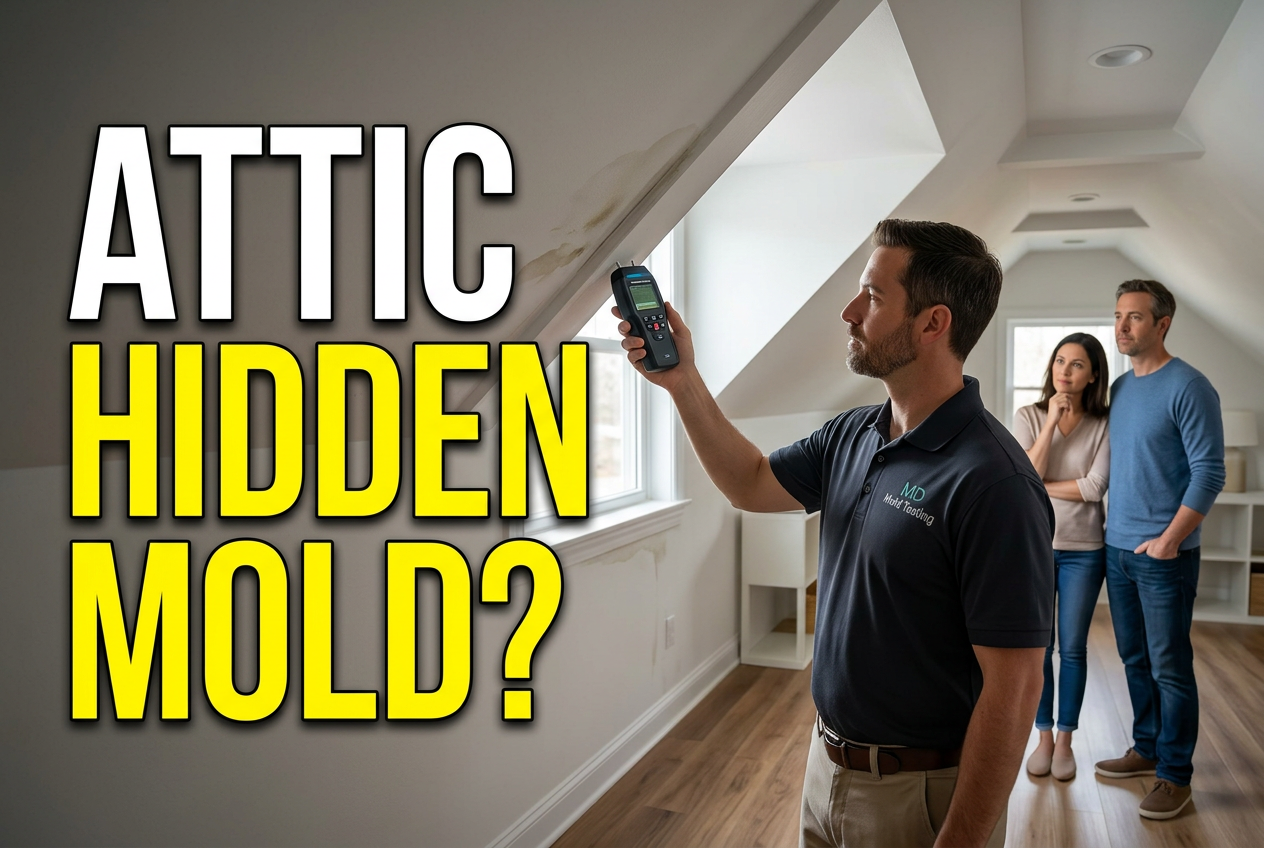
A finished attic can add flexible space to a Kensington home, but a polished appearance does not tell you everything about how the room was built or what may be concealed behind its walls and ceiling. During a tour, a Walk and Talk home inspection in Kensington, MD can help a buyer look more carefully at accessible areas and ask informed questions while the property is in view.
What a Walk and Talk Inspection Can—and Cannot—Tell You
A Walk and Talk is an opportunity to review visible, accessible areas of a home with an inspector while you tour. In a finished attic, that may help you notice conditions that deserve a closer look or questions for the seller, agent, or a qualified professional. It can also help you organize follow-up questions before making a decision.
The visit is limited by what can be seen and safely accessed during the tour. Finished walls and ceilings can conceal framing, wiring, insulation, plumbing, and the roof structure. A visual walkthrough cannot confirm the condition of concealed materials or guarantee that hidden problems will be found. It should not be treated as a replacement for a traditional full home inspection.
Ask what the service includes and what its limitations are when arranging a Walk and Talk. MD Mold Testing offers Walk and Talk Home Inspections; you can find its BestMoldTestingUSA directory listing for more information.
What to Notice in a Finished Attic During a Kensington Home Tour
Ceilings, walls, and trim
Look for discoloration, peeling or bubbling paint, warped trim, and patches that appear different from surrounding surfaces. These conditions can have several explanations, including an old repair or a current moisture issue; appearance alone does not establish the cause. If you see a suspicious area, note its location and ask whether the seller knows when it appeared or whether repairs were made.
A musty odor is worth mentioning, but odor alone cannot confirm mold. Likewise, a stain is not proof of an active leak. A qualified inspection can help assess visible conditions and whether further evaluation is appropriate.
Flooring, doors, and transitions
Notice whether the floor feels noticeably uneven underfoot, whether doors or windows appear difficult to operate, and whether there are obvious gaps or changes where the attic room meets the rest of the home. These observations do not diagnose a structural issue, but they may be useful to document and discuss during a full inspection.
Windows, roof slopes, and ventilation details
Check accessible windows for visible damage, condensation, or signs of water around the frame. Look at the sloped ceiling and the places where it meets walls, but remember that finished surfaces can hide what is behind them. If you can see an access panel or an unfinished area without moving or removing anything, ask whether it is appropriate for the inspector to view it. Do not force access or disturb finishes.
Also ask how the room is heated and cooled and whether the system serving it is part of the home’s existing equipment. A tour-time observation cannot establish whether the design or installation meets applicable requirements; the seller’s records and qualified follow-up may help answer those questions.
Ask About the Attic’s History and Documentation
A finished attic may have been part of the original home or completed later. The appearance of the room does not establish when it was finished, what work was done, or whether approvals were required. Ask the seller or agent for available records, such as permits, contractor paperwork, warranties, or documentation of prior roof or moisture repairs.
Useful questions may include:
- When was the attic finished, and what work was performed?
- Are there records for any renovation, electrical, heating, or cooling work?
- Has there been a roof leak or other moisture event, and what repairs followed?
- Are there areas of the attic or roof structure that cannot be viewed during the tour?
- Can the buyer arrange a full home inspection and any recommended follow-up?
If answers are incomplete, that does not by itself prove there is a problem. It does help identify what you may want to verify before proceeding.
When to Consider More Inspection or Testing
If the walkthrough reveals visible staining, damaged finishes, or other concerns, discuss them with the inspector and ask whether a more detailed evaluation is appropriate. A full home inspection can provide a broader assessment than a tour-time walkthrough. If there are signs of moisture, an appropriate professional may investigate the source and extent of the issue.
Mold testing is not automatically necessary whenever a room has a stain or odor. Visual inspection, moisture investigation, and mold testing are different steps: an inspector may document visible conditions, investigate moisture where appropriate, or recommend testing when there is a specific reason to identify or assess mold. Appearance or smell alone cannot confirm mold. For an overview of MD Mold Testing, visit its verified website.
For any proposed follow-up, ask what question the inspection or test is intended to answer and what areas can be evaluated. Keep notes and photographs of visible concerns if the seller or agent permits them, and share those observations with the professional conducting any later inspection.
Make the Walkthrough More Useful
Before the tour, prepare a short list of questions and let your agent know you are considering a Walk and Talk. During the visit, focus on observations rather than conclusions: record what you noticed, where it was, and what information you still need. Avoid opening panels, moving stored belongings, or disturbing building materials. If an area is inaccessible, ask whether it can be evaluated later as part of a properly arranged inspection.
In Kensington, as elsewhere, the best use of a Walk and Talk is to help you make a more informed decision about next steps—not to promise certainty from a brief, limited view.
Frequently Asked Questions
Does a Walk and Talk replace a full home inspection?
No. It offers a tour-time review of accessible areas, while a traditional full home inspection is a separate service with a broader purpose and scope. Ask about the limitations of each before relying on either.
Can an inspector tell from a stain whether there is mold?
No. A stain or odor alone does not confirm mold or identify its cause. A professional can assess visible conditions and discuss whether moisture investigation or testing makes sense.
Should I avoid a home if the attic has a patch or an old stain?
Not based on that observation alone. Ask about the history and repairs, document the condition, and discuss appropriate follow-up with your agent and inspection professional.
What if the seller has no records for the finished attic?
Ask what is known about the work and whether other documentation is available. A full home inspection and any recommended specialist evaluation can help you understand what can be assessed before making a decision.
Planning a Walk and Talk in Kensington?
MD Mold Testing offers Walk and Talk Home Inspections to help buyers look more carefully at accessible areas and raise informed questions while touring a home. Contact the company to discuss the service and your plans for a Kensington property.
MD Mold Testing
Call: (301) 717-1454




Leave a Reply