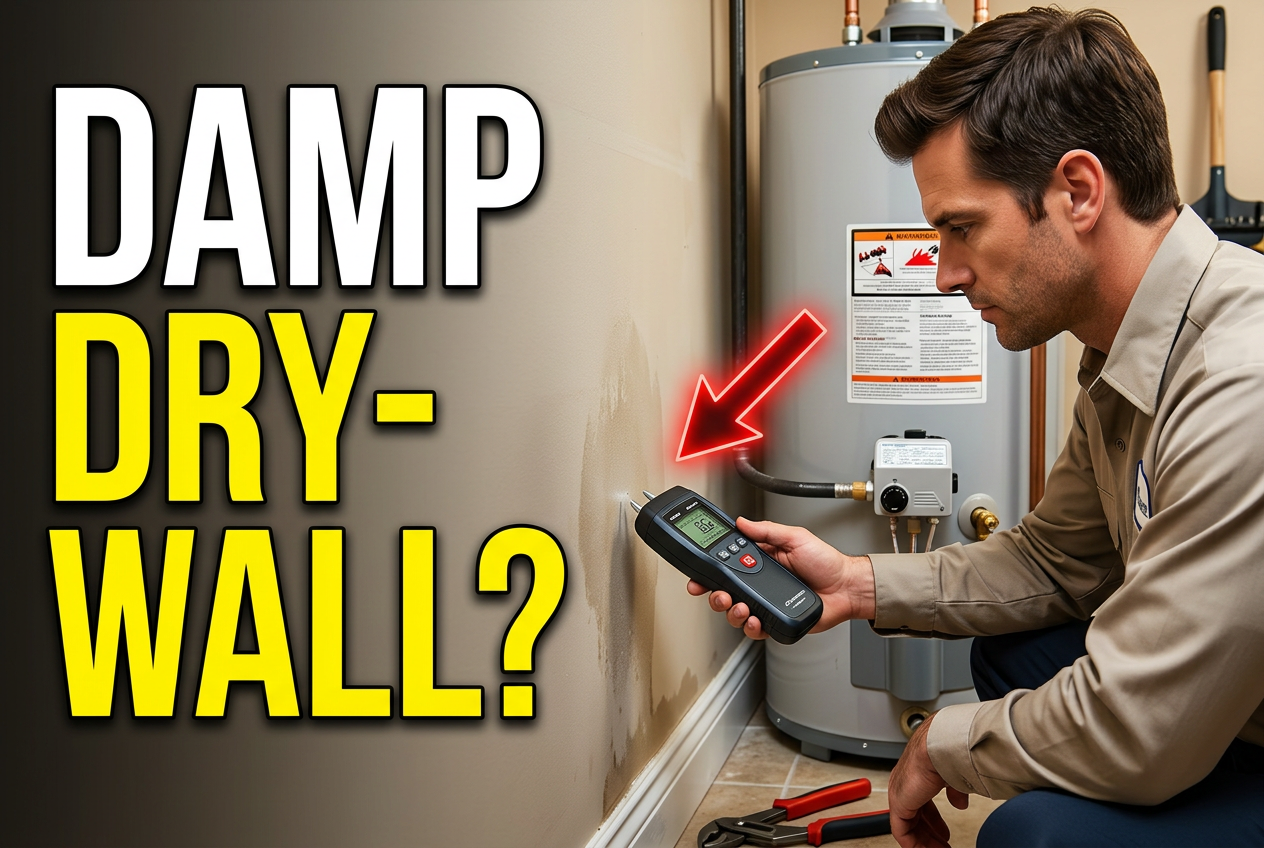
Damp drywall or a musty smell near a water heater can point to a leak, lingering moisture, or another indoor humidity problem. In a Plantation home, it is worth finding and addressing the moisture source before repairing or closing up a wall. A qualified plumber may be needed to diagnose or repair the water heater or its plumbing, while a mold and moisture inspection can help assess affected building materials and whether further testing may be useful.
Key Takeaways
- Dampness near a water heater can come from the tank, plumbing connections, a discharge pipe, or another nearby source—not necessarily from mold.
- Stop or repair the source of water and dry affected materials before installing new drywall.
- An inspection can document visible conditions and help identify areas of elevated moisture, but it cannot guarantee that every hidden area is free of mold.
- Sampling is not automatically necessary; an inspector can explain when testing may help answer a specific question.
Why Might the Area Around a Water Heater Be Damp?
Water heaters have several connections and components that can release water if they leak or malfunction. Moisture may come from the tank itself, a supply line, a fitting, a drain valve, or the temperature-and-pressure relief valve and its discharge pipe. A drain pan may collect some water, but it does not identify the source or ensure that water has not reached nearby flooring or walls.
Sometimes the water heater is not the cause. A nearby plumbing line, appliance, air-conditioning component, or roof or wall leak may leave moisture in the same area. In humid South Florida conditions, condensation can also contribute to damp surfaces, depending on the equipment and surrounding conditions. The location of a stain can be a useful clue, but water can travel behind finishes before it appears.
If water is actively leaking, the tank appears damaged, or you are unsure how to operate a shutoff, contact a licensed plumbing professional. Avoid touching electrical equipment or standing water near it. An inspection for mold or moisture is not a substitute for a plumber’s diagnosis or a water heater repair.
Signs to Notice Before Repairs
Look for changes in the area over time, without opening walls or disturbing materials. Relevant signs can include:
- Wet, swollen, soft, or discolored drywall, baseboards, or flooring.
- Water in a drain pan, on the floor, or around visible pipes and fittings.
- Peeling paint, bubbling, or a stain that grows or returns after it seems to dry.
- A musty odor, especially inside a nearby closet or cabinet.
- Visible spotting or fuzzy growth on surfaces.
These clues do not, by themselves, confirm mold or identify the source of moisture. Take dated photos and note when dampness or odors appear. If the water heater has recently been serviced or a leak has been repaired, keep relevant records. This information may help a plumber or inspector understand the sequence of events.
What a Mold and Moisture Inspection Can Check
A mold inspection Plantation FL homeowners arrange before drywall repairs may begin with a discussion of the reported leak, timeline, odors, and any past repairs. The inspector can then visually assess accessible areas around the water heater and affected finishes, looking for visible growth, water staining, material damage, and signs that moisture may extend beyond the obvious spot.
Depending on access and conditions, an inspector may use moisture-measuring equipment to compare affected materials with nearby areas. Thermal imaging may also help identify temperature patterns that warrant closer evaluation. It does not see through walls or prove that mold is present; readings and images need to be interpreted alongside other observations. If a wall cavity cannot be assessed without opening it, the inspector should explain that limitation and discuss appropriate next steps.
Testing may be considered when it can help answer a defined question, such as whether sampling of a particular area is appropriate. The inspector should explain the proposed sampling approach and what the results can and cannot show. A sample represents conditions at a particular place and time. No single test can establish that an entire home is mold-free, and testing alone does not identify or repair a water leak.
MoldXperts provides independent mold inspection and testing, rather than mold remediation or mold removal. An independent assessment may help property owners get an evaluation from a company that is not also selling remediation work. The inspection findings can help inform decisions about the next steps, but they are not a guarantee about hidden areas that were inaccessible or outside the inspection scope.
What to Do Before Replacing Drywall
Before covering a damp area, make sure the source has been addressed by the appropriate professional. Then allow affected materials to dry and consider an inspection if moisture has persisted, the extent of damage is unclear, or odors or visible growth remain. Replacing drywall while a leak continues—or while materials behind it remain wet—can conceal a continuing problem.
Ask the inspector what areas were accessible, whether moisture readings were taken, whether sampling is recommended, and what limitations apply. If the wall needs to be opened to investigate concealed damage, discuss that decision with the relevant building professional. Follow applicable building requirements and use qualified contractors for plumbing and repair work.
For a home sale, purchase, or rental property, photographs, repair records, and inspection findings can help clarify what was observed and what remains uncertain. Keep in mind that an inspection is an assessment of conditions at the time of the visit, not a promise that moisture will never return.
When to Consider Professional Inspection or Testing
Consider contacting an independent inspector if dampness returns after a repair, the affected area is larger than expected, a musty odor persists, or you need a documented assessment before drywall work. Inspection may also be useful when the visible stain is small but there are signs that water has reached adjoining materials. If the area is dry, the source is resolved, and there are no continuing concerns, testing may not be necessary; an inspector can discuss whether it would provide useful information for your situation.
Inspection and testing have limits. They do not replace plumbing repairs, establish the exact cause of every leak, or guarantee that concealed materials contain no mold. A clear explanation of the findings, methods, and access limitations is important when deciding what to do next.
Watch: MoldXperts on YouTube
Visit the MoldXperts YouTube channel for educational information about mold inspection and testing.
Arrange an Inspection in Plantation
If you are dealing with dampness around a water heater in Plantation, MoldXperts can discuss an independent mold and moisture inspection and whether testing may be appropriate. MoldXperts serves Broward, Miami-Dade, and Palm Beach counties and does not provide mold remediation or mold removal. Call (954) 464-4538 or visit the website to ask about your property.


Leave a Reply