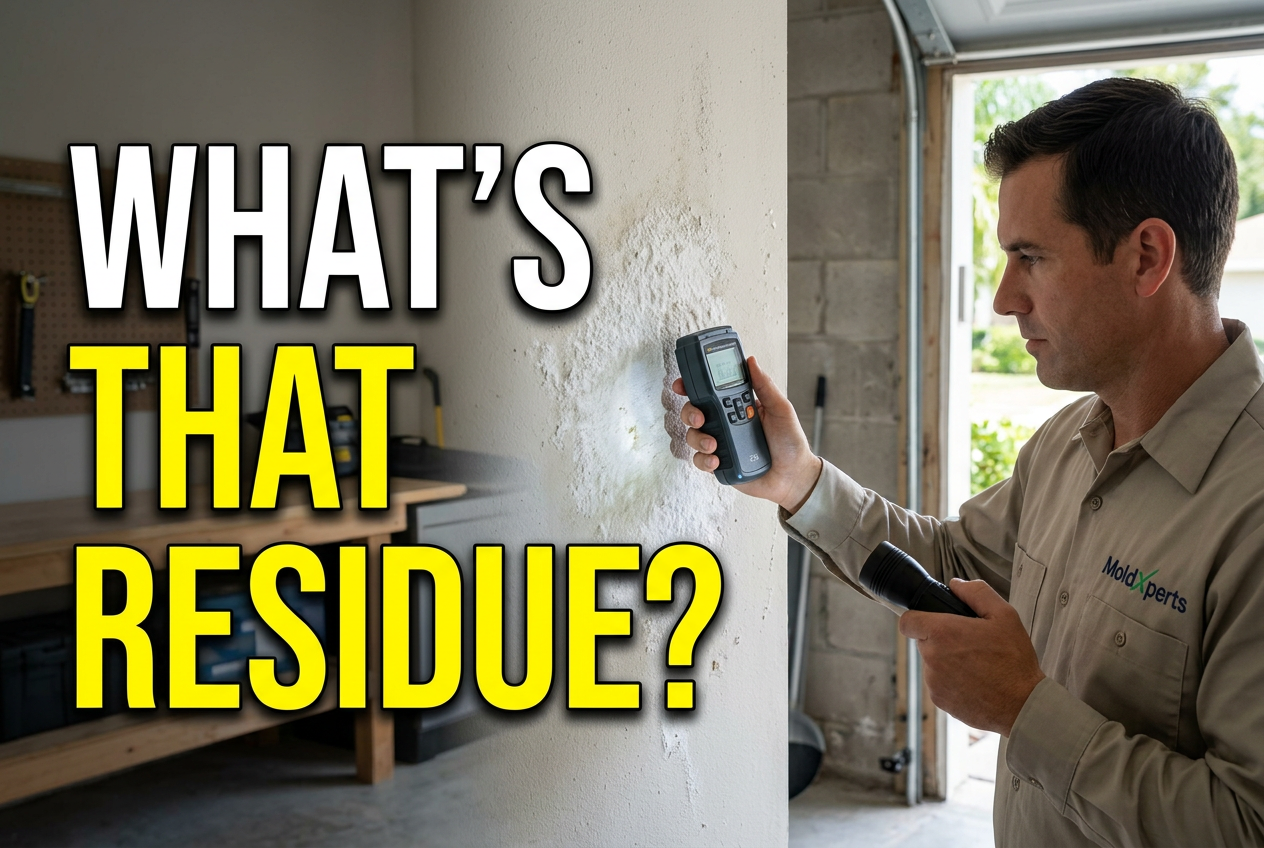
White, powdery residue on a garage wall in Pembroke Pines can be unsettling, especially when you are concerned about mold. The appearance alone, however, cannot confirm what the material is or why it appeared. It may be mineral salts left behind as moisture moves through masonry, mold growth, deteriorating paint, or another surface deposit. An independent mold inspection can assess the surrounding conditions and help clarify what further evaluation may be appropriate.
Key Takeaways
- White powder on a wall is not automatically mold; mineral deposits called efflorescence are one possible explanation.
- Recurring residue, dampness, staining, peeling paint, or a musty odor can point to an ongoing moisture concern.
- An inspection can assess visible conditions and potential moisture patterns, but appearance or a single test cannot answer every question.
- Finding and addressing the moisture source is important; cleaning or painting over the residue may not resolve the underlying issue.
What could the white powder be?
One common possibility on concrete or masonry is efflorescence. Water can travel through porous material, dissolve naturally occurring salts, and carry them to the surface. When the water evaporates, it may leave a white, chalky or crystalline deposit. Efflorescence itself is not mold, but it can indicate that moisture has moved through the wall.
Other possibilities include residue from paint or building materials, dust, or mold. Some mold growth can appear pale, but color and texture are not reliable ways to identify it. Even a close-up photograph cannot establish the material’s identity. A professional may consider the wall type, the pattern of the deposit, nearby moisture conditions, and whether the residue returns after being removed.
In Pembroke Pines, a garage wall may be exposed to humid air, rain-related moisture, or water moving through or around the building envelope. Those are possibilities to investigate—not proof that any one source is responsible. The relevant clues are the specific location, construction, history of leaks or flooding, and conditions around the wall.
Clues that make a moisture assessment worthwhile
A small, isolated patch of dry powder may have a different significance from a deposit that keeps returning. Consider arranging an assessment if you notice any of the following:
- The residue reappears after the area has been cleaned.
- The wall feels damp, or there is visible water, staining, bubbling, or peeling paint.
- You see discoloration or suspected growth on nearby drywall, stored items, or other surfaces.
- A persistent musty odor is present, particularly after rain or periods of high humidity.
- The area is near plumbing, a water heater, a window, an exterior wall, or a location with a history of leaks.
- There has been flooding, water intrusion, or repeated condensation in the garage.
These signs do not by themselves prove that mold is present. They can help an inspector decide where to look and what questions to ask about the moisture history.
What an independent mold inspection in Pembroke Pines can assess
A mold inspection Pembroke Pines FL homeowners arrange may include a visual review of accessible areas and an assessment of conditions that could be contributing to suspected growth. The inspector may document the size, location, and appearance of the residue; check nearby surfaces; and ask about past leaks, repairs, flooding, or recurring dampness.
Depending on the situation, the inspector may use moisture-measuring tools to look for elevated moisture in appropriate building materials. Thermal imaging may help identify temperature patterns that warrant closer investigation, but it does not see mold or water inside a wall. It is one tool, and any unusual pattern needs to be interpreted alongside other observations and measurements.
Testing may be considered when it could help answer a specific question. The appropriate approach depends on the visible conditions, the property, and the reason for testing. Sampling is not automatically necessary for every white deposit, and a sample result should be interpreted in context. Testing can provide information about collected material or airborne particles under the conditions at the time of sampling, but it does not by itself identify the moisture source, show every hidden area, or predict health effects.
Because MoldXperts is an independent inspection and testing company—not a mold remediation provider—its role is to assess and report on observed conditions and testing findings, rather than sell mold removal work. Independent assessment can be useful to owners who want an evaluation from a company that is not also offering remediation services. Companies with combined services may operate differently; the important thing is to understand the scope of the work and any recommendations.
What an inspection cannot establish
An inspection is a point-in-time assessment of accessible areas and conditions. It may not reveal concealed moisture or growth behind finishes without further investigation. A moisture reading or thermal image is not, by itself, a definitive diagnosis. Likewise, a laboratory result does not determine the complete condition of a building or establish whether a particular person’s symptoms are related to the property.
If the deposit is on a structural wall, an inspection focused on mold and moisture should not be treated as an engineering evaluation of the wall’s structural integrity. A qualified building or structural professional may be needed for concerns such as cracking, movement, or deteriorating masonry.
Practical next steps for the property owner
- Document the area. Take clear photos and note when the residue appeared, whether it changes after rain, and whether the surface feels damp.
- Avoid disturbing a large or suspicious deposit. Dry brushing or scraping can spread dust. If there is extensive suspected growth or a history of water damage, seek professional guidance before disturbing it.
- Look for nearby moisture clues. Without opening walls or taking risks, note visible leaks, plumbing, exterior openings, stored items against the wall, or condensation.
- Do not simply cover it up. Painting or applying a surface coating before the cause is understood may hide evidence while leaving a moisture issue unresolved.
- Arrange an assessment when concerns persist. A qualified inspector can evaluate accessible conditions and explain whether testing or another type of professional assessment may be useful.
If cleaning is appropriate after the material and circumstances are understood, follow product directions and avoid mixing cleaning products. People with asthma, allergies, or other health concerns may wish to avoid handling suspected growth and consult a healthcare professional about personal medical questions.
Watch: MoldXperts on YouTube
For more information about mold inspection and testing, visit the MoldXperts YouTube channel.
Schedule an independent assessment in Pembroke Pines
If white powder keeps returning, the garage wall appears damp, or you are unsure whether the surface needs further evaluation, MoldXperts can discuss professional mold inspection and testing options in Pembroke Pines. MoldXperts serves Broward, Miami-Dade, and Palm Beach counties and provides independent mold inspection, mold testing, indoor air quality testing, and thermal imaging as part of mold and moisture inspections. It does not provide mold remediation or mold removal.
Contact MoldXperts at (954) 464-4538 or visit moldxperts.com to ask about an inspection.


Leave a Reply