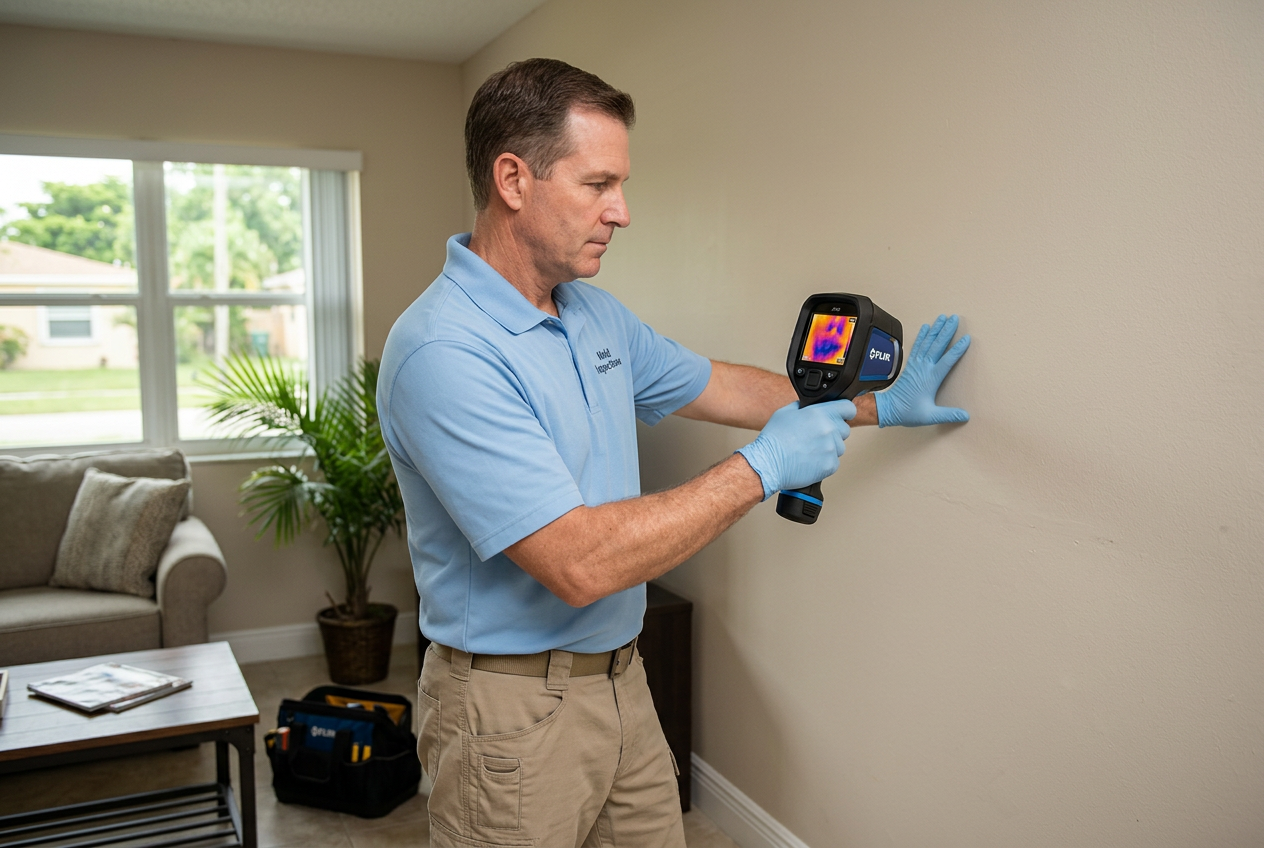
During a mold inspection in Davie, FL, thermal imaging can help an inspector spot temperature patterns that deserve a closer look. A cooler area on a wall or ceiling may be associated with moisture, an insulation gap, an air leak, or another condition—but the image alone cannot identify the cause or confirm mold. Understanding what the camera can and cannot show helps property owners make sense of an inspection and choose reasonable next steps.
Key Takeaways
- Thermal cameras measure surface temperature patterns; they do not see mold or moisture directly.
- An unusual temperature pattern can point an inspector toward an area for closer evaluation, not establish a diagnosis.
- Moisture meters, visual observations, building history, and, when appropriate, mold sampling can provide additional information.
- Davie’s heat, humidity, air conditioning, and seasonal rain can all affect temperature patterns indoors.
- Thermal imaging is most useful as one part of a broader inspection—not as a stand-alone mold test.
What thermal imaging shows during a mold inspection
A thermal imaging camera detects infrared energy and displays differences in the apparent surface temperature of materials. The resulting image uses colors or shades to make temperature variations easier to see. It does not photograph the inside of a wall, identify a particular substance, or reveal mold growth behind a surface.
During a mold inspection in Davie, an inspector may use a thermal camera to scan accessible areas such as ceilings, walls, floors, and spaces near windows or plumbing. A distinct temperature pattern may help direct attention to a possible concern that is not obvious during a visual check. The inspector can then assess the area using other appropriate methods, such as a moisture meter or a closer visual examination.
For example, a cooler patch on a ceiling could be consistent with moisture, but it might also relate to airflow, insulation, a temperature difference between rooms, or another building condition. A warm or cool area is a clue to investigate—not proof of a leak, damp building material, or mold.
Why temperature patterns can matter in Davie homes
South Florida properties experience high outdoor temperatures, substantial humidity, seasonal rain, and frequent air conditioning use. These conditions can create noticeable temperature differences between indoor and outdoor areas, or between rooms and building materials. The effects vary with the property’s construction, insulation, HVAC operation, recent weather, and how long the air conditioning has been running.
In Davie, an inspector might pay particular attention to areas around windows and exterior doors, ceilings below roof or plumbing areas, and walls near bathrooms, kitchens, or air-conditioning equipment. A temperature anomaly in one of these locations may help identify where further assessment is warranted. It does not, by itself, establish that water has entered the home or that mold is present.
Recent rain or a roof repair, a plumbing leak, condensation around cooling equipment, or a history of musty odors may provide useful context. Sharing this information with the inspector can help them decide where to focus and how to interpret what they observe.
What thermal imaging cannot confirm
Thermal imaging does not detect mold spores, determine whether a material is contaminated, or measure the amount of moisture inside a wall. It also does not reveal what is behind drywall just because a pattern appears on the camera display. Temperature differences may have several explanations, and some moisture problems may not create a distinctive thermal pattern at the time of the inspection.
Other factors can affect the image. Sunlight warming an exterior wall, reflective surfaces, furnishings, air movement, and differences in surface materials can influence apparent temperatures. Camera settings, viewing angle, and indoor conditions also matter. An inspector should interpret the camera’s findings alongside observations about the building rather than treating a single image as conclusive.
For these reasons, thermal imaging alone cannot confirm or rule out mold. A normal-looking image does not guarantee that a hidden moisture issue is absent, and an unusual image does not prove that mold exists.
How inspectors follow up on an unusual pattern
If a thermal scan identifies an area that merits attention, an inspector may compare it with nearby surfaces and look for visible signs such as staining, bubbling paint, damaged materials, or condensation. They may use a moisture meter to evaluate accessible materials or examine related areas for a likely source of moisture. The tools and methods used depend on the property and the conditions observed.
Mold sampling may be considered when it can help answer a specific question, but it is not automatically required whenever a thermal camera shows a temperature difference. Sampling has limits, too: results describe the samples and conditions at the time they were collected. An inspection and any testing should be interpreted in context, including the property’s history and the locations examined.
An independent mold inspection can be useful to owners who want an assessment from a company that does not also sell mold remediation. MoldXperts provides mold inspections, mold testing, indoor air quality testing, and thermal imaging as part of mold and moisture inspections. It does not provide mold remediation or mold removal.
What property owners can do before an inspection
- Make a note of musty odors, recurring condensation, visible staining, or areas that feel damp.
- Share the location and approximate timing of any known roof, plumbing, or air-conditioning leak.
- Tell the inspector about recent repairs, heavy rain, or changes in how the HVAC system is operating.
- Keep access clear around the areas of concern when practical, while avoiding opening walls or disturbing suspected mold yourself.
A thermal camera reading is only one observation, so avoid drawing conclusions from a phone attachment or a single image without additional assessment. If there is active water intrusion, address the water source promptly through an appropriate qualified professional. If you are unsure what a temperature pattern means, ask the inspector what other observations or measurements support their assessment.
When to consider a mold inspection in Davie
Consider professional evaluation if you notice a persistent musty smell, recurring dampness, visible mold-like growth, water staining, or a history of leaks—especially if the cause or extent is unclear. A mold inspection may also be helpful before or after a property transaction when there are specific moisture concerns to investigate. The appropriate scope depends on the situation; not every home needs sampling or thermal imaging.
A qualified inspector can explain what was examined, what the findings suggest, and what remains uncertain. In a Davie property, thermal imaging may help guide attention to a temperature anomaly, while follow-up observations and measurements help determine whether there is evidence of a moisture concern. No single tool can answer every question about a building.
Watch: MoldXperts on YouTube
Explore the MoldXperts YouTube channel for information about mold inspections and testing.
Schedule an independent mold inspection in Davie
If you have a temperature anomaly, a history of water intrusion, or another indoor moisture concern in Davie, MoldXperts can discuss professional mold inspection and testing options. The company serves Broward, Miami-Dade, and Palm Beach counties. Call (954) 464-4538 or visit MoldXperts.com to ask about an inspection.




Leave a Reply