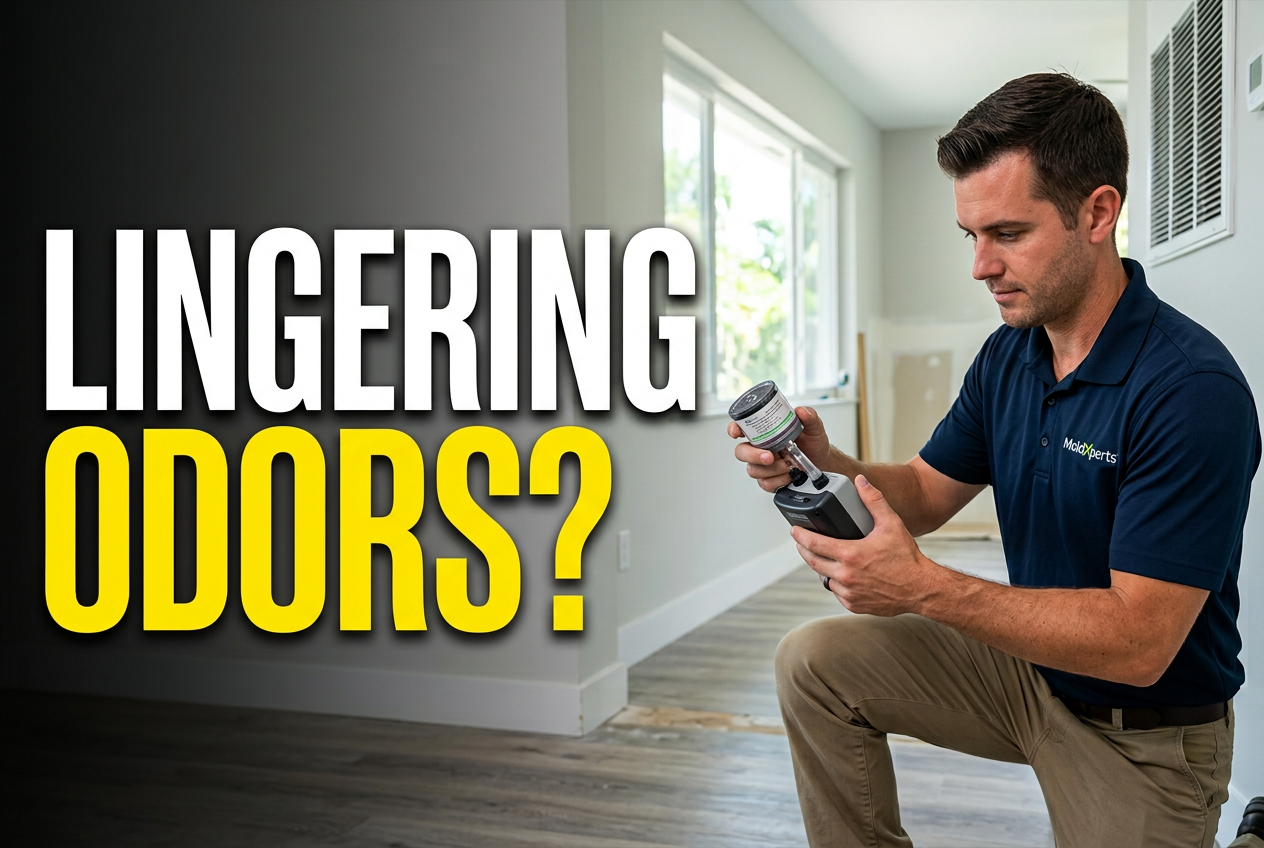
A renovation can make a Boca Raton home more comfortable and attractive, but unfamiliar or persistent odors may linger after the work is complete. A smell does not automatically mean there is mold or a serious indoor air quality problem. It may come from new materials, leftover dust, moisture, plumbing, or other sources. Understanding when to investigate—and what testing can actually tell you—can help you choose a reasonable next step.
Key Takeaways
- Renovation-related odors can come from materials, coatings, dust, plumbing, ventilation, or moisture; smell alone cannot identify the cause.
- Ventilation and a careful check for obvious sources are sensible first steps, but persistent or recurring odors may warrant further evaluation.
- Indoor air quality testing is most useful when the inspection and testing approach is guided by the specific concern.
- Mold testing can provide information about sampled conditions, but it cannot by itself prove that a home is mold-free or identify every odor source.
- An independent inspection can assess visible conditions and moisture concerns without also selling mold remediation.
Why odors may linger after renovation
Renovation work can introduce or disturb many materials. Paints, adhesives, sealants, flooring, cabinets, and other products may release odors as they cure or air out. Sawdust and construction debris can also collect in rooms, closets, or air returns. If the heating, ventilation, and air conditioning system ran during construction, dust may have entered the system or settled near vents.
Other odors may not come directly from renovation materials. A drain trap that has dried out, a plumbing leak, a dirty filter, or an issue with ventilation can cause smells that become more noticeable after rooms are closed up. In South Florida’s humid climate, moisture deserves attention as well: a leak or damp building material can contribute to musty odors and may create conditions that support mold growth.
These possibilities are different, and one remedy will not address them all. A musty smell can be a reason to look for moisture, but it does not confirm mold. Likewise, a strong chemical-like odor does not identify a specific chemical or establish that the air is unsafe. The pattern, location, timing, and any visible signs can help guide what to investigate.
What to check before arranging testing
If it is safe and practical, begin with a basic walkthrough. Note which rooms have an odor, whether it changes when windows or doors are closed, and whether it is stronger near a particular wall, cabinet, floor, drain, or air vent. Check for visible staining, bubbling paint, warped materials, condensation, or signs of a leak. Pay attention to whether the odor began during construction or appeared later.
Consider asking the renovation contractor what products and materials were installed and whether any manufacturer guidance is available about ventilation or curing time. Replace or inspect HVAC filters as appropriate, and make sure vents are not blocked. Ventilation may help with some odors, but it is not a substitute for addressing a leak, contaminated material, or another underlying source. Avoid masking a persistent smell with fragrances, which can make it harder to track changes.
If an odor is intense, causes immediate symptoms, or may be connected to a fuel-burning appliance or another urgent safety concern, leave the area if needed and contact the appropriate qualified professional or emergency service. Indoor air quality testing is not a replacement for emergency response or specialized evaluation of every possible contaminant.
When indoor air quality testing may help in Boca Raton
Indoor air quality testing in Boca Raton, FL, may be worth discussing when an odor continues despite reasonable ventilation and cleanup, returns repeatedly, or seems concentrated in a particular area. Testing may also be considered when there is a known moisture event, visible suspected growth, or a concern about indoor conditions after construction. The right approach depends on the question being asked; there is no single test that screens for every possible source of an odor.
A qualified inspector can first discuss the history of the home and renovation, the materials involved, where the odor is noticed, and whether there are signs of moisture. That information can help determine whether a visual inspection, moisture assessment, mold sampling, or another form of indoor air quality testing is appropriate. Testing without a clear purpose may produce results that are difficult to interpret or do not address the actual concern.
When mold is a specific concern, sampling may provide information about the types or levels of airborne or surface particles in the samples collected. Results reflect the locations and conditions at the time of sampling. They cannot, on their own, identify every hidden source, establish that a building is entirely free of mold, or prove that a particular odor is caused by mold. Findings should be considered alongside the inspection and the property’s moisture history.
What an independent mold inspection may evaluate
An independent mold inspector may look for visible signs of suspected growth, water staining, damp or damaged materials, and conditions that could contribute to moisture. Depending on the concern and the home, the inspection may include moisture measurements and thermal imaging as part of the effort to locate temperature patterns that could merit further investigation. Thermal imaging does not see through walls or confirm mold; unusual patterns need to be interpreted and, when appropriate, checked with other methods.
MoldXperts provides independent mold inspection, mold testing, indoor air quality testing, and thermal imaging as part of mold and moisture inspections. The company does not provide mold remediation or mold removal. An independent assessment can be useful for property owners who want inspection and testing from a company that is not also selling remediation work. This does not mean every company that offers both inspection and remediation has a conflict; it simply gives homeowners another service model to consider.
Choosing a practical next step
Before booking, describe the odor, when it started, the rooms affected, any renovation materials or moisture events you know about, and steps already taken. Ask what the proposed inspection or testing is intended to establish, what it cannot determine, and how findings will be explained. If testing is recommended, ask how sample locations and methods will relate to your particular concern.
For Boca Raton homeowners, persistent post-renovation odors are a reason to investigate thoughtfully—not to assume the worst. Start with likely sources and visible conditions. If the cause remains unclear, an independent inspection and appropriately selected testing may help narrow down what should be addressed next.
Watch: MoldXperts on YouTube
For more information about MoldXperts, visit the official MoldXperts YouTube channel.
Contact MoldXperts
If lingering odors have you concerned about moisture, mold, or indoor air quality in your Boca Raton home, contact MoldXperts to discuss an independent inspection or testing. MoldXperts serves Broward, Miami-Dade, and Palm Beach counties.
Call (954) 464-4538 or visit moldxperts.com to get started.


Leave a Reply