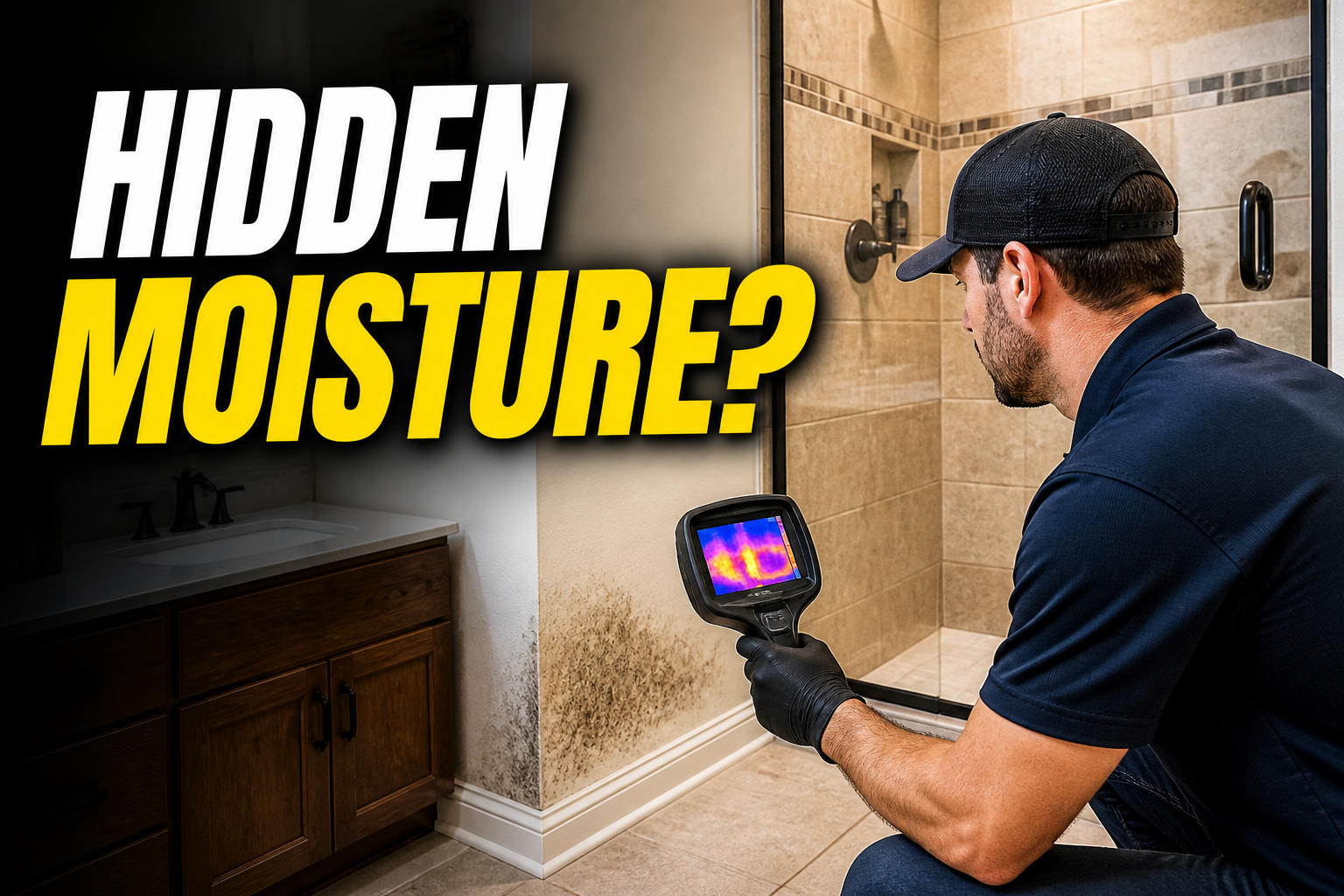
If bathroom humidity in your Sun City home lingers long after a shower, first look for a moisture source or ventilation problem. Persistent dampness does not prove mold is present, but recurring condensation, a musty odor, or signs of water damage can make a closer inspection worthwhile.
Lingering humidity is a reason to check bathroom ventilation and nearby surfaces, not proof of mold. Consider a mold inspection if dampness keeps returning, there is visible water damage or a persistent musty odor, or you suspect moisture may be hidden behind a wall or under flooring.
Why bathroom moisture may linger
Showers and baths release moisture into the air. If the room does not clear that moisture effectively, it can settle as condensation on mirrors, windows, ceilings, walls, and other cool surfaces. Repeated dampness may affect paint, caulking, grout, and other materials over time.
Several issues can contribute, including an exhaust fan that is not operating well, a fan that is not used consistently, or a bathroom with limited airflow. Plumbing leaks, gaps around fixtures, and water escaping from a shower or tub can also keep materials damp. These are possibilities to investigate, not conclusions that can be drawn from humidity alone.
The U.S. Environmental Protection Agency explains that controlling moisture is central to reducing mold growth. Its guidance on mold, moisture, and the home offers general information about common moisture sources and prevention.
What Sun City homeowners can check first
Pay attention to whether the moisture appears only after bathing or continues at other times. Notice how long condensation remains and whether the same area repeatedly gets damp. A brief episode of steam after a shower is different from a recurring wet patch or a surface that never seems to dry.
- Run the bathroom exhaust fan during bathing and afterward, and check whether it seems to move air.
- Look for peeling paint, swollen trim, damaged caulk, loose flooring, or discoloration near the tub, shower, sink, and toilet.
- Check accessible areas for plumbing drips or water collecting around fixtures.
- Note whether a musty odor persists when the room is dry and unused.
- Photograph visible changes and keep a record of when dampness or odors occur.
A fan that sounds like it is running may still be ineffective at clearing moisture. If you are unsure whether the ventilation is working as intended, a qualified contractor can assess the fan and its operation. Avoid opening walls or pulling up flooring just to look for a problem; disturbing suspect materials can spread dust and debris.
When a mold inspection for bathroom moisture in Sun City may help
A mold inspection for bathroom moisture in Sun City, AZ may be useful when the moisture keeps returning despite reasonable efforts to dry the room, when there are signs of water damage, or when you suspect a leak or concealed dampness. It may also help clarify what to do if an odor or visible change persists and the source is not obvious.
Inspection, moisture investigation, and mold testing are related but different steps. A visual inspection looks for observable conditions and potential problem areas. Moisture investigation focuses on whether materials are damp and where water may be entering or collecting. Mold testing involves collecting samples for analysis; it is not automatically needed for every bathroom with condensation.
Stains and odors can have more than one cause, and appearance alone cannot confirm mold or identify its type. Testing may be considered when there is a specific question that sampling can help address, such as concerns about a suspected area that is not readily visible. The EPA also explains how to assess whether you may have a mold problem, including why sampling is not always necessary.
ALM Services provides mold inspection, mold testing, and mold remediation. Homeowners can review the ALM Services directory listing or explore the directory’s mold testing providers when considering whom to contact.
What to expect from an inspection or testing
An inspection generally begins with a discussion of the moisture history and visible concerns. The inspector may look at bathroom surfaces and nearby areas, assess signs of water intrusion, and investigate moisture where appropriate. The details depend on the property and the reason for the visit.
If testing is recommended, ask what question it is intended to answer and how the results will be interpreted. A sample is only one piece of information; it should be considered alongside the inspection findings and the building’s moisture conditions. Results alone do not establish the source of water or determine what repairs are needed.
For a broader explanation of ALM Services’ offerings, visit the ALM Services website. The company also shares information through its YouTube channel.
What to do if a moisture problem is found
Address the source of moisture before focusing only on surface cleanup. A plumbing leak, recurring splash-out, or ineffective ventilation calls for a different response, so the first step is understanding what is keeping the area damp. If there is an active leak, arrange for it to be addressed by an appropriate repair professional.
For small amounts of condensation, improve ventilation and allow affected surfaces to dry when practical. Avoid painting over stains or covering damp materials before the cause is understood. If you find extensive water damage, suspect hidden moisture, or see material that may contain mold, avoid disturbing it and seek qualified guidance.
If mold is confirmed and remediation is appropriate, the work should account for the moisture source as well as affected materials. The scope depends on the conditions found; not every situation requires extensive removal. Correcting the conditions that allow dampness to persist is an important part of addressing the problem.
Frequently Asked Questions
Does lingering bathroom humidity mean I have mold?
No. Humidity or condensation can occur without mold. Persistent moisture can create conditions that may support mold growth, so investigate recurring dampness and any signs of water damage.
Should I test every time I see bathroom staining?
Not necessarily. A stain can have different causes, and mold testing is not required in every case. An inspection can help assess the visible condition and whether testing would answer a useful question.
Can mold be hidden behind bathroom walls?
It is possible for moisture and mold to be concealed, particularly if a leak has affected building materials. A musty odor or recurring damage may justify further investigation, but neither one confirms hidden mold on its own.
What information should I have ready before contacting an inspector?
Describe when the humidity occurs, how long it lasts, any history of leaks, and where you have seen staining or dampness. Photos and notes about recurring changes can help explain the concern.
Need a Mold Inspection in Sun City?
ALM Services can help Sun City homeowners assess bathroom moisture concerns with mold inspection and testing, and provides mold remediation when appropriate. Share what you have noticed and ask about the next step for your property.
ALM Services
Call: 602-257-8000





Leave a Reply