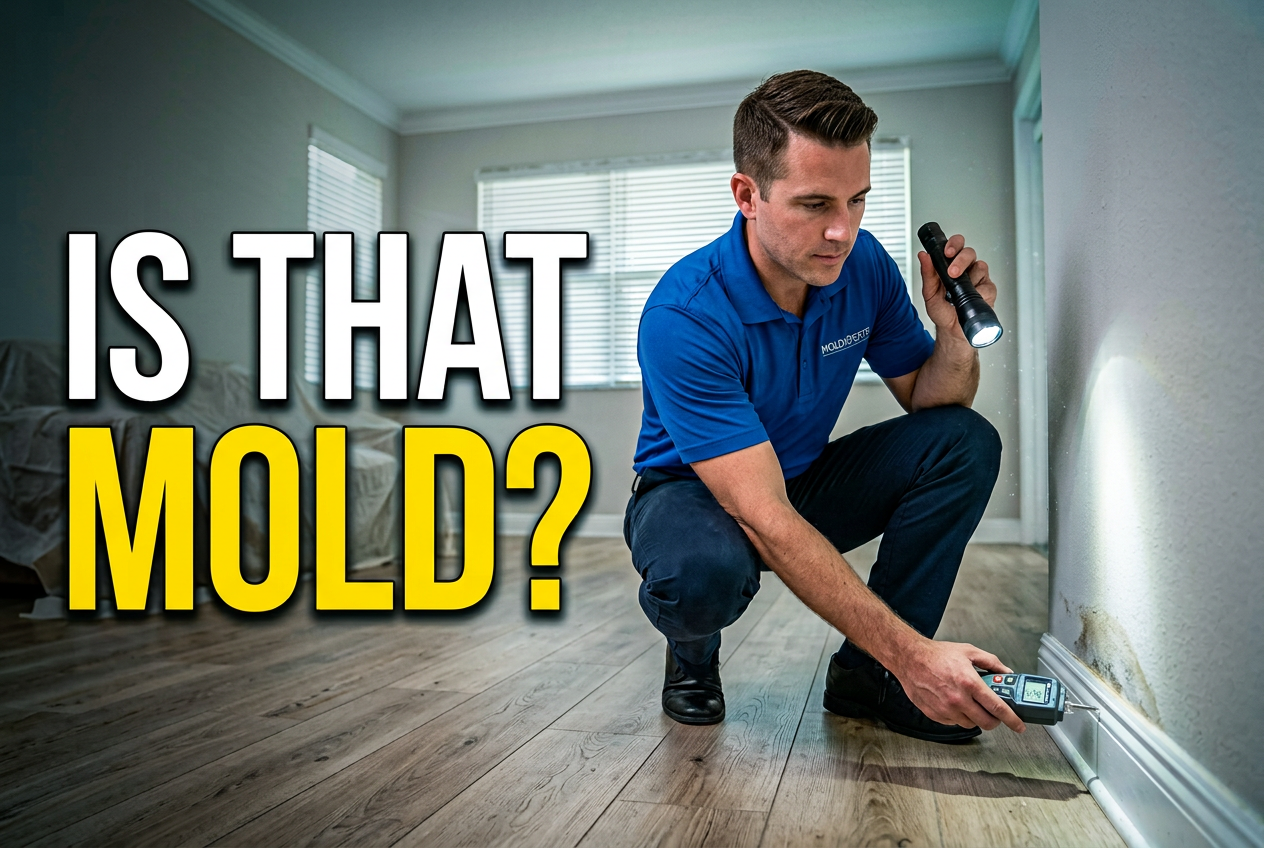
Coming back to a home that has been vacant can mean more than unpacking and turning on the lights. In West Palm Beach, heat, humidity, heavy rain, and air-conditioning interruptions can make moisture issues worth checking—especially if the home was closed up for weeks or months. A musty odor, visible staining, or a history of leaks may raise questions about mold, but no single sign proves what is happening inside a building.
Key Takeaways
- Check for leaks, water staining, musty odors, and signs that the air-conditioning or plumbing stopped working while the home was vacant.
- Address active water intrusion and moisture sources promptly; testing alone does not fix a leak or dry a property.
- Mold testing may be worthwhile when there are unexplained odors, a documented water event, or questions that a visual inspection cannot resolve.
- Testing provides information about sampled areas and conditions at the time of inspection; it cannot certify that a home is entirely mold-free.
Start with a Careful Walk-Through
Before moving belongings back in, take a calm, methodical look through the property. If you can, note when the home was last occupied, whether the air-conditioning remained on, and whether anyone reported a roof, plumbing, appliance, or storm-related leak. These details can help explain what you find and guide any follow-up.
Look and smell for clues in rooms that tend to be less visible or well ventilated, including bathrooms, closets, laundry areas, under sinks, and around the air handler. Check ceilings and walls for new discoloration, bubbling paint, warped trim, or soft spots. Look around windows and exterior doors for dampness or staining, and inspect accessible areas beneath sinks and near water-using appliances. A musty or earthy smell can be a reason to investigate, but odor alone does not identify a source or establish that mold is present.
Also check whether the home’s cooling system appears to be operating normally. Look for unusual condensation, visible dampness near equipment, or a musty smell when the system runs. Do not open electrical equipment or attempt repairs if there is standing water or a safety concern. If you suspect an HVAC problem, consult a qualified HVAC professional.
Look for Moisture Before Focusing on Mold
Mold needs moisture to grow. If you find an active leak, water intrusion, or persistent dampness, the practical priority is to identify and correct the source and dry affected materials appropriately. Mold testing does not stop water from entering a home, and a sample cannot substitute for repairs or moisture control.
In South Florida, possible moisture sources can include plumbing leaks, roof or window problems, appliance failures, air-conditioning drainage issues, or water entering during severe weather. A vacant home may go without someone noticing a slow leak or a system problem. Keep a record of what you observe, when you first noticed it, and any known periods when utilities or cooling systems were off. Photos can also help document conditions before anything is moved or cleaned.
A small, accessible spot and a larger or recurring moisture problem are not the same situation. Avoid disturbing extensive suspect growth, since scraping, sanding, or pulling apart materials can spread dust and make it harder to assess the area. If damage is widespread, concealed, or related to a significant water event, consider getting qualified professional guidance on the appropriate next steps.
When May Mold Testing in West Palm Beach, FL Be Worthwhile?
Mold testing West Palm Beach FL may be worth considering when a home has a persistent unexplained musty odor, a known leak or water event, visible conditions whose cause is unclear, or concerns about areas that cannot be assessed during a basic walk-through. It may also help when a buyer, seller, landlord, or returning occupant needs documented information about specific indoor conditions.
Testing is not necessary in every situation. If there is an obvious moisture source, addressing that problem may be the first priority. Similarly, a test is not a substitute for investigating a visible water stain or evaluating building materials. An independent mold inspector can help determine whether sampling is appropriate based on the property, the reason for the visit, and what can be observed.
There is no single test that answers every question about a home. Sampling choices depend on the inspection purpose and conditions. An inspector may consider whether to collect air or surface samples, where to sample, and whether comparison information is useful. Results should be interpreted alongside the inspection findings and property history, not treated as a stand-alone verdict.
What an Independent Inspection Can and Cannot Establish
An independent mold inspection may include a visual assessment of accessible areas, discussion of the home’s moisture history, and attention to conditions that could support mold growth. When appropriate, the inspector may use tools such as moisture meters or thermal imaging as part of evaluating suspected moisture. Thermal imaging can help identify temperature patterns that merit further investigation, but it does not directly identify mold or prove that a wall is wet. Findings may need confirmation with other methods.
Testing can provide information about the samples collected under the conditions present at that time. It cannot guarantee that every room, wall cavity, or hidden space is free of mold, and results may not represent conditions at another time. A negative result does not necessarily rule out a concealed problem, while a detected sample does not by itself explain the moisture source or determine the full extent of an issue. A good assessment explains the scope and limitations of the work in plain language.
MoldXperts is an independent mold inspection and testing company serving Palm Beach County, including West Palm Beach, as well as Broward and Miami-Dade counties. The company does not provide mold remediation or mold removal. Keeping inspection and testing separate from remediation can help property owners receive an assessment from a company that is not also selling remediation work.
Practical Next Steps After You Return
- Document odors, visible staining, dampness, and any known leaks or system interruptions.
- If there is active water intrusion, arrange to address the source and prevent further wetting.
- Do not disturb extensive suspect growth or enter areas that may present a safety concern.
- Consider an independent inspection if the source is unclear, the odor persists, or you need a professional evaluation of specific concerns.
- Discuss whether testing is appropriate and what the proposed sampling can—and cannot—answer before it begins.
Watch: MoldXperts on YouTube
For more information about mold inspection and testing, visit the official MoldXperts YouTube channel.
Arrange an Independent Assessment in West Palm Beach
If you have returned to a vacant West Palm Beach home and are concerned about a musty odor, past water intrusion, or possible mold, MoldXperts can discuss independent inspection and testing options for your property. Call (954) 464-4538 or visit MoldXperts.com to ask about service in Palm Beach County and throughout South Florida.


Leave a Reply