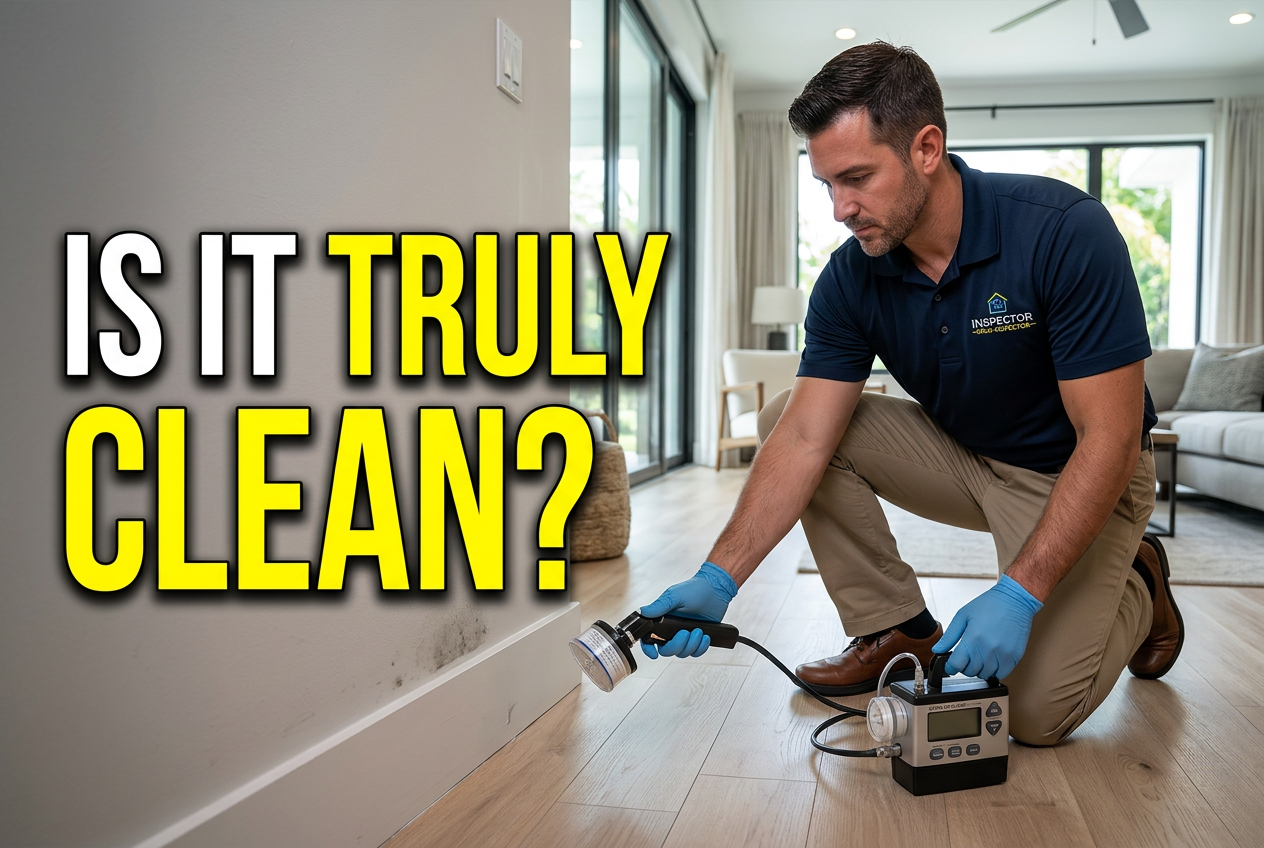
Post-Remediation Mold Testing in Aventura, FL: When It May Help
After mold cleanup in an Aventura home, it is natural to want reassurance that the work addressed the affected area and that the conditions that contributed to mold growth have been corrected. Independent post-remediation testing may help assess the property, particularly when the affected area was extensive, hidden moisture was involved, or a buyer, seller, landlord, or occupant wants a separate evaluation. Testing is not automatically necessary after every cleanup, and no single sample can guarantee that a home is entirely free of mold.
Key Takeaways
- Post-remediation testing may be useful when the cleanup scope was significant, the moisture source was difficult to resolve, or documentation is needed.
- A visual inspection and moisture assessment are important parts of evaluating the area; sampling is selected based on the circumstances.
- Results describe conditions at the time and locations assessed. They do not prove that every concealed space is mold-free.
- In Aventura’s humid, coastal climate, continued attention to leaks, condensation, and indoor humidity can help reduce the chance of recurring moisture problems.
What post-remediation testing can help assess
Post-remediation mold testing is an evaluation performed after cleanup or remediation work has been completed. Depending on the property and the purpose of the assessment, an inspector may look at whether the previously affected area appears clean, whether building materials are dry, and whether there are signs of remaining moisture or visible growth. If sampling is appropriate, the inspector may collect air or surface samples to help evaluate specific locations.
The purpose is not simply to ask whether a mold spore can be found. Mold spores occur naturally indoors and outdoors. Instead, an assessment considers the property’s condition, the history of the affected area, moisture observations, and any laboratory findings together. A test result on its own cannot identify every possible source or establish that a home is completely mold-free.
When independent testing may make sense in an Aventura home
Whether to arrange an independent assessment depends on the work performed, the conditions that led to the cleanup, and the level of documentation needed. It may be worth discussing testing when:
- The affected area was large, involved multiple rooms, or included concealed spaces such as a wall cavity or ceiling.
- There was a significant leak, flooding, or a recurring moisture problem, and it is important to evaluate whether the area is dry.
- Odors, visible discoloration, or signs of dampness remain after the cleanup.
- A property owner wants an evaluation from a company separate from the contractor that performed the work.
- A real estate transaction, rental issue, or occupant concern makes a documented assessment useful.
Testing may be less informative if the underlying moisture problem is still active or the area has not been made accessible for evaluation. For example, if a roof leak, plumbing leak, or air-conditioning condensate problem continues, sampling alone will not correct the cause. It is sensible to understand what was cleaned, what materials were removed or retained, and how the moisture source was addressed before arranging an assessment.
Warning signs to watch for after cleanup
Pay attention to musty odors, recurring staining, damp or swollen materials, peeling paint, and condensation that returns in the same location. These signs do not confirm mold by themselves, but they can indicate a moisture condition worth investigating. A persistent odor may also have causes unrelated to mold, so it should be considered alongside other observations.
In Aventura, warm weather and high outdoor humidity can make moisture management especially important. Air-conditioning systems, supply vents, windows, plumbing, and exterior walls may all be relevant when investigating dampness or condensation. In condos and multi-unit buildings, a leak or moisture source may involve a neighboring unit or shared building system, so documenting the location and timing of the problem can help with follow-up.
What an independent inspector may evaluate
An independent mold inspector can review the history and scope of the cleanup, visually assess accessible areas, and look for signs of moisture or conditions that could support mold growth. Moisture-measuring tools may help assess building materials, and thermal imaging may be used as part of a moisture inspection to identify temperature patterns that warrant closer investigation. Thermal images do not identify mold and should be interpreted alongside other observations.
When sampling is justified, the inspector can select locations and sample types based on the questions being asked. Air samples may be used to compare conditions in selected indoor areas with an outdoor reference sample. Surface samples may be considered when a specific visible material or location needs evaluation. Sampling plans are not one-size-fits-all; unnecessary or poorly targeted samples may provide little useful information.
MoldXperts provides independent mold inspection, mold testing, indoor air quality testing, and thermal imaging as part of mold and moisture inspections. The company does not provide mold remediation or mold removal. An independent assessment can offer a separate perspective without implying that every company offering both inspection and remediation has a conflict of interest.
Understanding the limits of testing
There is no single test that proves an entire house is free of mold. Sampling reflects the conditions at the time and places where samples were collected. Results can vary with weather, ventilation, recent cleaning, air movement, and other factors. A laboratory report should be interpreted with the inspection findings and property history, rather than treated as a stand-alone pass-or-fail verdict.
Similarly, a favorable result does not guarantee that hidden areas were inspected or that future growth cannot occur. A report may help describe observed conditions and findings, but it cannot replace correcting leaks, controlling humidity, or maintaining the building. If visible growth or a moisture problem is found, the appropriate next step may involve further investigation or work by a qualified remediation professional.
Practical steps before arranging an assessment
- Gather any cleanup records, photographs, and information about the original leak or moisture source.
- Make a list of areas where odors, staining, or dampness have continued or returned.
- Ask what the assessment will include, whether sampling is recommended, and how results will be interpreted.
- Confirm that the source of moisture has been repaired and that affected materials are accessible for evaluation.
Watch: MoldXperts on YouTube
For more information about mold inspection and indoor conditions, visit the MoldXperts YouTube channel.
Arrange an independent assessment in Aventura
If cleanup has been completed and you still have questions about moisture, odors, or the condition of an affected area, MoldXperts can discuss whether an independent inspection or testing may be appropriate. MoldXperts serves Aventura and communities throughout Broward, Miami-Dade, and Palm Beach counties. Call (954) 464-4538 or visit moldxperts.com to ask about professional mold inspection and testing.


Leave a Reply