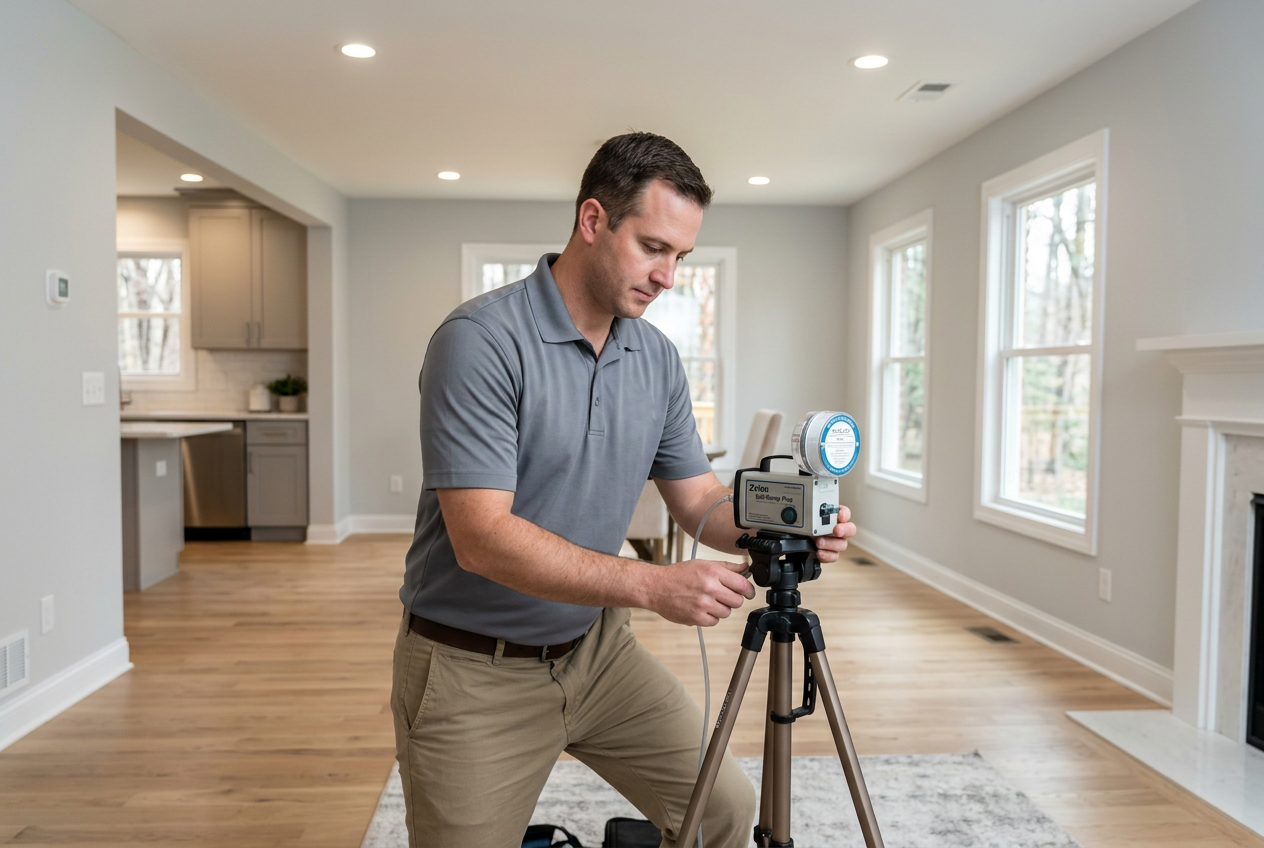
A renovation can change how a home looks and feels, but lingering odors, dust, or irritation after the work is finished may leave you wondering whether the indoor air has changed, too. Indoor air quality testing in Cabin John, MD, may help investigate specific concerns—but the right approach depends on what was used, what work took place, and what you are noticing.
What renovation-related air concerns may involve
Renovation work can introduce or disturb a range of materials. Paints, adhesives, sealants, flooring, cabinetry, and other products may release volatile organic compounds (VOCs), sometimes creating noticeable odors. Cutting, sanding, demolition, and cleanup can also generate particles that settle on surfaces or remain airborne for a time.
Other concerns depend on the scope of work. A leak or damp building material could create a moisture issue that warrants investigation. If older materials were disturbed, asbestos may be a question—but appearance or age alone cannot confirm whether a material contains asbestos. Do not disturb suspected material; appropriate professional assessment and laboratory testing may be needed.
These possibilities are not proof that a home has a specific air quality problem. A new smell, for example, does not identify the substance causing it, and dust after construction does not automatically mean a specialized air test is necessary.
Start with observations before ordering a test
Before arranging testing, note when the concern began and whether it changes with certain conditions. Useful details include which rooms were renovated, what products or materials were installed if known, whether the smell is strongest in one area, and whether it becomes more noticeable when windows are closed or the heating and cooling system is running.
Also look for visible dust, damp spots, leaks, condensation, or signs that wet materials were enclosed during the project. Do not open walls or disturb questionable materials to investigate. If there is an obvious moisture source, addressing that source is an important step rather than relying on an air sample alone.
The EPA’s introduction to indoor air quality explains how indoor pollutants can come from different sources and why ventilation and source control matter. That context is useful because a single test cannot assess every possible pollutant in a home.
What indoor air quality testing can—and cannot—tell you
Testing is most informative when it is selected to answer a defined question. Depending on the concern, a qualified indoor environmental professional may recommend measurements or samples for a particular pollutant, particles, or conditions. The method, location, timing, and interpretation should match the suspected source.
A test result is a snapshot of the conditions at a particular time and place. It may not represent every room or explain where a substance originated. Some concerns are better investigated by examining materials, ventilation, moisture, or the renovation history. For that reason, a useful assessment generally begins with questions and observations—not automatically with the broadest possible panel of tests.
Be cautious of promises that one test can certify a home as completely “safe” or identify every cause of an odor. Ask what the proposed test measures, why it is appropriate, what its limitations are, and how results will guide next steps. The EPA’s information on VOCs and indoor air quality can help explain why product-related odors and emissions may require a source-specific approach.
When a mold inspection or mold testing may be relevant
If renovation concerns include a persistent musty odor, visible suspected growth, or a history of water intrusion, a mold-focused evaluation may be appropriate. A visual inspection looks for observable conditions; a moisture investigation looks for dampness or potential water sources; mold testing collects samples for analysis. These are related but different steps, and not every odor or moisture event requires sampling.
Testing should be considered in context. A sample alone does not identify or correct a moisture source, and appearance or odor by itself cannot confirm what is present. If water damage or damp materials are found, the cause and extent of the moisture problem should be considered as part of deciding what to do next.
MD Mold Testing provides mold inspections and mold testing, not general indoor air quality testing for every type of pollutant. If your renovation concern is specifically about mold or moisture, you can learn more through the MD Mold Testing directory listing or the MD Mold Testing website.
Practical steps to take after renovation work
- Ask for product information. If available, keep labels or product details for paints, flooring, adhesives, and finishes. This can help a professional understand what may be relevant.
- Clean settled dust carefully. Follow product and equipment instructions, and avoid dry methods that simply redistribute dust. If you are unsure how to handle construction debris, ask the contractor what cleanup was included.
- Use ventilation where appropriate. Follow product directions and consider the home’s ventilation options. If an odor persists, avoid assuming that masking it resolves the source.
- Document patterns. Record when and where odors or dust are noticeable and whether the conditions change. This can help narrow the investigation.
- Seek qualified help for specific concerns. A professional can help determine whether inspection, targeted testing, or another evaluation makes sense based on the circumstances.
If suspected asbestos-containing material may have been disturbed, do not scrape, cut, sand, drill, break, or remove it yourself. Avoid further disturbance and seek qualified guidance about appropriate assessment and testing.
Frequently Asked Questions
Should I test the air just because my renovated home smells different?
Not necessarily. An odor can have several possible sources, and testing is most useful when it is designed to investigate a specific concern. Start with the rooms, materials, and timing involved, then consider whether a targeted assessment is warranted.
Can one indoor air test check for every renovation-related pollutant?
No single test should be assumed to cover every possible pollutant or explain every odor. Different concerns require different methods, and some are better investigated by examining materials, moisture, or ventilation.
Does a musty smell confirm mold?
No. Odor alone cannot confirm mold or identify its source. If there is also visible suspected growth, a history of water intrusion, or signs of dampness, a mold-focused inspection may help clarify what should be investigated.
Does MD Mold Testing provide general indoor air quality testing?
MD Mold Testing’s approved services include mold testing, mold inspection, asbestos testing, and Walk and Talk Home Inspections. For broader pollutant testing, ask a qualified indoor environmental professional about the specific testing available and appropriate for your concern.
Concerned About Renovation-Related Mold in Cabin John?
If your post-renovation concern involves moisture, a musty odor, or suspected mold, MD Mold Testing can help you explore whether a mold inspection or testing is appropriate. Contact the company to discuss your situation and available services.
MD Mold Testing
Call: (301) 717-1454



Leave a Reply