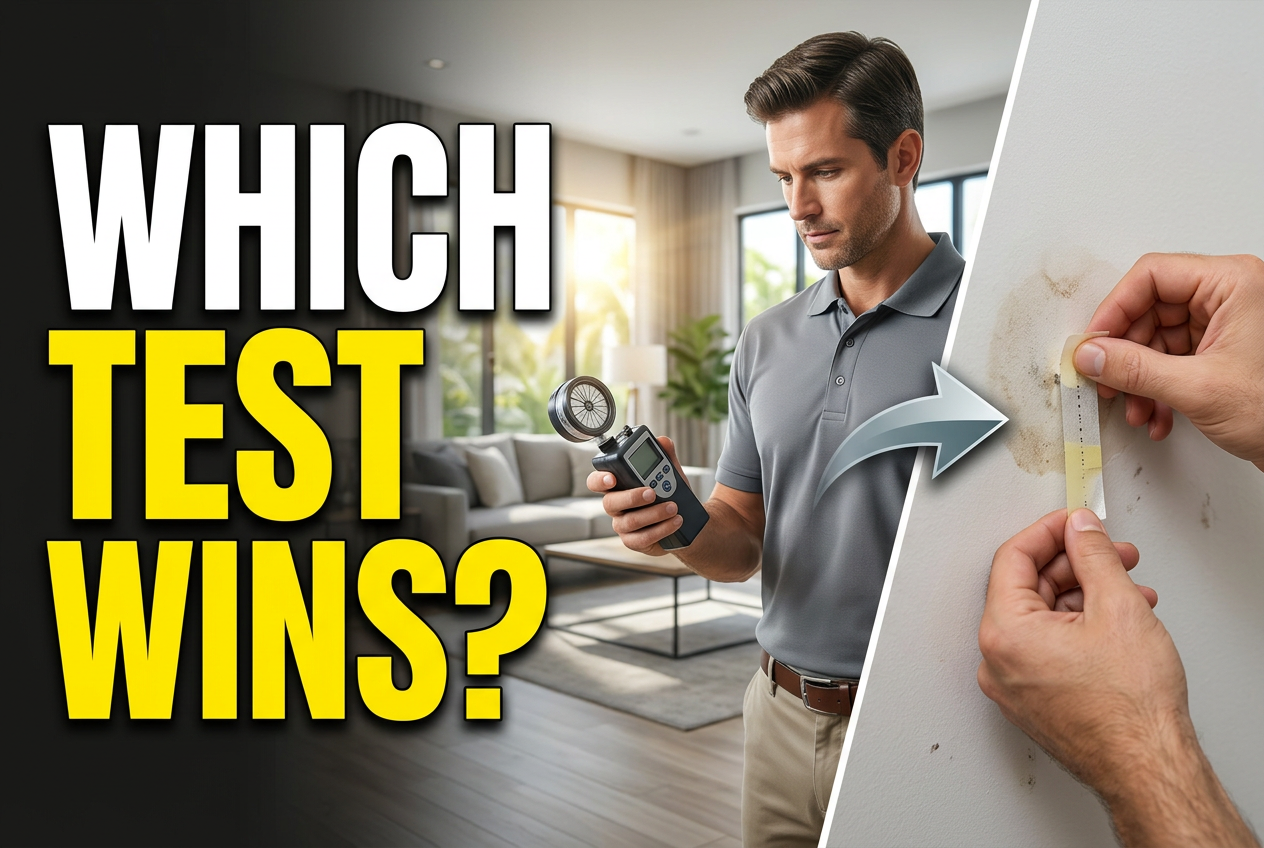
Air Sampling or Surface Sampling? A Fort Lauderdale Homeowner’s Guide to Choosing the Right Mold Testing Approach
If you are concerned about mold in your Fort Lauderdale home, you may be wondering whether air sampling or surface sampling is the better choice. The answer depends on what you are trying to find out and what an inspection reveals. Neither method is a universal test for every mold concern, and sampling results are most useful when interpreted alongside visible conditions, moisture findings, and the reason for testing.
Key Takeaways
- Air sampling measures airborne mold particles in a particular place and time; it does not, by itself, identify the source.
- Surface sampling examines material from a specific spot, such as a suspicious stain or growth.
- A visual and moisture-focused inspection can help determine whether sampling is appropriate and where it may be useful.
- A negative sample does not prove that a home is mold-free, and a positive result does not automatically establish a health risk.
What Air Sampling Can Tell You
Air sampling collects particles from the air, typically using a specialized collection device. A laboratory can examine the sample and report the types and quantities of mold particles found. Depending on the inspection plan, samples may be collected indoors and outdoors so the indoor findings can be considered in relation to the outdoor environment.
This method may be considered when there is a musty odor, a history of water intrusion, or a concern about an area where mold is suspected but not visible. It can also help compare conditions in different rooms. However, an air sample is a snapshot: airborne particles can vary over time with airflow, activity, HVAC operation, and other conditions. A result from one room or one visit does not necessarily represent the entire property.
Air sampling also cannot identify the precise location of a mold source on its own. A result should be considered with the inspector’s observations, moisture information, and the sampling conditions. Air tests are not medical tests and cannot determine whether a particular person’s symptoms are caused by mold.
What Surface Sampling Can Tell You
Surface sampling collects material from a specific area. Depending on the surface and the testing plan, an inspector may use a swab, tape lift, or another collection method. A laboratory may be able to determine whether the collected material contains mold and identify the types present.
This approach can be useful when there is a visible mark, discoloration, or suspected growth and the property owner wants the material examined. It may help distinguish suspected mold from other substances, but the sample only represents the location and material collected. A result from one spot cannot describe every surface in the home or measure what is in the air throughout the property.
Surface sampling may not be helpful when there is no defined area to investigate. It also cannot establish how far growth extends behind a wall or beneath a floor. A negative result from a small or poorly chosen sample does not rule out mold elsewhere.
How to Choose the Right Approach
Start with the question you need answered. If you see suspected growth on a particular surface, a targeted surface sample may be relevant. If the concern is about airborne particles in a room, air sampling may be considered. In some situations, an inspector may recommend both types; in others, sampling may not add useful information.
A professional inspection can help make that choice. The inspector can look for visible conditions, note odors, assess areas with a history of leaks or dampness, and use appropriate moisture-measurement tools. The location, number, and type of samples should be based on the property and the purpose of testing—not selected by a one-size-fits-all checklist.
Thermal imaging may be used as part of a mold and moisture inspection to identify temperature differences that could point to areas needing closer attention. It does not detect mold directly or prove that a wall is wet. Any potential concern should be evaluated with suitable follow-up methods.
Fort Lauderdale Conditions to Keep in Mind
In Fort Lauderdale and across South Florida, warm, humid weather can make moisture management an ongoing concern. Rain-related water intrusion, plumbing leaks, condensation, or air-conditioning issues can all warrant attention if they leave building materials damp. The local climate alone does not show that a home has mold, but it makes it sensible to investigate persistent moisture, water stains, recurring odors, or damp materials rather than relying on a test result without context.
Before arranging testing, consider whether there has been a recent leak, flooding, roof issue, or repeated condensation. Note where odors are strongest and whether marks change over time. Avoid disturbing suspected growth while deciding on next steps. If there is an active leak or another source of moisture, addressing that condition is important; sampling does not repair the cause.
When Professional Mold Testing May Make Sense
Professional inspection or testing may be worth considering when an odor persists without an obvious explanation, water damage has affected building materials, suspected growth is present, or you need an independent assessment for a property decision. Testing may also be useful when an inspection identifies a specific question that a laboratory sample could help address.
For home buyers, sellers, landlords, and property owners, it helps to be clear about the purpose of testing before it begins. Ask what each proposed sample is intended to answer, how the findings will be interpreted, and what the test cannot establish. Mold testing can document conditions at the time of sampling, but it cannot guarantee that hidden mold is absent or predict future moisture problems.
What Mold Testing Can—and Cannot—Establish
Testing can provide information about collected airborne particles or material from a sampled surface. When interpreted with inspection findings, it may help clarify a particular concern. But no single sample provides a complete inventory of a building’s mold conditions. Results can be influenced by sampling location, timing, building conditions, and collection method.
Laboratory findings should not be treated as a stand-alone diagnosis of health effects or as a substitute for addressing water intrusion. If you have health concerns, speak with a qualified health professional. If the inspection points to a moisture problem, the underlying condition may need to be evaluated and addressed by the appropriate professional.
Choosing an Independent Inspector in Fort Lauderdale
Ask whether the company explains its testing plan and provides a written report that connects the results to observed conditions. It is also reasonable to ask whether the inspector offers testing and inspection independently of remediation work. An independent assessment can give property owners information from a company that is not also selling remediation work. Business models vary, so focus on clear communication, appropriate methods, and an explanation of limitations.
MoldXperts provides independent mold inspection and testing in Broward, Miami-Dade, and Palm Beach counties. For Fort Lauderdale homeowners, an inspection can help determine whether air sampling, surface sampling, or another evaluation is appropriate for the concern at hand. MoldXperts does not provide mold remediation or mold removal.
Watch: MoldXperts on YouTube
Visit the MoldXperts YouTube channel for information about mold inspection and testing.
Get Guidance for Your Fort Lauderdale Property
If you are weighing air sampling against surface sampling, start with the specific concern and the conditions observed in your home. For independent mold inspection or testing in Fort Lauderdale and throughout Broward County, contact MoldXperts at (954) 464-4538 or visit moldxperts.com.


Leave a Reply