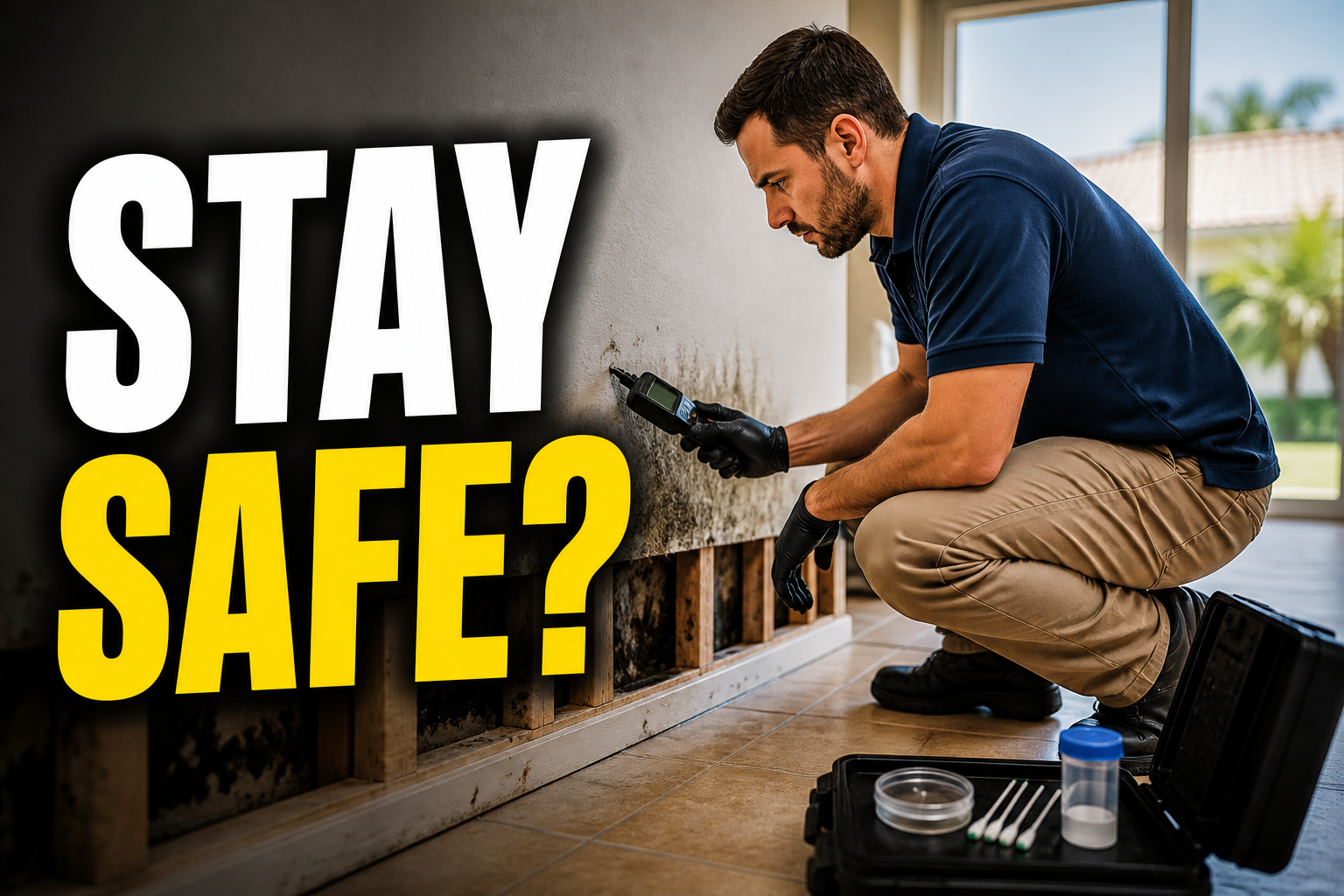
Follow-up mold testing after remediation in Scottsdale, AZ, may be useful, but it is not automatically necessary for every project. Whether it makes sense depends on the original problem, the remediation plan, the results of a visual and moisture assessment, and what information you need before the space is returned to normal use.
Testing can provide additional information about conditions at the time samples are collected, but it does not guarantee that a building is completely free of mold or that mold will not return. A careful post-remediation review should also consider whether the affected area appears clean and dry and whether the source of moisture has been addressed.
Consider follow-up mold testing when you need independent information after remediation, when concerns remain, or when a project plan calls for it. Testing is most useful alongside a visual inspection and moisture investigation—not as a substitute for checking whether the water source was corrected.
What follow-up mold testing can—and cannot—tell you
Mold testing may involve collecting air or surface samples and submitting them for analysis. The results can help answer a specific question about sampled locations and conditions during the test. They do not, by themselves, show every place mold may be present or identify the cause of a moisture problem.
There is no single result that serves as a universal pass-or-fail measure for every home. Interpretation depends on the sampling method, locations, conditions, and purpose of the assessment. A test result should be considered with the property’s history and what an inspector observes.
The U.S. Environmental Protection Agency explains that sampling is not always necessary when visible mold is present. Its guide to mold, moisture, and the home also emphasizes the importance of addressing moisture so mold does not continue to grow.
When to consider mold testing after remediation in Scottsdale, AZ
Follow-up testing may be worth discussing when it can help resolve a specific concern or document conditions after work. For example, you may want an assessment if the affected area was concealed, the original moisture source was difficult to identify, or questions remain about the completed work.
- The scope of work calls for it: Review any written remediation plan or agreement to see whether post-remediation testing or inspection was included.
- There are unresolved concerns: If a musty odor persists or you notice new staining, those observations do not prove mold is present, but they may warrant further evaluation.
- You need documentation: Owners, buyers, sellers, landlords, or real estate professionals may want a record of the assessment, depending on the situation and any agreements involved.
- The space is still showing signs of moisture: Damp materials, recurring water intrusion, or a leak that has not been resolved may call for a moisture investigation before relying on sampling alone.
- You want an additional assessment: A separate inspection or testing provider may be appropriate when you want an evaluation that is independent of the remediation work.
Testing may be less useful if there is no clear question to answer, the area has not been visually assessed, or an active moisture problem remains. In those cases, addressing the source and evaluating affected materials should come first. The EPA’s resource on how to tell if you have a mold problem can help explain why a single sign, such as staining or odor, is not conclusive on its own.
Inspection, moisture investigation, and testing are different steps
These terms describe related but distinct parts of an assessment. A visual inspection looks for observable conditions, such as visible growth, water staining, or affected materials. A moisture investigation looks for dampness or signs that water may still be entering or accumulating in the building.
Mold testing involves sampling and analysis. It can add information, but it does not replace a visual inspection or determine whether the moisture source has been corrected. A qualified provider can explain what a proposed test is intended to answer and what its limitations are.
Homeowners looking for local providers can browse mold testing services and review ALM Services’ directory listing for information about the company.
What to check before requesting a follow-up test
Start by reviewing the remediation documents and noting what areas were addressed. If you have questions about the work or remaining concerns, a clear record can make a follow-up discussion more useful.
- Confirm what rooms, materials, and areas were included in the remediation scope.
- Ask whether the source of water intrusion or moisture was identified and corrected.
- Note any visible changes, new staining, or persistent odors without disturbing suspected mold.
- Ask what type of inspection or sampling is proposed, which locations will be assessed, and what the results can establish.
- Keep reports, photographs, repair records, and any test results together for future reference.
A persistent odor or a stain is a reason to ask questions, not proof of active mold. Avoid opening walls or disturbing suspected growth just to investigate it yourself. If there is a continuing leak or dampness, arrange for the moisture issue to be assessed and corrected through appropriate qualified help.
If concerns remain after remediation
If a follow-up assessment identifies an unresolved moisture issue or mold growth, the next step is to understand the cause and the extent of the affected area. Mold remediation may be appropriate depending on the findings. The response should be based on the property’s conditions rather than on a test result alone.
Ask the provider to explain the findings in plain language, including any limitations. If remediation is recommended, clarify how the work relates to the moisture source and what conditions will be reviewed afterward. Avoid treating a negative sample as proof that every hidden area is clear, or a positive sample as a complete map of the problem.
Frequently Asked Questions
Is follow-up mold testing required after every remediation project?
No. It may be appropriate when a work plan calls for it, concerns remain, or documentation is useful. The need depends on the project and the questions the assessment is meant to answer.
Can a mold test prove the remediation was successful?
A test can provide information about sampled locations and conditions at a particular time, but it cannot guarantee that all mold has been removed or that it will not return. Consider results alongside a visual review and moisture findings.
Should I test if I still smell something musty in my Scottsdale home?
A persistent odor may justify further evaluation, but it does not confirm mold on its own. A visual inspection and moisture investigation can help determine whether additional testing is useful.
What if staining remains after the cleanup?
Staining alone does not establish that mold remains. Ask for the area and any affected materials to be evaluated, especially if the stain is changing or there are signs of ongoing moisture.
Need Mold Testing in Scottsdale?
ALM Services provides mold testing, mold inspection, and mold remediation for property owners with questions about conditions after cleanup. Contact the company to discuss your Scottsdale property and whether an inspection or testing may help answer your specific concern.
ALM Services
Call: 602-257-8000




Leave a Reply