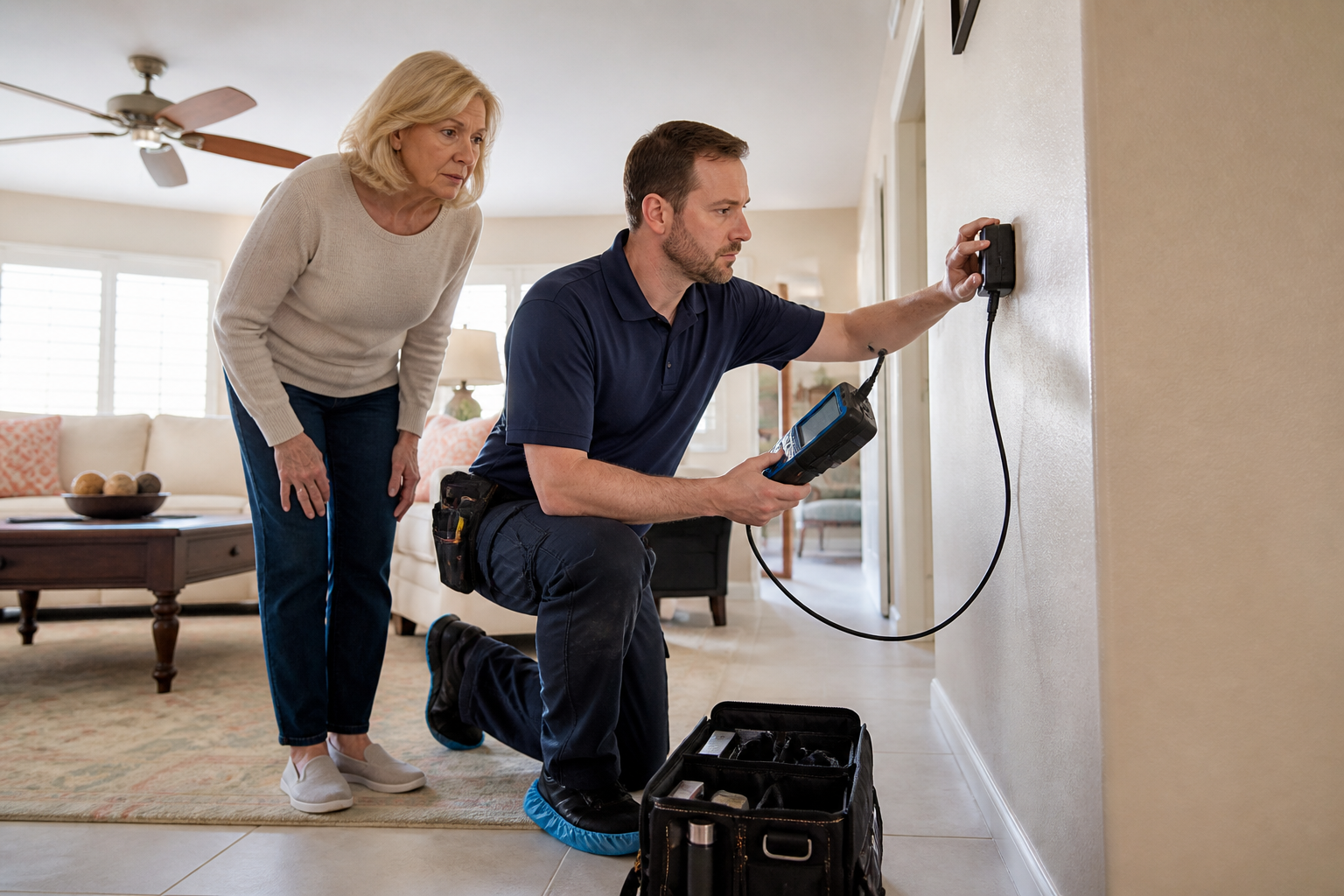
A musty smell in your Sun City home can be a reason to investigate, even if you don’t see mold. The odor may come from hidden moisture or mold growth, but it can also have other causes. A smell alone can’t confirm what’s happening behind a wall, under flooring, or inside a cabinet.
Start by looking for a moisture source and noting where and when the odor occurs. If it persists, returns after cleaning, or appears alongside water staining or damp materials, a mold inspection in Sun City, AZ may help identify areas that need closer attention. Testing may be appropriate in some situations, but an inspection can help determine what steps make sense.
Why a home can smell musty without visible mold
Mold can grow on materials that stay damp, including drywall, wood, carpet, and items stored in a closet. If growth is hidden behind a finished surface or beneath flooring, there may be no obvious patch to see. Moisture can also linger in less visible places, such as under a sink or around a plumbing connection.
Not every musty odor comes from mold. Damp fabrics, stored belongings, drains, or a poorly ventilated area may produce an unpleasant smell. The location and pattern can offer useful clues: an odor that is strongest near one wall, cabinet, or floor may point to an area worth checking, but it still doesn’t establish the cause.
The U.S. Environmental Protection Agency explains that mold growth is associated with moisture and recommends addressing water problems. Its guidance on why mold grows in homes can help homeowners understand the connection between damp materials and mold.
Clues to check before arranging an inspection
Notice whether the smell is confined to one room or seems to come from a specific surface or storage area. Check accessible areas for signs of water entry or ongoing dampness, without removing walls, flooring, or other finished materials.
- Water stains, bubbling paint, warped trim, or changes to flooring
- Condensation or dampness around windows, plumbing, or appliances
- Past leaks or water intrusion that may not have been fully dried
- An odor that returns after the area has been cleaned or aired out
- Closets, cabinets, or storage spaces that smell different from nearby areas
These signs can help guide an investigation, but none confirms mold by itself. If you find an active leak, arrange to have the source addressed. Avoid simply covering the smell with fragrance or paint; that may make the odor less noticeable without resolving an underlying moisture issue.
When a mold inspection may make sense
Consider arranging an inspection when the smell continues and you can’t identify its source, when there are signs of water damage, or when a musty odor returns after a leak or cleanup. An inspection may also be useful if you suspect moisture behind a finished surface but don’t want to open it without a clearer reason.
An inspection generally focuses on the conditions that could contribute to mold, such as moisture, water damage, or areas where an odor is concentrated. Depending on the situation, mold testing may be considered to gather additional information. Testing is not automatically necessary for every odor, and results should be interpreted in the context of the property and its moisture history.
For more background on the difference between signs and confirmation, see the EPA’s guidance on how to tell if you have a mold problem. You can also explore the mold testing service category for additional information and providers.
What to do while you’re investigating
Keep your observations simple and specific. Write down when the odor is strongest, whether it changes after rain or household water use, and whether it is limited to one area. If you see staining or a change in a material, take a photo and note whether the area feels damp.
Don’t disturb a suspected hidden growth by cutting into a wall or pulling up flooring just to look. If you locate an active plumbing leak or another source of water, contact an appropriate service provider to address it. Drying affected materials and resolving the source of moisture may help prevent further problems, but materials that remain damp or damaged may need additional assessment.
If an inspection or testing identifies a concern, the next steps depend on what was found and the extent of the affected area. ALM Services lists mold inspection, mold testing, and mold remediation among its services. You can view the ALM Services directory listing for more information about the company.
Frequently Asked Questions
Does a musty smell always mean there is mold?
No. A musty odor can be associated with mold or damp materials, but it can have other sources. Look for moisture clues and consider further investigation if the smell persists or you can’t identify its cause.
Can mold be present if I can’t see it?
It’s possible for mold growth to be hidden behind or beneath finished materials, but an odor alone can’t confirm that. An inspection may help identify areas that warrant closer attention.
Should I get mold testing right away?
Not necessarily. The appropriate next step depends on the odor, moisture history, and any visible signs of water damage. An inspection can help determine whether testing may be useful.
What should I tell an inspector about the odor?
Describe where you notice it, when it started, whether it comes and goes, and any past leaks or water damage you know about. Photos of staining or material changes can also help explain your concerns.
Need Mold Testing in Sun City?
If you’re concerned about moisture or possible mold in your property, ALM Services can help evaluate the situation and determine appropriate next steps.
ALM Services
Call: 602-257-8000





Leave a Reply