
Arriving at a vacation home in Rehoboth Beach after weeks or months away and noticing a musty odor can be unsettling. The smell may come from stale indoor air, a plumbing or HVAC issue, damp materials, or another source. Odor alone does not confirm mold or identify a specific indoor air problem, so it helps to look for clues before deciding whether testing is appropriate.
Quick Takeaway: Air out the home and look for dampness, leaks, or odors that return. If the musty smell persists or you find signs of moisture, a professional inspection can help determine whether mold testing or other next steps make sense.
Why a vacation home may smell musty after being closed
When a home has been closed up, indoor air may feel stale. But a persistent musty smell can also be a reason to check for moisture. Water may enter through a leak, collect around plumbing or an appliance, or remain in materials after a spill or prior water event. Odors can also come from floor drains, sink traps, stored belongings, or HVAC components.
Try to notice where and when the smell is strongest. An odor near a bathroom, kitchen, laundry area, window, or air-conditioning unit may help narrow down what to inspect. A smell that fades after airing out the home is different from one that returns quickly or is strongest in a particular room or enclosed area.
Neither a musty odor nor a visible spot proves that mold is present. Likewise, not seeing mold does not rule out a hidden moisture problem. Treat the smell as a prompt to investigate, rather than as a diagnosis.
What to check before arranging testing
If it is safe to do so, ventilate the home and take a careful look around. Avoid covering the odor with air fresheners before checking for possible sources; masking it can make the problem harder to trace.
- Look for signs of moisture. Check accessible areas around sinks, toilets, appliances, windows, and ceilings for dampness, water staining, peeling finishes, or visible growth.
- Notice whether the odor is localized. A smell concentrated in one room, closet, cabinet, or near an HVAC component may point to an area that deserves closer attention.
- Check for plumbing or drain odors. If a smell seems to come from a sink, floor drain, or rarely used fixture, consider whether it may be related to plumbing rather than indoor mold.
- Pay attention to the HVAC system. If the odor appears when heating or cooling starts, note that pattern. Do not open equipment or disturb damp or suspect materials; arrange qualified help if the source is unclear.
- Consider recent events. Think about past leaks, roof or window repairs, spills, or water entering the home. A known moisture event can help guide an inspection.
For general background, the U.S. Environmental Protection Agency’s mold information explains why moisture control matters and why visible signs and building conditions are important considerations.
What indoor air quality testing can—and cannot—tell you
“Indoor air quality testing” can refer to different kinds of measurements, depending on the concern. A test aimed at mold is not the same as testing for every possible indoor pollutant. Before arranging testing, clarify what question you want answered: Are you concerned about a particular room, a known water problem, or a musty odor that has no obvious source?
Mold testing may involve collecting air or surface samples for laboratory analysis. Results provide information about the samples taken at that time and place; they do not automatically identify the source of an odor, reveal every hidden condition, or establish that a home is safe or unsafe. Sampling is most useful when there is a clear purpose and the results can be considered alongside the home’s condition.
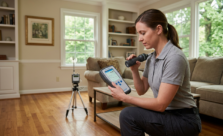
A visual inspection and moisture investigation are different from testing. An inspection looks for visible concerns and conditions that may support moisture problems. A moisture investigation focuses on locating dampness or a possible water source. Testing analyzes collected samples. Depending on what is found, a professional may recommend an inspection first, testing, or no sampling at all.
The EPA’s overview of indoor air quality is also a useful reminder that indoor air concerns can have multiple sources. If you suspect a fuel-burning appliance or another immediate safety issue, follow appropriate safety guidance and contact the relevant qualified professional rather than relying on a mold test.
When professional inspection or testing may make sense
Consider asking a qualified professional about an inspection when the odor persists after airing out the home, returns repeatedly, or is accompanied by visible staining, damp materials, or a history of water intrusion. Testing may be worth discussing when there is a specific concern that sampling could help evaluate, especially if the source is not apparent after a visual assessment.
Testing is not automatically necessary just because a home smells musty. If an obvious plumbing leak or other moisture source is found, addressing that issue may be the first priority. If the source is unclear, a professional can help determine what to inspect and whether mold sampling would add useful information.
MD Mold Testing offers mold testing and mold inspection. To learn more about the company, visit its BestMoldTestingUSA directory listing or contact MD Mold Testing directly. Describe when the odor occurs, where it is strongest, and any moisture history so the conversation can focus on your specific concern.
If you are buying a vacation home
A musty odor during a property tour is a reason to ask questions, not a conclusion about the home. Ask whether there has been a leak, whether repairs were made, and whether the odor changes when the HVAC system is operating. If you are considering a purchase, a Walk and Talk Home Inspection can help you look more carefully at accessible areas and ask informed questions while touring the property. It is not a substitute for a traditional full home inspection and cannot guarantee that hidden problems will be found.
Frequently Asked Questions
Does a musty odor mean there is mold in the home?
No. Odor alone cannot confirm mold or locate its source. Check for moisture and other clues, and consider a professional inspection if the smell persists or returns.
Should I request air sampling as soon as I notice the smell?
Not necessarily. First consider whether there is an obvious source, such as a plumbing odor or a damp area. An inspection can help determine whether sampling would answer a useful question.
Can a mold test identify the cause of the odor?
A test analyzes the samples collected, but it does not necessarily identify the odor’s source. Results should be considered alongside a visual inspection and information about moisture conditions.
What information should I share when asking about an inspection?
Note when the odor began, where it is strongest, whether it changes after ventilation or HVAC use, and whether you know of past leaks or water events. These details can help guide the discussion.
Concerned About a Musty Odor in Your Rehoboth Beach Home?
MD Mold Testing provides mold testing and mold inspection to help property owners consider appropriate next steps when an odor or moisture concern needs a closer look.
MD Mold Testing
Call: (301) 717-1454




Leave a Reply