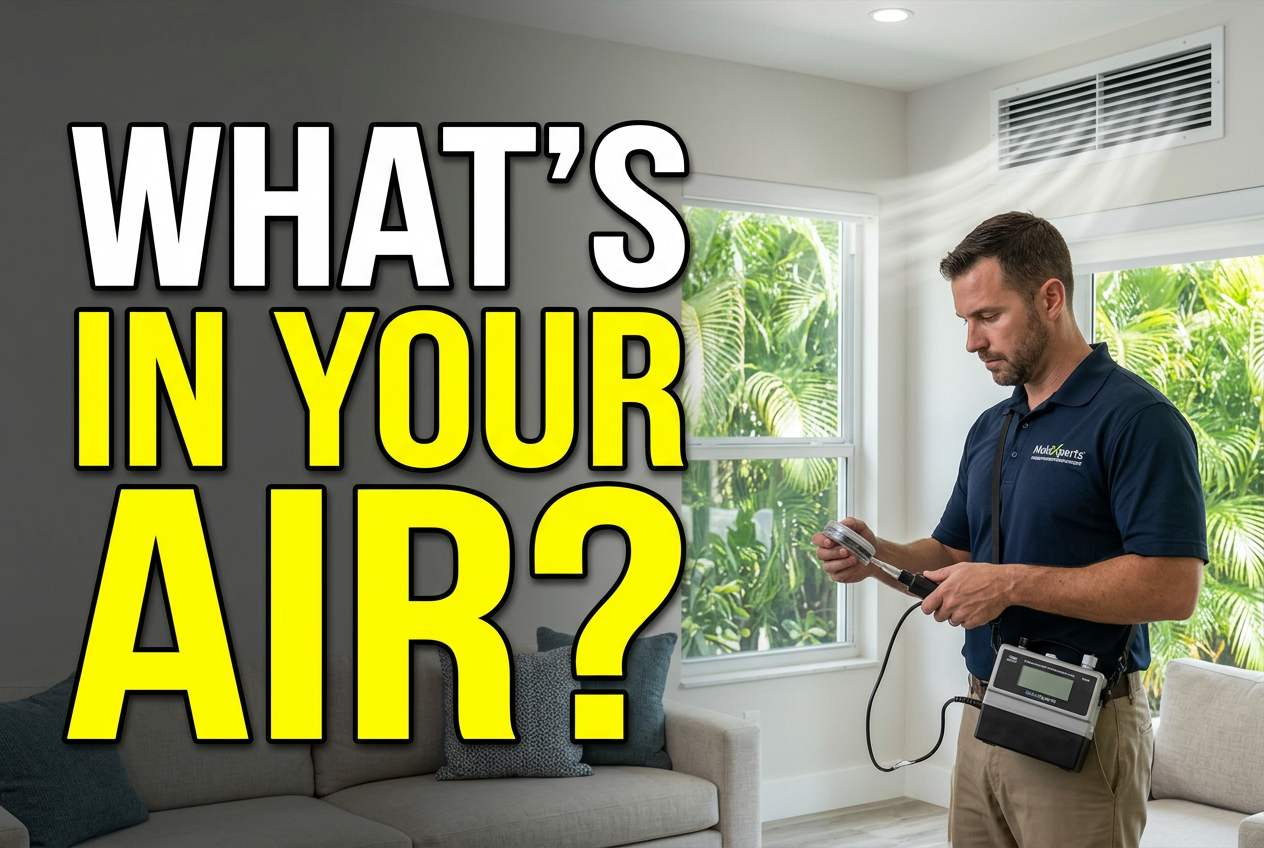
Musty Odor Only When the AC Runs in a Fort Lauderdale Home? When to Consider Indoor Air Quality Testing
If a musty smell appears only when the air conditioning runs, it can be unsettling—especially in Fort Lauderdale, where hot, humid weather keeps many cooling systems in use for much of the year. The timing is useful information: the odor may be coming from a part of the HVAC system, from moisture elsewhere that moving air carries through the home, or from a combination of conditions.
A musty odor does not, by itself, prove that mold is present or identify where a problem may be. Paying attention to when and where the smell occurs can help you decide whether simple observations, an HVAC evaluation, or professional inspection and indoor air quality testing makes sense.
Key Takeaways
- A smell that begins with the AC may be associated with moisture or buildup in or near the cooling system, but it is not proof of mold.
- Note when the odor starts, which rooms are affected, and whether it changes after rain or when the system has been off.
- Check accessible filters and look for visible signs of moisture, but avoid opening equipment or disturbing suspected mold.
- Professional inspection can help investigate moisture sources; air testing may provide additional information when used to answer a specific question.
- Testing results describe conditions at the time and place of sampling and cannot, by themselves, guarantee that every hidden area is clear.
Why might the odor show up when the air conditioner runs?
Air conditioning removes heat and moisture from indoor air. In a humid South Florida home, that process produces condensate that should drain away through the system’s drain pan and line. If water is not draining as intended, or if a component stays damp, an odor may become noticeable when air begins moving.
Potential areas an HVAC professional may evaluate include the condensate drain and pan, the evaporator coil, the air handler, and nearby insulation or building materials. Dust or other buildup can also contribute to unpleasant smells. Ductwork may be relevant if there is evidence of moisture, contamination, or an odor that seems to travel through particular vents. These are possibilities to investigate—not a diagnosis based on smell alone.
The source may also be outside the equipment. A leak, damp closet, wet building material, or another localized moisture issue can release an odor that the circulating air carries into other rooms. In some homes, the odor is most noticeable at startup or after the system has been off for a while. Tracking that pattern can help a qualified professional narrow the investigation.
What signs are worth noting?
Before arranging an evaluation, observe the conditions without taking apart the system. Write down whether the smell begins immediately or after the AC has run for a while, whether it is strongest near one vent or room, and whether it occurs every time the system runs. Also note any connection to heavy rain, recent plumbing work, a change of filter, or a period when the home was closed up.
Look for visible water or dampness around accessible parts of the air handler, ceiling stains, peeling paint, swollen trim, or recurring condensation. Keep in mind that visible moisture can have multiple causes, and a lack of visible damage does not rule out a concealed problem. If you see water near electrical equipment, do not touch the equipment; contact an appropriate HVAC professional.
Replace a filter if it is due and you can do so safely according to the manufacturer’s instructions. Avoid spraying cleaners into vents, using fragrances to mask the odor, or disturbing suspected mold. These steps can obscure useful clues or spread particles, and they do not address a moisture source.
Should you call an HVAC technician or arrange mold testing?
If the odor seems to come directly from the air handler or appears only when cooling starts, an HVAC technician can assess the system’s operation, drainage, and service needs. That evaluation is different from an independent mold inspection. Depending on what is found, it may be reasonable to consult both types of professionals, with each addressing their area of expertise.
Consider a professional mold or moisture inspection if the smell persists, returns after HVAC service, affects multiple rooms, or occurs alongside signs of water damage or a history of leaks. An independent inspector can evaluate accessible areas for moisture conditions and visible concerns, discuss the history and odor pattern, and help identify locations that may warrant further attention. Thermal imaging may help identify temperature patterns that merit closer evaluation, but it does not detect mold and usually needs to be interpreted alongside other observations.
Indoor air quality testing in Fort Lauderdale, FL, may be worth discussing when there is a clear question that sampling could help address—for example, when an odor continues but its source is unclear, or when a property owner needs information about airborne particles under specific conditions. A qualified professional should explain what the proposed samples are intended to measure, where and when they will be collected, and how the results will be interpreted.
What can indoor air quality testing establish—and what can’t it?
Air sampling can provide information about the airborne particles collected in specific locations during the sampling period. Depending on the investigation, a professional may compare indoor samples with an outdoor reference or use other sampling approaches. The appropriate method depends on the question being asked and the conditions at the property.
A test is not a complete map of a home. Results may vary with location, recent activity, ventilation, weather, and whether the HVAC system is operating. A sample may not identify a hidden moisture source, and a result from one room cannot necessarily describe every room or concealed space. Testing alone also cannot prove that a particular odor is caused by mold or establish whether a building is safe for every person.
For these reasons, sampling is most useful when paired with a careful history and inspection. A professional should discuss limitations and avoid treating a single result as a substitute for finding and addressing moisture. If testing is recommended, ask what decision the results may help you make and what follow-up may be appropriate.
Choosing a next step in Fort Lauderdale
Start with the pattern: record when the odor occurs, check the filter if appropriate, and look for accessible signs of dampness without opening the HVAC system. If the issue points to equipment operation or drainage, contact an HVAC professional. If there are persistent odors, water-damage clues, or unanswered questions about possible mold or indoor air conditions, an independent inspection may help clarify what should be evaluated next.
MoldXperts provides independent mold inspection, mold testing, indoor air quality testing, and thermal imaging as part of mold and moisture inspections in Broward, Miami-Dade, and Palm Beach counties. The company does not provide mold remediation or mold removal. An independent assessment can help property owners obtain inspection and testing information from a company that is not also selling remediation work.
Watch: MoldXperts on YouTube
Visit the official MoldXperts YouTube channel for educational videos and information.
Request an independent assessment
If a musty odor returns whenever your Fort Lauderdale home’s AC runs, MoldXperts can discuss whether a mold inspection or indoor air quality testing may help answer your questions. Call (954) 464-4538 or visit MoldXperts.com to ask about service in Broward, Miami-Dade, or Palm Beach County.



Leave a Reply