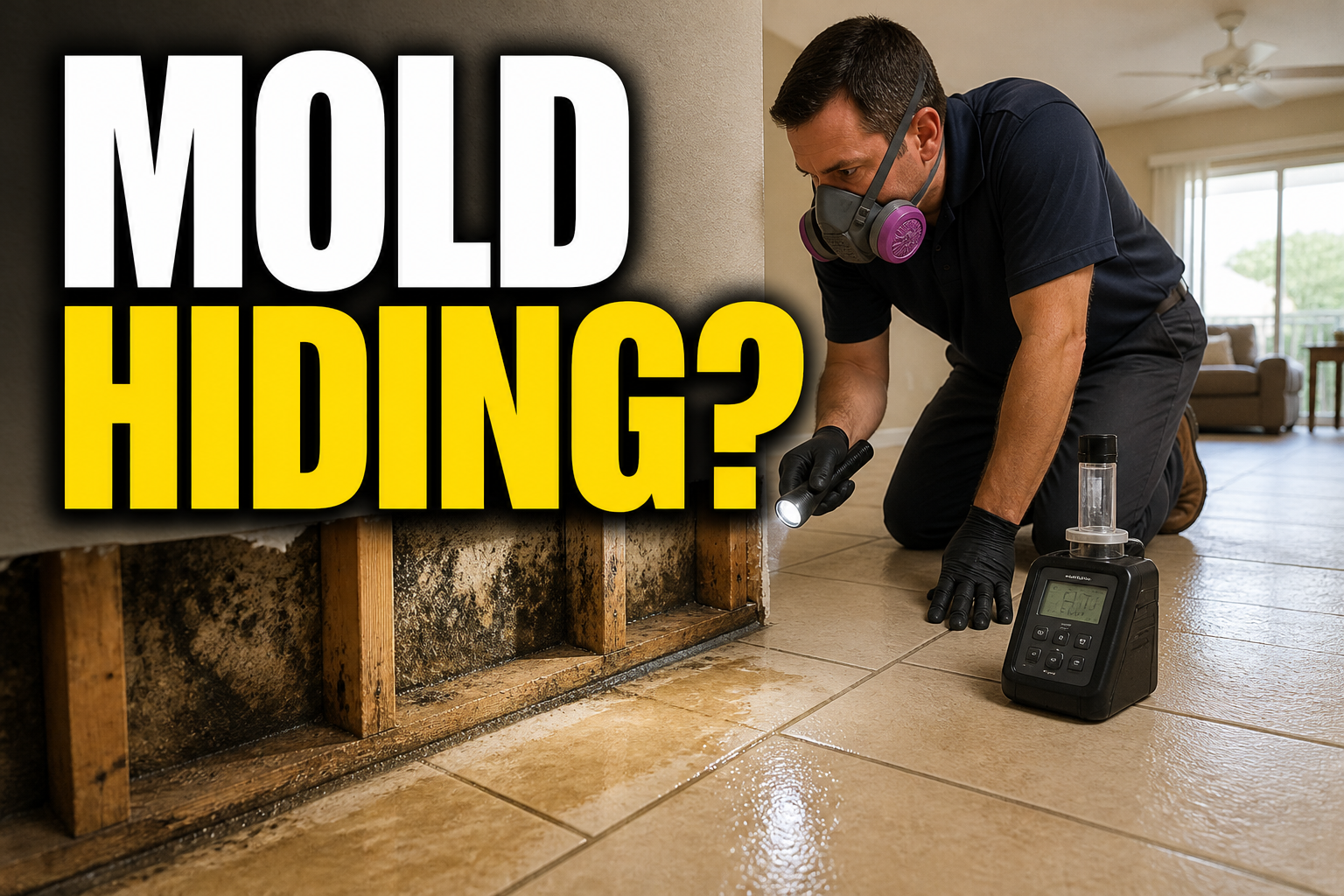
Mold testing after a sewage backup in Sun City, AZ, may be useful when affected areas stayed wet, moisture may remain hidden, or there is uncertainty about mold after cleanup. It is not usually the first step: sewage contains contaminants beyond mold, so arrange appropriate cleanup by qualified professionals and address the water source before deciding whether testing is warranted.
A sewage backup does not automatically mean mold is present, and odor or staining alone cannot confirm it. Once contaminated materials have been safely addressed, a mold inspection and moisture investigation can help determine whether testing would answer a specific remaining question.
Why mold may become a concern after a sewage backup
Mold can grow when building materials remain damp. A backup may wet flooring, baseboards, drywall, cabinets, or materials beneath finished surfaces. The extent of moisture is not always obvious from what can be seen, particularly if water reached concealed spaces.
However, sewage cleanup and mold assessment are different concerns. Sewage can carry biological and other contaminants that require careful handling. Do not disturb suspected contaminated materials or rely on mold testing to determine whether an area is safe from sewage-related hazards. A qualified restoration professional can advise on appropriate cleanup and material removal.
After cleanup, the chance of mold growth depends in part on how much material became wet, how long it remained damp, and whether moisture was thoroughly removed. Visible discoloration or a musty smell can be reasons to investigate, but neither proves that mold is present or identifies its type.
When mold testing after a sewage backup may be useful
Testing is most useful when it can help answer a defined question. For example, a homeowner may want information about a room after cleanup when there is reason to suspect hidden growth, or when an inspection identifies a concern that cannot be resolved by visual examination and moisture checks alone.
- Moisture may remain in concealed areas: Water may have reached behind a wall, beneath flooring, or inside a cabinet. An inspection can help identify areas that need closer attention.
- There are signs that warrant further investigation: A persistent musty odor, recurring dampness, or visible growth may prompt an assessment. These signs do not confirm mold by themselves.
- The extent of the problem is uncertain after cleanup: Testing may help assess a specific concern when the inspection findings and the homeowner’s question support sampling.
- Documentation is needed: A property owner, buyer, seller, or real estate professional may seek an independent assessment to better understand conditions after the incident.
Testing may not add useful information if there is no specific question, no evidence of a continuing moisture issue, or no reason to suspect mold. A sample is a snapshot of conditions at a particular place and time; it cannot establish that every part of a home is mold-free. The EPA’s guidance on identifying a mold problem also explains why visible assessment and moisture control matter.
Inspection, moisture investigation, and testing are not the same
A mold inspection generally involves examining accessible areas for visible conditions and signs that may point to a moisture problem. A moisture investigation looks for damp materials or areas that may need further evaluation. These steps can help identify where a concern exists, but they do not automatically establish that mold is present.
Mold testing involves collecting samples for analysis. Depending on the question, an assessor may consider samples from air or surfaces, but sampling methods and locations should be selected for a reason. Results need context: where the sample was taken, what was observed during inspection, and whether moisture was found can all affect how the findings are interpreted.
For an explanation of what mold testing services may involve, homeowners can review the mold testing provider category. The EPA’s guide to mold, moisture, and the home discusses the importance of correcting moisture problems.
What to do before deciding on testing
Start by making sure the sewage source has been addressed and that cleanup is being handled appropriately. If you are unsure whether an area or material remains contaminated, avoid disturbing it and ask a qualified restoration professional for guidance. Mold testing does not replace sewage cleanup or determine whether contaminated materials were handled safely.
Once the cleanup process is complete, keep a record of the affected areas and any signs that continue. Useful notes may include:
- Where the backup reached and which rooms or materials were affected.
- When the backup occurred and when cleanup took place, if known.
- Any visible staining, recurring dampness, or persistent odor after cleanup.
- Areas that were inaccessible or where moisture may have remained concealed.
Do not assume that a dry-looking surface means the materials beneath it are dry. If there is continuing moisture, identify and address its source before focusing on mold sampling. Avoid unnecessary demolition or disturbance of suspected growth; an inspection can help determine whether further evaluation is appropriate.
What happens if an assessment finds mold?
If an inspection or test indicates a mold concern, the next step is to understand its extent and address the underlying moisture problem. The appropriate response depends on the affected materials and conditions; not every finding calls for extensive removal. Where mold remediation is appropriate, it should be planned around the specific situation and coordinated with correction of the moisture source.
ALM Services offers mold testing, mold inspection, and mold remediation. Sun City property owners can review the ALM Services directory listing for provider information. For general information about the company, visit the ALM Services website.
Frequently Asked Questions
Should I test for mold immediately after a sewage backup?
Not necessarily. First address the sewage contamination and cleanup with qualified help. Mold inspection or testing may be considered afterward if moisture, hidden growth, or another specific concern remains.
Does a musty odor mean mold is present?
No. An odor may be a reason to investigate, but it does not confirm mold or reveal its type. Consider the odor alongside moisture findings and an inspection.
Can mold testing confirm that my whole home is mold-free?
No single sample can establish conditions throughout an entire home. Testing reflects the sampled locations and conditions at the time, so results should be interpreted with inspection findings.
Do I need mold testing if the affected area is dry?
Not always. If cleanup is complete and there are no remaining signs or specific concerns, testing may not be necessary. If you suspect concealed moisture or growth, an inspection can help determine whether sampling would be useful.
Need Mold Testing in Sun City?
ALM Services can help Sun City property owners assess whether mold testing or a mold inspection may be appropriate after a sewage backup and cleanup.
ALM Services
Call: 602-257-8000




Leave a Reply