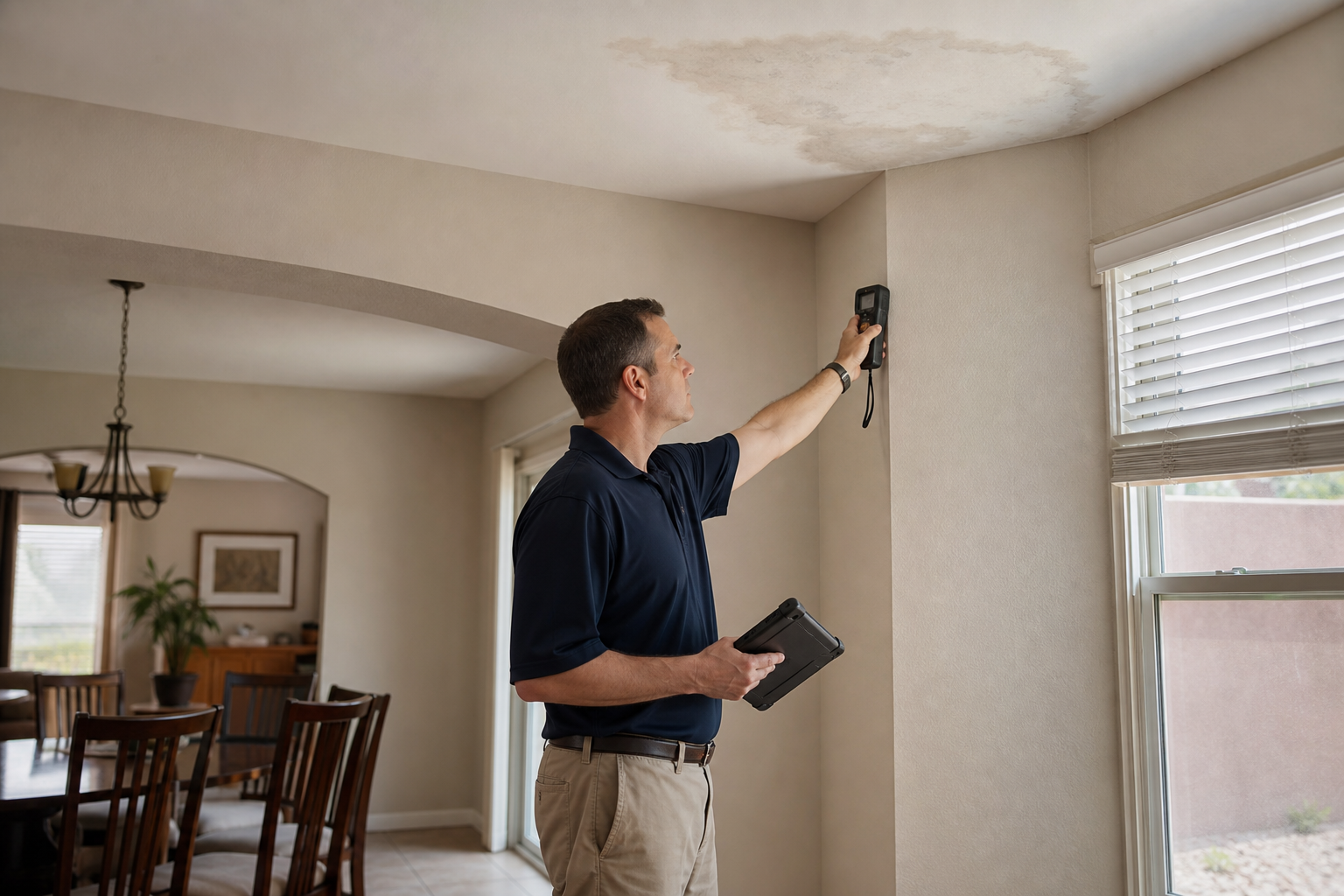
A roof leak does not automatically mean mold is growing, but lingering moisture can create conditions for it. In Mesa, a leak may seem to dry quickly once the visible water is gone, while damp insulation, roof decking, or drywall remains hidden. The most useful warning signs are persistent moisture, spreading stains, musty odors, or recurring damage after the leak has been repaired.
Mold testing in Mesa may help clarify whether mold is present when there are signs of hidden growth or uncertainty about the extent of water damage. Testing is not necessary in every situation, and results should be considered alongside the leak history, a mold inspection, and an assessment of moisture conditions.
Why a roof leak can lead to hidden mold
When rainwater enters through a damaged roof, it can travel along framing or collect inside ceilings and walls. Porous materials such as drywall, insulation, and wood can hold moisture even after the surface looks dry. If those materials stay damp, mold may develop. The timing and likelihood depend on factors such as how much water entered, how long materials remained wet, and whether the affected area was dried properly.
In Mesa’s warm, dry climate, exposed surfaces may dry faster than enclosed spaces. That can make a ceiling look better while moisture remains in a roof cavity or behind a wall. A dry-looking surface alone does not confirm that concealed materials are dry.
Signs you may need mold testing after a roof leak
1. A musty odor that lingers or returns
A persistent earthy or musty smell near a former leak can be a reason to investigate, particularly if it becomes stronger after the room has been closed up. Odor alone cannot confirm mold, but it may point to damp materials or a concealed source that deserves attention.
2. Water stains that grow, darken, or reappear
Yellow, brown, or gray ceiling marks can indicate past or continuing water damage. A stain does not prove mold is present. However, a mark that expands, returns after repainting, or appears alongside other moisture signs may warrant a closer look.
3. Peeling paint, bubbling, or soft drywall
Moisture can weaken finishes and cause paint or drywall to blister, peel, or feel soft. If the affected area is near the roof leak, or damage continues after the roof has been repaired, hidden moisture may remain. Avoid pressing, cutting, or pulling apart damaged materials just to check what is behind them.
4. Visible spotting near the leak area
Discolored spots on ceilings, walls, trim, or other materials may be mold, but appearance alone cannot reliably identify what the substance is. If growth is visible, avoid disturbing it. A qualified professional can assess the area and help determine whether mold testing would add useful information.
5. A leak that went unnoticed or affected a large area
A small leak addressed promptly may not result in mold. Concern is greater when water entered repeatedly, the leak lasted for an unknown period, or insulation and other enclosed materials became wet. In these situations, an inspection can help determine whether there are signs of moisture or damage beyond the visible stain.
6. Water damage that keeps coming back
If the same area develops a new odor, stain, or finish problem after repairs, the roof leak may not be fully resolved, or affected materials may not have dried adequately. Confirming that the source of water has been addressed is an important step before focusing only on possible mold.
What a mold inspection and testing can involve
A mold inspection generally begins with questions about the leak: when it happened, where water appeared, how long it may have continued, and what repairs or drying have taken place. A professional may visually assess accessible areas and use moisture-measuring tools to check building materials. The purpose is to look for conditions that could support mold and identify areas that may need further evaluation.
Mold testing may involve collecting air or surface samples when sampling is appropriate to the situation. The type and location of any samples depend on the concerns being investigated. Testing can provide information about sampled areas at a particular time, but it is not a guarantee that every hidden space in a building is free of mold. Results make the most sense when interpreted with the inspection findings and the water-damage history.
Testing is not always the first or only step. If there is obvious mold growth and a clear moisture source, addressing the water problem and evaluating the affected materials may be more useful than collecting samples alone. A professional can explain whether testing is likely to answer your specific question.
What to do after discovering a roof leak
- Address the source. Arrange to have the roof leak repaired so additional water does not enter. Mold assessment cannot substitute for stopping the leak.
- Document what you see. Take photos of stains and note when the leak occurred, whether it returned, and which rooms or materials were affected.
- Keep the area undisturbed. Do not scrape, sand, or cut into material that may have mold. Disturbing it can spread dust and debris.
- Watch for changes. Note recurring odors, new staining, or signs that finishes are deteriorating. Do not rely on paint or a surface covering to resolve an underlying moisture problem.
- Seek an evaluation when uncertainty remains. Consider a mold inspection or mold testing if signs persist, affected materials may be concealed, or you need more information before deciding on next steps.
If mold is confirmed or affected materials need attention, mold remediation may be considered based on the extent and location of the problem. The appropriate response varies by property, so avoid assuming that every roof leak calls for extensive remediation.
When to contact a local professional
Consider professional evaluation when the leak affected a ceiling or wall cavity, the area stayed wet for an extended or unknown period, musty odors persist, or visible damage returns after repairs. Buyers, sellers, landlords, and business owners may also want an independent understanding of a leak’s possible impact before making decisions about a property.
For people looking for mold testing Mesa AZ property owners can discuss, ALM Services offers mold testing, mold inspection, and mold remediation. Contact the company to talk about signs of possible mold or moisture after a roof leak and whether an evaluation may be appropriate for your Mesa property.
Frequently Asked Questions
How soon after a roof leak should I consider mold testing?
There is no single timeline that applies to every leak. The amount of water, time materials stayed damp, and drying all matter. If odors, staining, or other concerns persist after the leak is repaired, ask a professional whether an inspection or testing makes sense.
Can a ceiling stain tell me whether mold is present?
No. A stain can show that water affected the surface, but it cannot confirm whether mold is present behind it or elsewhere. An inspection can assess the area and help determine whether testing would be useful.
Does every roof leak lead to mold?
No. Some leaks are repaired and affected materials dry before mold develops. Risk depends on the amount of water, how long materials remain damp, and other property conditions.
Should I test if I can already see possible mold?
Not necessarily. Visible growth and its moisture source may need evaluation whether or not samples are collected. A professional can explain what testing could clarify and how results would inform next steps.
If you are concerned about possible mold or lingering moisture after a roof leak in Mesa, contact ALM Services at 602-257-8000 to discuss mold testing, inspection, or remediation.





Leave a Reply