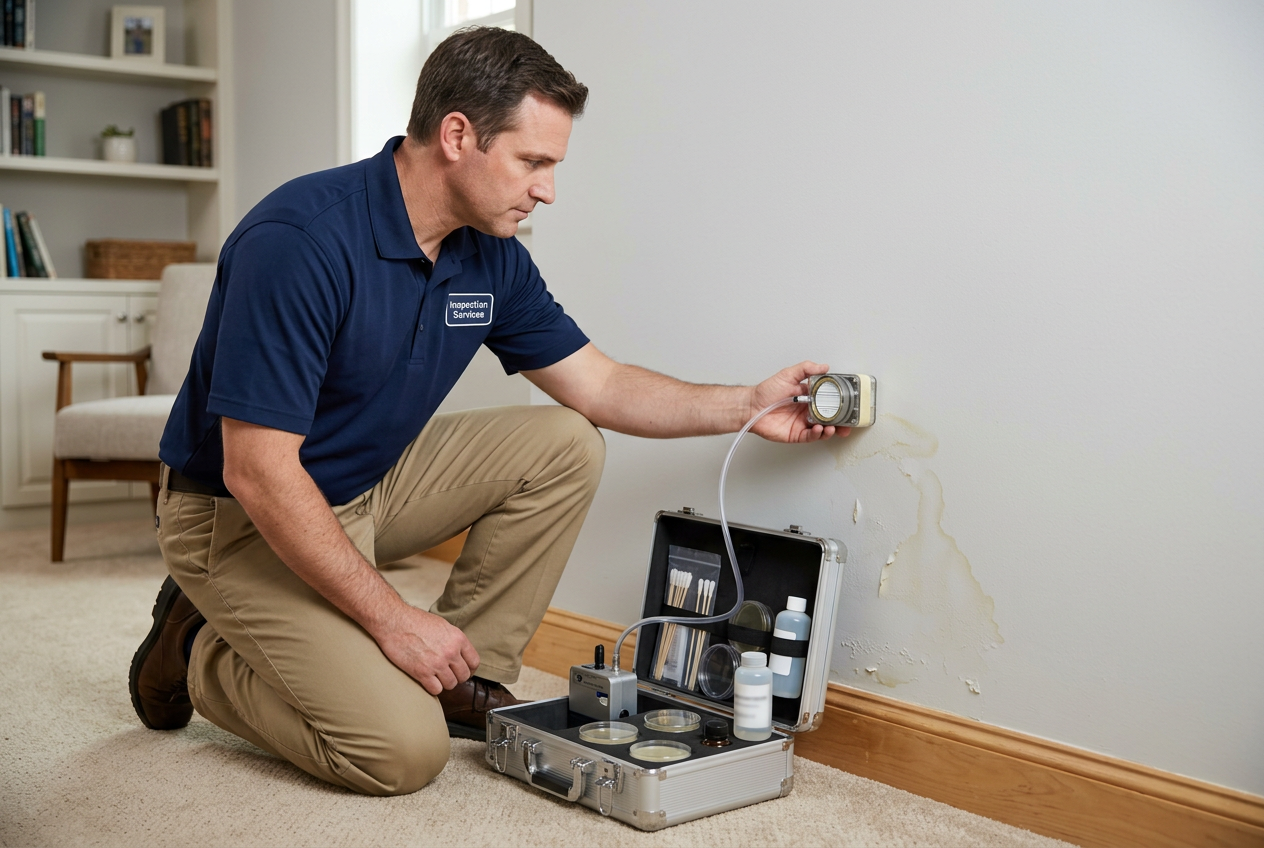
A past leak does not automatically mean a home has a mold problem. But if you are preparing to sell in Chevy Chase, unanswered questions about a repaired roof, plumbing issue, or other water event may make it useful to look more closely before listing. Mold testing before selling a home in Chevy Chase, MD, may help clarify a specific concern when there are signs of lingering moisture, visible growth, or a persistent musty odor.
What a past leak can—and cannot—tell you
The location and extent of a leak matter, but so do the steps taken afterward. A small plumbing leak that was promptly repaired and thoroughly dried may leave no ongoing issue. Water that reached concealed areas or remained in building materials longer may warrant a closer look, especially if you do not know how fully the affected area was dried.
Before listing, gather any records you have about the event: when it happened, what caused it, what repairs were made, and whether materials were dried or replaced. Receipts, contractor notes, photos, or insurance documentation may help you answer buyer questions factually. If you are uncertain about disclosure obligations, ask a qualified Maryland real estate professional or attorney; this article is not legal advice.
Also consider whether the original source of water was addressed. Testing cannot repair a leak, dry a wall, or prevent future moisture. If the cause may still be active, have the relevant plumbing, roofing, or other building issue evaluated and corrected by an appropriate professional.
Signs that may justify a closer look
Some conditions can suggest that water damage or excess moisture deserves attention before a home goes on the market. Look for:
- Water stains, bubbling paint, peeling finishes, or warped materials near the former leak
- A musty odor that persists in a room, closet, basement, or other area
- Visible growth or discoloration on surfaces
- Materials that feel damp or areas where condensation repeatedly appears
- Evidence of a leak returning after a repair
These signs do not, by themselves, confirm that mold is present. A stain may be left by an old, dried leak, and odor alone cannot identify its source. Likewise, the absence of visible signs does not establish what may be present inside a wall or another concealed space. The next step depends on the home’s specific conditions.
Inspection, moisture investigation, and mold testing are different
Visual inspection
A visual inspection looks at accessible areas for visible signs of water damage, mold-like growth, and other conditions that may merit further investigation. It can help put a past leak in context, but it cannot see through finished walls or guarantee that hidden conditions are absent.
Moisture investigation
A moisture investigation focuses on whether materials or areas show signs of current or residual moisture. It can help determine whether a suspected leak area needs additional attention. The scope and methods depend on the property and the concern; not every old water stain calls for mold sampling.
Mold testing
Mold testing may involve collecting samples for analysis when there is a defined question that testing can help address. For example, it may be considered if there is a persistent concern after a visual assessment, or if a buyer, seller, or other involved party needs more information about a particular area. Testing is not a universal pass-or-fail certificate, and results should be interpreted alongside the inspection findings and the home’s moisture history.
The U.S. Environmental Protection Agency’s mold guidance emphasizes addressing moisture as part of managing mold concerns. In practical terms, identifying and correcting the source of water is important whether or not testing is performed.
When mold testing before selling a home in Chevy Chase, MD, may help
Testing may be worth discussing when the past leak has left an unresolved question that could affect how you prepare for buyer conversations. Examples include a musty odor with no obvious source, a leak that may have affected concealed materials, or visible growth whose cause is unclear. It may also help when you want an independent assessment of a defined concern before making decisions about next steps.
Testing may be less useful if there is no current sign of moisture, no visible concern, and the leak was repaired and documented. In that situation, a test without a specific question may provide limited context. A professional can help you decide whether a visual inspection, moisture-focused investigation, testing, or no further evaluation is appropriate.
What to expect from a pre-listing assessment
Start by explaining the history as clearly as you can: where the leak occurred, how long it may have continued, what repairs were completed, and what prompted you to seek an assessment now. Make the affected area accessible if possible, and share any repair records or photos. The professional can then determine what areas are relevant and whether testing is appropriate.
Depending on the scope, an assessment may include observations of accessible areas, attention to moisture conditions, and sampling if there is a reason to collect it. Ask in advance what the proposed evaluation includes, what it does not cover, and how findings will be communicated. No inspection or test can guarantee that every concealed area has been evaluated.
MD Mold Testing offers mold testing and mold inspection. You can review the company’s BestMoldTestingUSA directory listing or visit MD Mold Testing’s website to learn more about contacting the business.
Practical steps before listing
- Keep records of the leak, repairs, and any drying or material replacement.
- Check for signs that the source of water has returned.
- Avoid covering up stains or suspected growth before understanding the cause.
- Ask a qualified professional whether inspection, moisture investigation, or testing fits the concern.
- Discuss property disclosures and buyer questions with your real estate professional.
A clear, measured approach can help you make informed decisions without assuming that every past leak has led to a mold problem. The aim is to understand the specific condition, address any ongoing moisture, and keep relevant information organized as you prepare to sell.
Frequently Asked Questions
Does every past leak mean I should test for mold?
No. Testing is not necessary for every past leak. Consider the leak’s history and whether there are current signs or unanswered questions, then discuss the appropriate next step with a qualified professional.
Can a mold test prove that a home is mold-free?
No single test can establish that every part of a home is free of mold. Results provide information about the samples collected and should be understood in context with the inspection and moisture conditions.
Should I test if the leak was repaired years ago?
Not necessarily. If the repair was completed and there are no current signs of moisture or other concerns, testing may not add much. A persistent odor, visible issue, or uncertainty about affected materials may justify asking about an inspection.
Will testing make buyers more confident?
It may help answer a specific question, but it does not guarantee a particular buyer’s response or replace any inspection or evaluation they choose to obtain. Keep the findings and repair documentation available for relevant discussions.
Considering Mold Testing Before Selling in Chevy Chase?
MD Mold Testing can help you explore mold testing or inspection options when a past leak has left questions about your home. Contact the company to discuss the concern and an appropriate next step.
MD Mold Testing
Call: (301) 717-1454





Leave a Reply