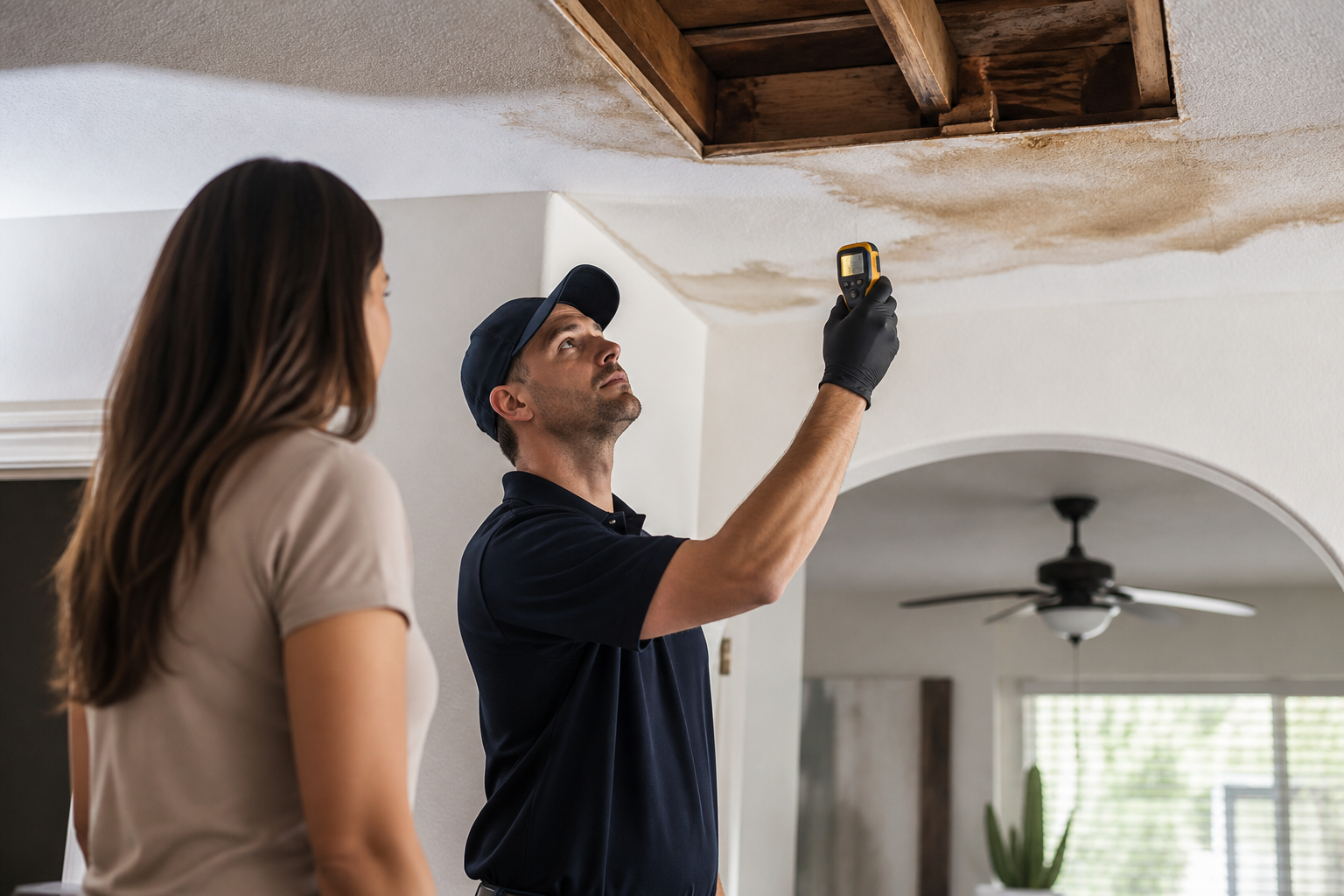
After a roof leak in a Phoenix home, consider mold testing if building materials stayed wet, moisture returned, or there are signs of possible hidden mold after the leak was repaired. A water stain alone does not confirm mold, and a short-lived leak that was promptly dried may not require testing. The key questions are whether moisture remains and whether testing would help answer a specific concern.
First, stop the water from coming in and address damp materials where it is safe to do so. If the affected area is concealed, the leak lasted for an unknown period, or musty odors or visible changes persist, a mold inspection can help determine whether testing is appropriate.
Why a roof leak can lead to hidden moisture
Water entering through a roof can travel beyond the visible drip or stain. It may wet ceiling materials, insulation, framing, or the upper portions of walls. A dry-looking surface does not always show whether concealed materials were affected, especially if the leak went unnoticed for a while.
In Phoenix, roof leaks can follow heavy rain, roof damage, or issues around roof openings and flashing. The specific cause matters less than whether water reached materials that stayed damp. Mold growth is possible when moisture persists, but the presence of a leak by itself does not establish that mold has developed.
The U.S. Environmental Protection Agency explains that controlling moisture is central to preventing mold growth. Its guide to mold, moisture, and the home offers general information on responding to water problems.
Signs that further investigation may be useful
Some clues can justify a closer look, but none confirms mold on its own. Pay attention to changes in the affected area and whether they continue after the leak has been repaired.
- A musty or earthy odor near the ceiling, attic, or wall below the leak.
- Staining, bubbling paint, peeling finishes, or soft or warped materials.
- Materials that remain damp or become damp again after drying.
- Visible growth or discoloration, particularly around the original leak area.
- A leak that continued for an unknown length of time or affected a large area.
- Signs that water may have entered an attic or another concealed space.
Water stains can remain after materials have dried, and discoloration can have causes unrelated to mold. If an area appears damaged or a smell persists, avoid disturbing suspected growth or opening building materials yourself. A qualified inspection can help identify what needs attention.
What to do after finding a roof leak
- Stop the source. Arrange for the roof issue to be repaired so additional water does not enter. Avoid climbing onto a roof or entering an unsafe area to investigate.
- Document what you can see. Take photos of stains or material changes and note when the leak was noticed, where water appeared, and what repairs were made.
- Address moisture. Where it is safe and appropriate, dry affected areas and keep an eye on them. Extensive or concealed water damage may require experienced help to determine how affected materials should be handled.
- Reassess after repairs. If odors, dampness, or visible changes persist, consider arranging a mold inspection. Testing may be useful if it can help answer a defined question.
Do not paint over a damp or damaged area to hide it. Covering a stain does not fix the moisture source or establish that materials behind the surface are dry.
When mold testing may make sense
Mold testing after a roof leak in Phoenix, Arizona, may be worth discussing when a property owner needs information about a specific area or concern. For example, testing may be considered if there is a persistent odor without visible growth, if the leak may have affected a concealed space, or if an inspection indicates that sampling could help clarify the situation.
Testing is not always the first or best step. A mold inspection can assess visible conditions and moisture concerns, while testing involves collecting samples for analysis. The appropriate approach depends on the property and the question being asked; testing does not necessarily identify every affected area or guarantee that mold is absent. The EPA’s information on how to tell if you have a mold problem explains why visible conditions and moisture clues matter.
Before arranging testing, ask what the proposed inspection or sampling is intended to determine and how the results will be used. If visible mold is already present, addressing the moisture source and affected materials may be more useful than testing alone. For further information, explore mold testing services and providers.
Inspection, testing, and remediation are different steps
A mold inspection focuses on the property’s conditions, such as the location of water damage, visible changes, and possible moisture sources. Mold testing involves sampling, when appropriate, to provide additional information. Neither step repairs the roof or dries wet materials.
If an issue is identified, mold remediation addresses affected materials and the conditions that contributed to the problem. The sequence matters: the roof leak should be corrected, moisture addressed, and any necessary remediation planned based on the findings. ALM Services lists mold testing, mold inspection, and mold remediation among its services. You can view the ALM Services directory listing for company information.
Frequently Asked Questions
Should I test for mold after every roof leak?
No. A leak that was repaired and promptly dried may not call for testing. Consider an inspection or testing if moisture may remain, materials were affected for an unknown period, or signs such as persistent odor or visible changes continue.
Can a ceiling stain tell me whether mold is present?
No. A stain can show that water reached the surface, but it does not confirm mold. Its appearance also cannot establish whether concealed materials are wet or affected.
How soon should I arrange an inspection?
Address the leak and dampness as soon as practical. If the damage is concealed, extensive, or not drying, or if signs persist after repairs, arrange an inspection rather than waiting for the area to worsen.
Does a negative mold test mean the home has no mold?
Not necessarily. A sample reflects the conditions and locations assessed at that time, so it may not represent every part of a home. Ask the person conducting the testing what the results can and cannot establish.
Need Mold Testing in Phoenix?
If you’re concerned about moisture or possible mold in your property, ALM Services can help evaluate the situation and determine appropriate next steps.
ALM Services
Call: 602-257-8000





Leave a Reply