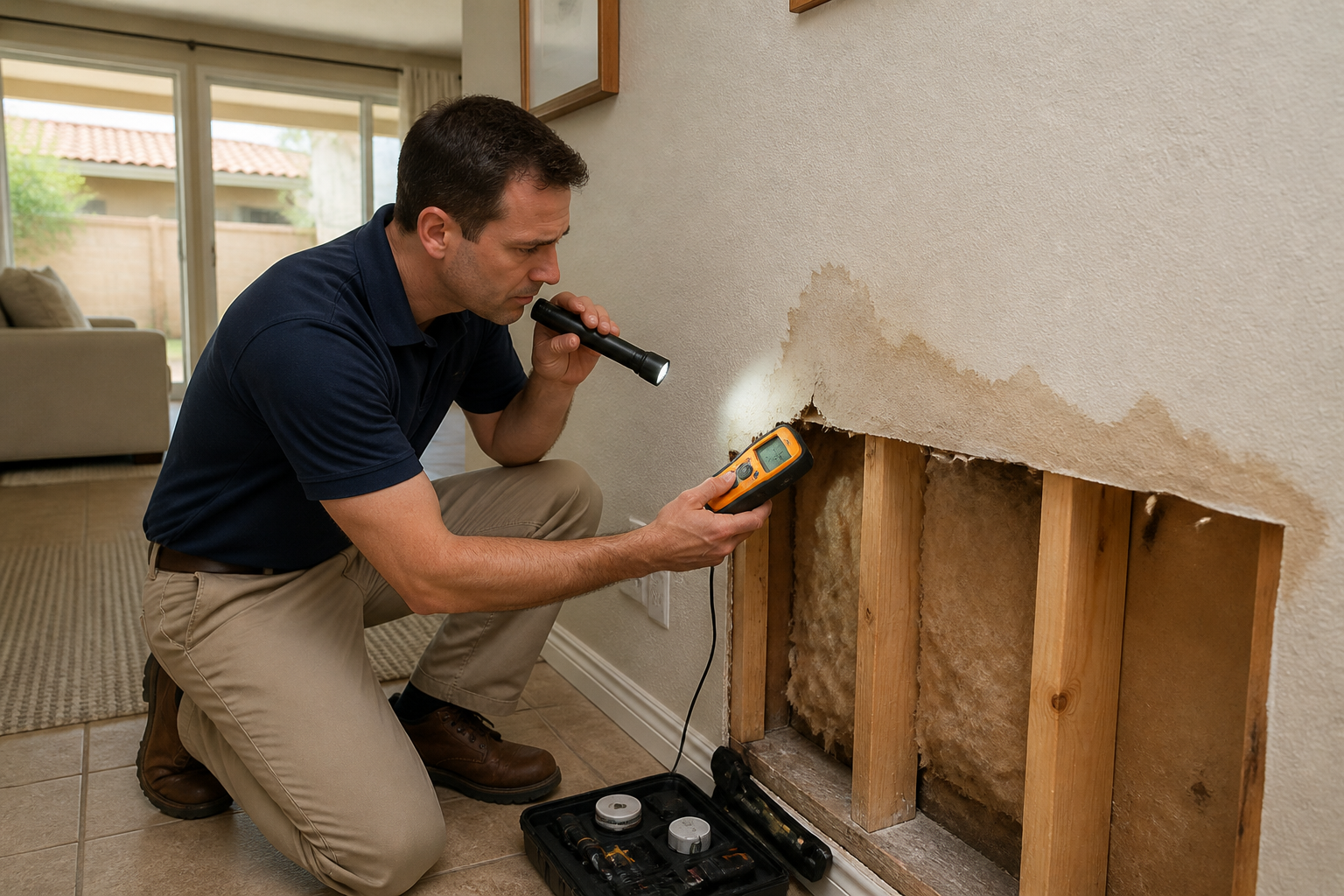
If drywall in your Phoenix home has a water stain, it can be tempting to cut out the damaged section and replace it. In many cases, a mold inspection before replacing drywall in Phoenix, AZ, is worth considering—especially if the leak was prolonged, the wall still feels damp, the stain returns, or there is a musty odor.
A stain alone does not prove that mold is present, and an inspection may not be necessary for every past leak. The first priorities are to identify and correct the moisture source and determine whether the affected area is dry. If the moisture history or condition of the wall is uncertain, an inspection can help assess what may be happening behind the visible surface before repairs begin.
Before replacing water-stained drywall, make sure the source of moisture has been addressed and the material is no longer getting wet. Consider an inspection if staining returns, dampness persists, or the leak may have affected the wall cavity; a stain by itself does not confirm mold.
Why inspect before replacing water-stained drywall?
Drywall can absorb water, and moisture may affect materials beyond the spot visible on the painted surface. Depending on where water entered and how long materials stayed wet, the wall cavity, insulation, trim, or nearby flooring may also warrant attention. Simply covering or replacing the stained area without resolving the moisture problem can leave the underlying issue unaddressed.
Water intrusion can come from different sources, including a roof leak, plumbing issue, or water entering around an opening. The stain’s location may offer clues, but it does not reliably identify the source or show how far moisture traveled. In Phoenix, homeowners should assess the specific property and leak history rather than assume the cause based on location or season.
The EPA’s guide to mold, moisture, and the home explains why controlling moisture is central to addressing mold concerns. Correcting the leak and allowing affected materials to dry are important steps whether or not mold is found.
Signs that an inspection may be useful
Consider a professional mold inspection before opening or replacing drywall if the condition of the wall is unclear or the problem appears to be continuing. Clues that may justify a closer assessment include:
- The stain is growing, darkening, or returning after the surface appeared dry.
- The drywall feels soft, swollen, or damp, or its paint is bubbling or peeling.
- A musty odor persists near the affected wall or in an adjoining space.
- The leak lasted for an unknown period or may have affected a larger area than the stain suggests.
- There are visible spots that concern you, or similar damage has appeared in nearby materials.
These observations are reasons to investigate, not proof of mold. Staining can remain after materials dry, and odors can have more than one cause. Appearance and smell alone cannot confirm mold or identify a particular species.
What a mold inspection can—and cannot—tell you
A visual inspection looks for signs of water damage, visible growth, and conditions that may support mold. A moisture investigation focuses on whether materials are damp and helps assess the extent and possible source of moisture. These steps are related, but they are not the same as mold testing.
Testing may be useful when there is a specific question that inspection alone cannot answer, such as whether suspected material contains mold. It is not automatically needed for every water stain. Sampling also has limits: results represent the samples collected and do not, by themselves, map all affected areas or explain why moisture is present.
For background on deciding when testing may be appropriate, see the mold testing providers listed on BestMoldTestingUSA. The right approach depends on the property, the moisture history, and what the inspection finds.
Practical steps before drywall replacement
Before arranging cosmetic repairs, take a few careful steps that can help clarify the situation:
- Address the suspected source. If water is still entering, arrange for the underlying leak or intrusion to be corrected. Replacing drywall before the source is fixed can lead to recurring damage.
- Document what you see. Take photos of the stain and note when it appeared, whether it changed, and any known leak history.
- Pay attention to ongoing moisture. If the surface remains damp or damage continues to spread, do not treat the issue as merely cosmetic.
- Avoid unnecessary disturbance. If you suspect mold or the wall is significantly damaged, avoid cutting into or pulling apart materials before the area has been assessed.
- Choose inspection or testing based on the question. An inspection can assess visible conditions and moisture concerns; testing may be considered when it would help answer a specific question.
Do not use fresh paint or new drywall to conceal an unresolved stain. If an inspection identifies affected materials, the next steps depend on the extent of the problem and whether the moisture source has been controlled. Mold remediation may be appropriate when mold is confirmed and needs to be addressed; it should be considered alongside correcting the conditions that allowed the moisture problem.
When replacement can proceed
Replacing drywall is generally a repair decision, not a moisture-control measure. Before work begins, the source of water should be resolved and affected areas should be assessed to determine whether materials are dry and whether damaged material needs attention. If the leak was minor, promptly corrected, and there are no continuing signs of moisture or other concerns, a separate mold inspection may not be necessary.
If the scope is uncertain, an assessment before demolition can help avoid replacing only the visible surface while overlooking a broader issue. ALM Services provides mold inspection, mold testing, and mold remediation. You can view the ALM Services directory listing for more information about the local provider.
Frequently Asked Questions
Does a water stain on drywall mean there is mold?
No. A stain shows that the surface was discolored, but it does not establish whether mold is present. The moisture source, current condition of the material, and any additional signs help determine whether further inspection makes sense.
Should I replace drywall after every leak?
Not necessarily. The right repair depends on how much water reached the material, whether it stayed wet, and whether it is damaged. Resolve the leak and assess the affected area before deciding what to replace.
Is mold testing always part of a mold inspection?
No. An inspection may involve visual assessment and moisture investigation without sampling. Testing can be considered when it helps answer a particular question, but it is not required for every stained wall.
Can I paint over the stain if the wall looks dry?
Painting may hide discoloration but does not correct an active leak or establish that materials behind the surface are dry. Confirm that the moisture source has been addressed before making cosmetic repairs.
Need Mold Testing in Phoenix?
ALM Services can help Phoenix property owners assess water-stained drywall with mold inspection or testing when appropriate, and offers mold remediation if needed. Contact the team to discuss the moisture concern before replacing the affected material.
ALM Services
Call: 602-257-8000





Leave a Reply