
A past leak does not automatically mean a Boca Raton home has a mold problem. It does mean buyers should understand what happened, whether the moisture source was corrected, and whether affected materials were properly dried or repaired. If those details are unclear—or there are signs of ongoing moisture—independent mold testing in Boca Raton, FL may be worth considering before closing.
The goal is not to test every home or treat a single laboratory result as a pass-or-fail verdict. A thoughtful evaluation can help you make a more informed decision, ask focused follow-up questions, and understand whether additional investigation may be appropriate.
What a past leak can—and cannot—tell you
A leak may have been limited and promptly repaired, with affected materials dried and restored. In that case, the history alone may not indicate a current concern. Alternatively, water may have entered a wall cavity, under flooring, above a ceiling, or around a window and remained unnoticed. The significance depends on factors such as how much water entered, how long materials stayed damp, what was affected, and what was done afterward.
In Boca Raton and elsewhere in South Florida, warm, humid conditions can make moisture management especially important. However, climate alone cannot determine whether a particular property has mold. The home’s current condition, moisture sources, and repair history matter more than the fact that it is in a humid region.
Questions to ask before deciding about testing
Start by requesting a clear account of the leak and any related work. Consider asking the seller or listing representative:
- Where did the water come from, and when did the leak occur?
- Was the source repaired? If so, who completed the repair and when?
- Which materials or rooms were affected?
- Were wet materials removed, dried, or replaced? Are there invoices, photographs, or other records?
- Has the area become wet again, or have there been later repairs or complaints?
Documentation can help you understand the sequence of events, but it does not by itself establish the present condition of concealed areas. If the explanation is incomplete, records are unavailable, or the repair appears limited to covering or repainting a surface, you may want to discuss the issue with your home inspector and consider a more focused evaluation.
Warning signs that may warrant a closer look
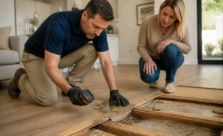
Pay attention to conditions near the reported leak and in connected areas. Potential clues include a persistent musty odor, visible discoloration, bubbling or peeling paint, swollen trim, warped flooring, staining on ceilings, or materials that feel damp. Previous patching or a newly painted area is not proof of a problem, but it may be useful to ask what prompted the work and whether the moisture source was addressed.
Also note whether there are signs of recurring water entry, plumbing issues, roof or window leaks, or condensation around air-conditioning equipment. A general home inspection may identify visible concerns, but it is not necessarily a mold assessment or a detailed evaluation of every concealed space. If a concern falls outside the scope of the inspection, ask what additional professional evaluation could clarify it.
When independent mold testing may be appropriate
Independent mold testing in Boca Raton, FL may be a reasonable option when there is a documented history of water intrusion and the affected area was not clearly evaluated, when musty odors or visible signs remain, or when a buyer needs more information about a specific concern before closing. It may also help when the available repair records leave important questions unanswered.
Testing is not automatically necessary just because a seller discloses an old leak. If the source was promptly fixed, the affected area was properly addressed, there are no current warning signs, and records are reassuring, you and your real estate or inspection professionals may decide that further testing is not needed. The decision should reflect the property’s facts, your concerns, and any applicable purchase-contract timelines.
When you arrange an evaluation, explain the leak history and share relevant records. Ask what areas the inspector plans to assess, what methods may be used, and what the proposed sampling can answer. It is also sensible to coordinate access and timing with the seller and your real estate representative, especially if the evaluation must occur before a contractual deadline.
What an independent inspector may evaluate
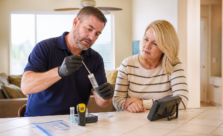
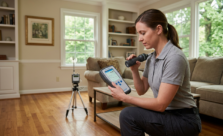
An independent mold inspector may review the reported leak area and nearby surfaces, look for visible signs of moisture or suspected microbial growth, and consider whether conditions point to an unresolved moisture source. Depending on the property and the scope agreed upon, an inspection may include moisture measurements, thermal imaging as part of a mold and moisture inspection, or sampling for laboratory analysis.
Thermal imaging can help identify temperature patterns that merit further investigation, but it does not identify mold and does not prove that an area is wet. A professional may need to use other tools or inspect the area directly to interpret an unusual reading.
Sampling is not the only way to assess a property, and it should have a clear purpose. An inspector can explain what samples are being collected, why those locations were selected, and how results should be interpreted alongside the site observations. Mold can be present in many indoor and outdoor environments, so a test result alone may not establish the source, extent, or cause of a condition.
What testing can and cannot establish
An inspection and any recommended testing can provide information about observed conditions and the samples collected at the time of the assessment. They may help identify areas that deserve further attention or support more informed conversations with the seller and your professional advisers.
They cannot guarantee that every concealed area is free of mold, predict future leaks, or prove that a property will never develop a moisture problem. A limited inspection covers the areas and conditions accessible within its agreed scope. Laboratory results also need to be interpreted in context; they should not be treated as a stand-alone measure of a home’s overall condition.
If an evaluation identifies moisture or a condition requiring further work, ask what the findings mean and what follow-up steps are recommended. MoldXperts provides mold testing, mold inspection, indoor air quality testing, and thermal imaging as part of mold and moisture inspections in South Florida. MoldXperts is an independent inspection and testing company and does not provide mold remediation or mold removal.
Making a decision before closing
For a Boca Raton home with a past leak, begin with the history, records, and current visible conditions. If there are unanswered questions or signs that moisture may remain, a focused independent evaluation may give you useful information before you finalize your purchase. Discuss the findings with your real estate representative and other relevant professionals so you can decide what, if anything, to address before closing.
To ask about an independent mold inspection or testing in Boca Raton, contact MoldXperts at (954) 464-4538 or visit moldxperts.com.


Leave a Reply