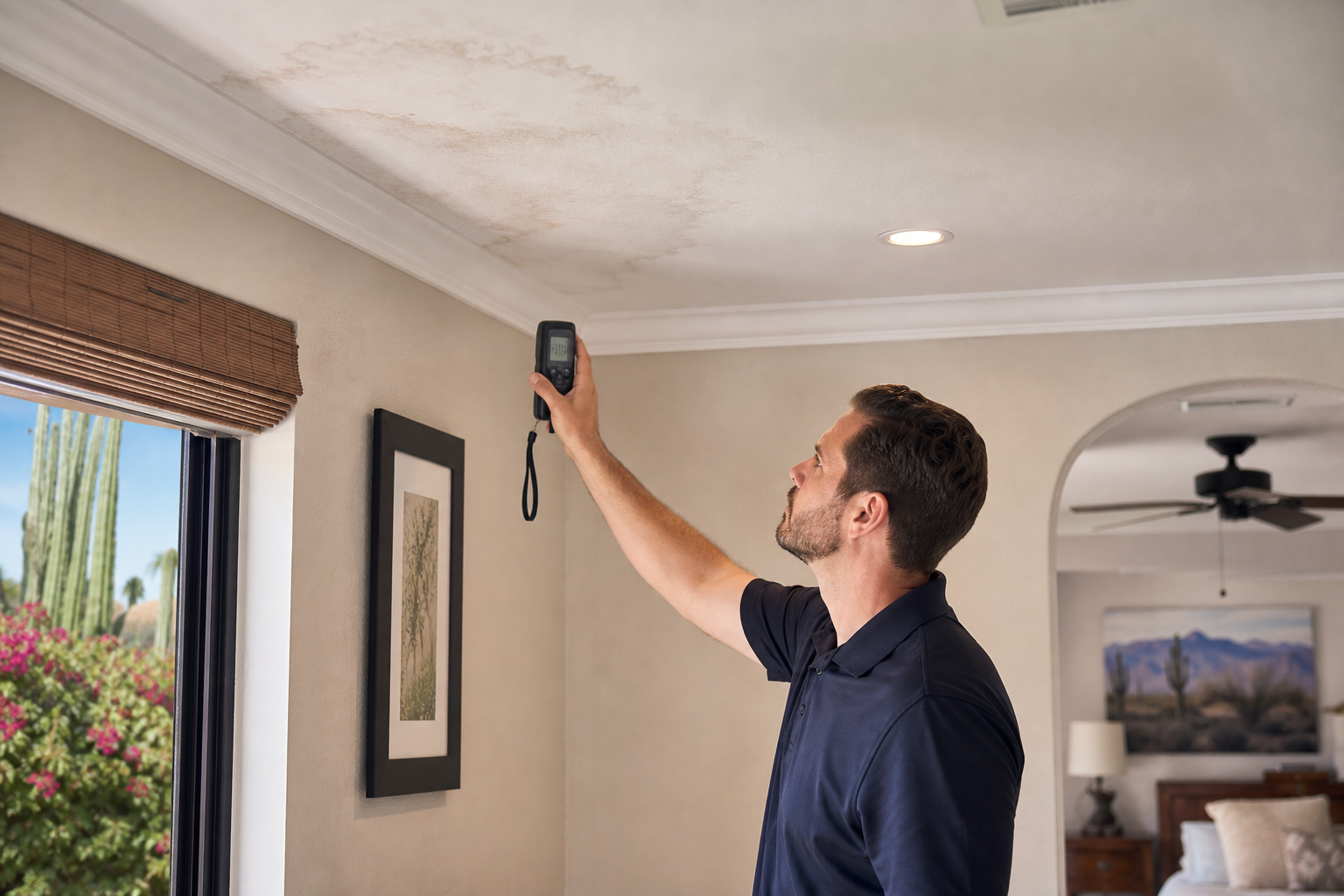
Mold is not always visible. In a Mesa home, moisture can collect behind walls, beneath flooring, around plumbing, or inside cabinets and other enclosed spaces. A musty odor, recurring water stains, or changes to building materials may point to a moisture problem—but no single sign proves mold is present.
Look at the full picture: a history of water damage, persistent dampness, unusual odors, and unexplained material changes together may justify further investigation. Here are five warning signs to watch for and practical steps to take if you notice them.
Hidden mold is often associated with moisture that has not fully dried or has returned over time. Document what you see and consider an inspection or testing if signs persist, especially after a leak or other water damage.
Why Mold Can Stay Out of Sight
Mold can grow where moisture and a suitable surface are present, including places that are not easy to see. A small plumbing leak, water that seeped under flooring, or moisture trapped behind a wall can affect concealed materials before obvious growth appears on a room’s surfaces.
For homeowners trying to understand the connection, the EPA’s explanation of why mold grows in homes describes the role moisture plays. Finding and addressing the source of moisture is an important part of assessing a suspected problem.
Five Signs of Possible Hidden Mold
1. A persistent musty or earthy odor
A musty smell that returns after cleaning or airing out a room may be worth investigating, particularly if it is strongest near a wall, cabinet, closet, or floor. Odors can have other causes, so smell alone cannot confirm mold. Pay attention to where and when it occurs, and whether it follows a leak or dampness.
2. Water stains that return or keep spreading
Brownish, yellow, or otherwise discolored patches on ceilings and walls can indicate past or ongoing moisture. A stain that grows, darkens, or reappears after being cleaned or painted deserves attention. Check nearby areas for a plumbing fixture, roof penetration, appliance, or other possible source of water.
3. Peeling paint, bubbling, or warped materials
Paint that blisters, wallpaper that loosens, or flooring that buckles can be signs that materials have been exposed to moisture. These changes do not establish that mold is present, but they can help identify an area that needs closer assessment. Note whether the affected section feels damp or changes over time.
4. A damp area that does not seem to dry
Recurring dampness around a sink, toilet, shower, laundry area, or appliance can point to a leak or another moisture source. A wet carpet edge or consistently damp cabinet base may also warrant a closer look. Even if the visible water seems minor, moisture can travel into materials beyond the spot you can see.
5. Previous water damage with unexplained changes afterward
A repaired leak or cleaned-up spill does not always mean every affected material dried completely. If an area later develops an odor, staining, or deterioration, consider whether moisture may remain in a concealed space. The sequence matters: record when the water event happened and when the changes began.
What to Do If You Suspect Hidden Moisture
Start with careful observation rather than opening walls or pulling up flooring. These steps can help you organize what you know and decide whether additional evaluation makes sense:
- Look for possible moisture sources, such as a dripping pipe, loose fixture connection, or appliance leak.
- Photograph visible stains and material changes, and note when they appear or worsen.
- Address an active leak or water intrusion through an appropriate repair professional.
- Avoid disturbing suspected mold or damaged materials; disturbing them can spread dust and debris.
- Consider a mold inspection or testing if the signs persist, the moisture source is unclear, or you need more information about an affected area.
The EPA’s guidance on identifying a possible mold problem can help put visible and odor-related clues in context. It is also useful to remember that testing is only one part of an assessment; results should be considered alongside the property’s moisture history and observed conditions.
When Mold Testing or an Inspection May Make Sense
Mold testing in Mesa, AZ, may be worth discussing when a musty odor has no obvious source, signs return after cleanup, or there has been water damage followed by unexplained changes. Testing may also be considered when an owner needs information about a specific concern. The right next step depends on the conditions and the questions you want answered.
A mold inspection generally focuses on visible conditions and potential moisture sources. Depending on the situation, an evaluation may include looking at affected rooms and building materials, asking about past leaks, and checking areas near the reported concern. Mold testing may involve collecting samples for analysis, but sampling methods and usefulness vary. No test should be treated as a substitute for finding and addressing moisture.
To explore the subject further, see BestMoldTestingUSA’s directory of mold testing services. If you are looking for a local provider, you can also view ALM Services on BestMoldTestingUSA, which lists mold testing, mold inspection, and mold remediation.
If a Mold Problem Is Found
The next steps depend on the location and extent of the affected area and whether the moisture source has been resolved. A qualified assessment can help clarify what needs attention. If mold remediation is appropriate, addressing the source of moisture is part of preventing the problem from continuing or returning.
Avoid covering stains with paint or removing potentially affected materials before the situation is understood. If you have documented the signs and any related water damage, that information can help guide the next conversation with an inspection or testing provider.
Frequently Asked Questions
Can a musty smell mean there is mold behind a wall?
It can be a clue, especially if the odor persists and is strongest in one area, but it does not confirm mold. Other sources can produce similar smells. Look for related signs of moisture and consider an inspection if the odor continues.
Can I confirm hidden mold with a home test kit?
A kit may provide limited information, but results can be difficult to interpret without understanding where and how a sample was collected. If you need answers about a specific area, discuss the concern and testing options with a qualified provider.
Should I remove a wall or flooring to look for mold?
Not as a first step. Opening up materials can disturb dust and debris and may not reveal the source of moisture. Document the concern and seek an appropriate assessment before disturbing a suspected area.
Does every water stain mean mold is present?
No. A stain indicates discoloration, which may result from past or current moisture, but it does not prove mold growth. A spreading stain, persistent dampness, or other changes can help determine whether further investigation is sensible.
Need Mold Testing in Mesa?
If you’re concerned about hidden moisture or possible mold in your home, ALM Services can help evaluate the situation and determine appropriate next steps.
ALM Services
Call: 602-257-8000





Leave a Reply