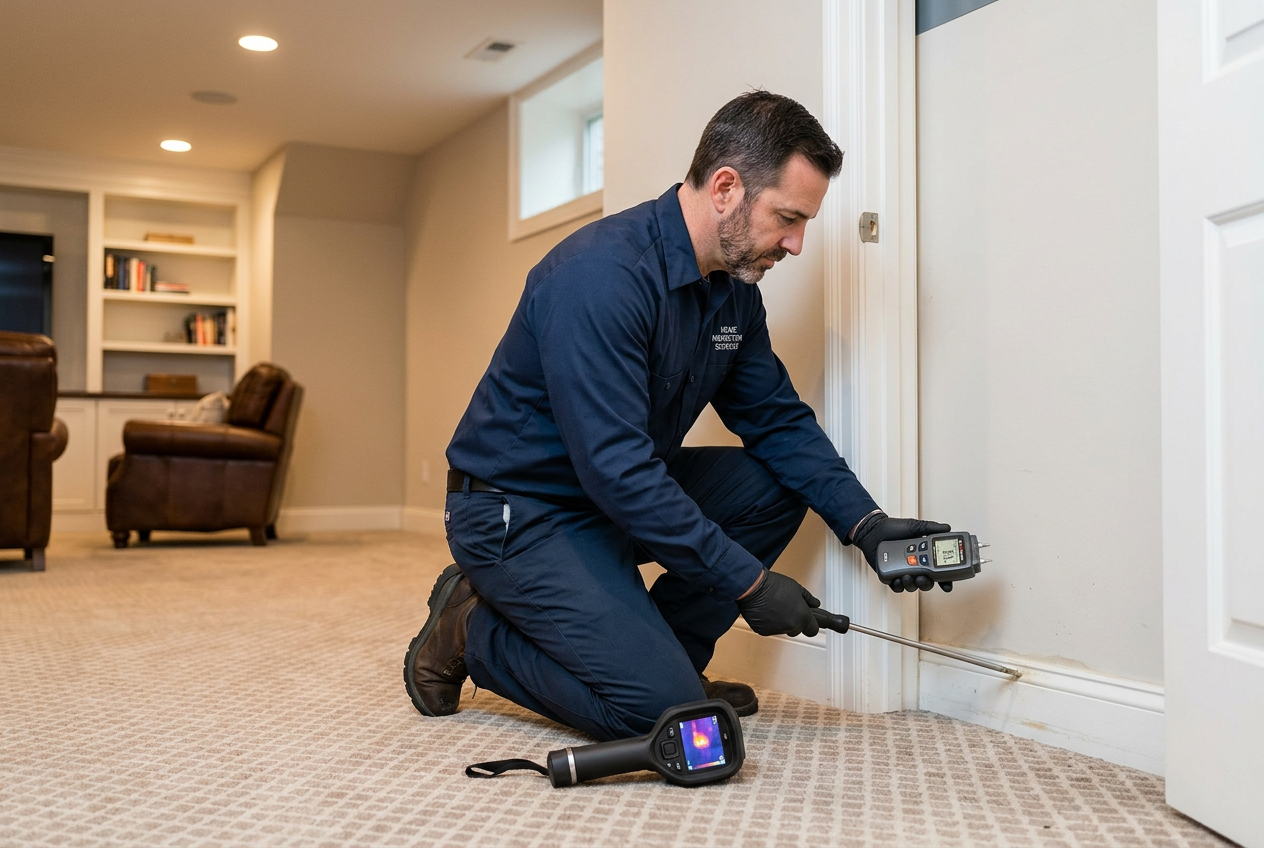
A finished basement can look dry and comfortable even after water has entered the space. Drywall, flooring, trim, and built-in cabinetry may conceal areas that were wet, while a musty odor or visible stain may not reveal the full extent—or cause—of a moisture problem.
Quick Takeaway: After basement water intrusion, a mold inspection may help assess visible conditions and moisture concerns, but finished surfaces can limit what can be seen without opening them.
If a finished basement in Potomac has a history of seepage, a plumbing leak, or another water event, deciding whether to investigate further depends on details such as how much water entered, how long materials stayed damp, and whether the source was corrected. An inspection can help you understand what is observable and whether mold testing may be useful. It cannot automatically confirm what is behind every finished surface.
Why finished basement surfaces can hide clues
Water may travel beneath flooring, behind baseboards, or into wall and ceiling cavities. Drywall and other porous materials can absorb moisture, and furnishings or built-ins may block access to portions of the floor and walls. A surface that feels dry today does not, by itself, establish whether concealed materials were wet or whether they dried adequately after an earlier incident.
Conditions can also change over time. A past leak may have been repaired, but a recurring moisture source—such as continued seepage or a plumbing issue—can create a new concern. Conversely, a prior water event does not mean mold is necessarily present. The inspection should consider the history and current evidence rather than assume an outcome.
The EPA’s guide to mold, moisture, and the home explains why controlling moisture is central to addressing mold concerns. For a finished basement, that makes understanding the water source and any remaining dampness important parts of the assessment.
What to look for before arranging an inspection
Make a note of what happened and what you have noticed since. Useful observations may include:
- Where water entered, how far it spread, and whether the event happened once or more than once.
- Whether the source was a plumbing leak, seepage, an appliance, or something else, and what steps were taken to address it.
- Staining, bubbling paint, warped trim, lifted flooring, or other changes in finishes.
- A persistent musty odor, especially in a particular room, closet, or area near a previous leak.
- Whether the basement has felt damp or whether similar signs return after rain or other water events.
- Items or built-ins that limit access to areas where water was previously present.
These observations can help focus an inspection, but none proves mold is present. Odor and appearance are clues to discuss, not a substitute for assessing the space. If the water source is ongoing, identifying and correcting it is a practical priority; an inspection does not repair a leak or prevent future water entry.
What a mold inspection can—and cannot—assess
A mold inspection generally involves a visual assessment of accessible areas and may include a moisture investigation. The inspector can look for visible water-related changes, signs of current dampness, and conditions that merit closer attention. Moisture measurements may help assess accessible materials, though readings and instruments have limits and need to be interpreted in context.
In a finished basement, the inspector can only assess what is accessible unless surfaces are opened by someone authorized to do that work. A standard visual inspection should not be understood as a guarantee that every concealed cavity has been checked. If there is a specific concern behind a wall or beneath flooring, ask what can be assessed without disturbing finishes and what additional access, if any, would be needed.
Inspection and mold testing are related but different. Testing may involve collecting an appropriate sample for analysis; it is not automatically necessary after every water event. A qualified professional can explain whether testing is likely to add useful information based on the history, visible conditions, moisture findings, and questions you are trying to answer. A test result is one piece of information, not a replacement for investigating the moisture source or evaluating the space.
MD Mold Testing offers mold inspection and mold testing. You can review its BestMoldTestingUSA listing when considering a provider. Before scheduling, ask what areas are included, how access limitations will be documented, and whether testing is being recommended for a specific reason.
Reasonable next steps after a water event
Keep any records that may help explain the basement’s history, such as repair notes, photos, or dates when water was observed. Share that information during an inspection and point out the areas where water appeared. If there is active water intrusion or a plumbing leak, contact the appropriate professional to address that source rather than relying on mold testing to resolve it.
A professional assessment may be worth considering when water affected finished materials, the source or extent of wetting is unclear, signs have returned, or you need a clearer understanding before making a property decision. If conditions are accessible and there are no continuing signs of moisture, an inspection may not be necessary in every situation. The decision depends on the particular history and what you need to know.
For buyers touring a home with a finished basement and a disclosed history of water intrusion, MD Mold Testing also offers Walk and Talk Home Inspections. A Walk and Talk can help a buyer look more carefully at accessible areas and ask informed questions during a tour. It is not a substitute for a traditional full home inspection, and it cannot guarantee discovery of hidden conditions.
Frequently Asked Questions
Does a past basement leak mean mold is present?
No. A past leak is relevant history, but it does not establish that mold is present now. The water source, duration of wetness, drying, current moisture conditions, and visible evidence all matter.
Can an inspector confirm what is behind finished basement walls?
Not through a visual assessment alone. Finished surfaces can restrict access to cavities. An inspector can explain what is visible and accessible and discuss whether further access may be needed to assess a specific concern.
Should I request mold testing after every water intrusion?
Not necessarily. Testing may be useful when it can help answer a specific question, but it is not required for every water event. Discuss the history and inspection findings with a qualified professional before deciding.
What should a home buyer do if the seller mentions prior basement water?
Ask about the source, timing, repairs, and any documentation. Consider a full home inspection and, when useful, a Walk and Talk to examine accessible areas and ask questions during a tour. Neither approach guarantees that concealed problems will be found.
Need a Mold Inspection for a Potomac Basement?
MD Mold Testing can help you discuss a mold inspection or testing after basement water intrusion and what may be assessed in a finished space.
MD Mold Testing
Call: (301) 717-1454





Leave a Reply