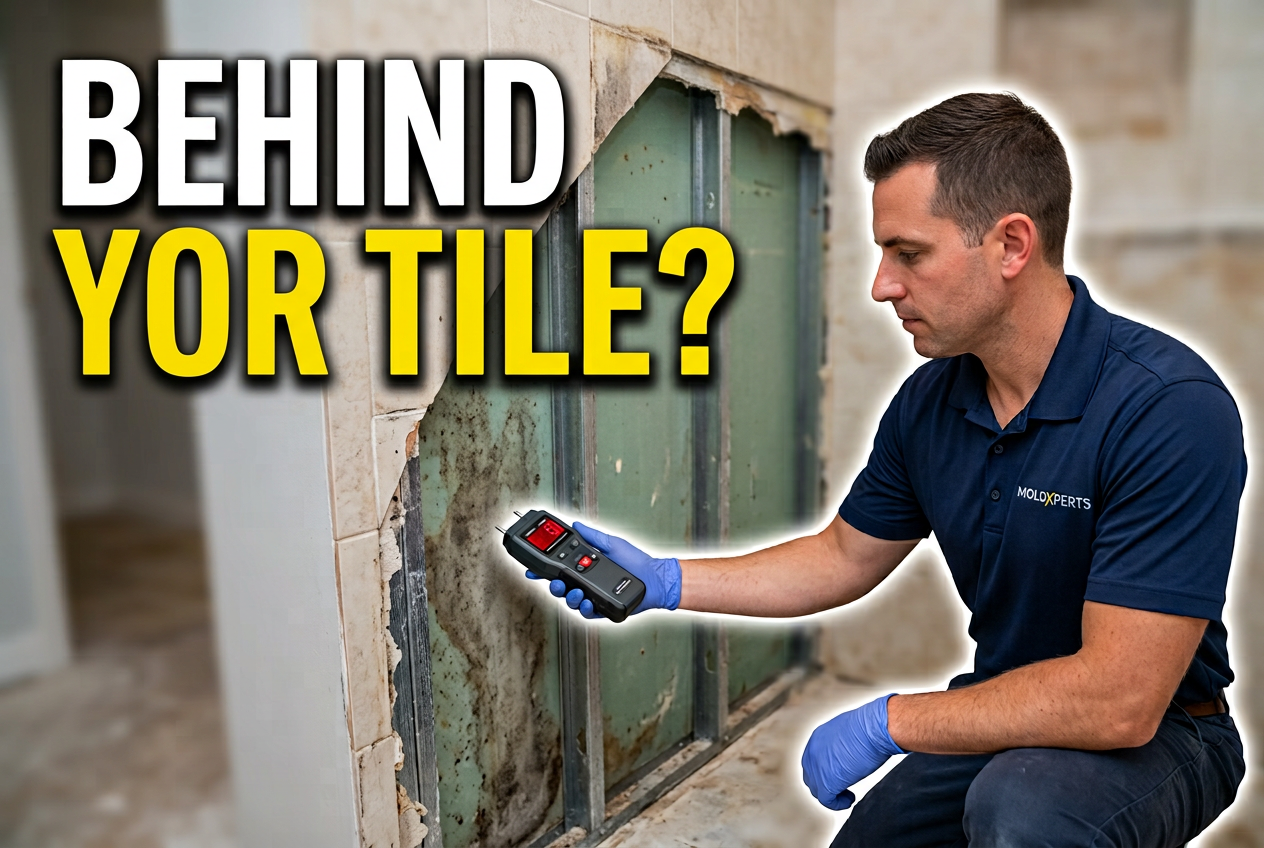
During a bathroom remodel in Plantation, removing tile can reveal dark spots, staining, or other discoloration on the wall behind it. That discovery may raise questions about mold, a past leak, or damage that is still developing. Before the area is covered with new materials, an independent inspection can help clarify what is visible, whether moisture may remain, and whether additional assessment is appropriate.
Key Takeaways
- Discoloration behind tile can have several causes; appearance alone cannot confirm mold or identify its extent.
- Pause before rebuilding, document what was uncovered, and have the source of any moisture investigated.
- An independent mold inspection may assess visible conditions and moisture indicators; testing is not necessary or conclusive in every situation.
- Inspection and testing have limits: they do not repair leaks, determine every hidden condition, or guarantee that an area is mold-free.
What Could Discoloration Behind Bathroom Tile Mean?
Bathrooms are regularly exposed to water and humidity. In Plantation and elsewhere in South Florida, a warm, humid climate can also make moisture management especially important. Still, a stain behind tile does not automatically mean there is an active mold problem. Possible explanations include water intrusion, a leak, old staining from a repaired issue, changes in building materials, or discoloration associated with an adhesive or other product. Mold may be one possibility, but a photo or color description alone cannot establish the cause.
The condition of the surrounding materials matters. A musty odor, soft or swollen drywall, deteriorated backing, damp framing, or discoloration that continues beyond the area opened during demolition may be reasons to look more closely. So can evidence of a plumbing leak or water entering around a shower, tub, window, or other transition. These observations are clues—not a diagnosis—and may require evaluation by the appropriate building or plumbing professional.
What to Do Before Rebuilding
If discoloration is found, avoid covering the area with new tile or wallboard until the concern has been considered. Photograph the exposed area and note where it is located, when it was discovered, and whether the bathroom has had leaks, repairs, or recurring dampness. Share that information with the remodeler and any qualified inspection professional you consult.
Ask how the source of moisture will be checked and addressed. An inspection focused on mold does not replace plumbing work, waterproofing repairs, or an evaluation of construction details. If a leak or building defect is suspected, the relevant contractor or licensed professional may need to investigate it. Rebuilding over material that remains wet or over an unresolved water source can leave the underlying issue unaddressed.
Do not disturb a larger area of suspect material simply to investigate it yourself. Demolition can release dust and debris, and the appropriate precautions depend on the materials and conditions involved. If the exposed area is extensive, materials are deteriorated, or occupants have concerns about exposure, consider getting professional guidance before further disturbance.
When Can an Independent Mold Inspection Help?
An independent mold inspection in Plantation, FL may be useful when the remodel has exposed unexplained staining, when there is a musty odor or history of water intrusion, or when the property owner wants an assessment before the wall is closed. An independent inspection can provide an evaluation from a company that is not also selling mold remediation work. That separation may be helpful to owners who want inspection findings before deciding what other work, if any, is needed.
A mold inspector may review the accessible area and surrounding conditions, look for visible signs of moisture-related damage, and use moisture-measuring tools where appropriate. MoldXperts also offers thermal imaging as part of mold and moisture inspections. Thermal imaging can help identify temperature patterns that warrant closer investigation, but it does not see through walls or confirm mold. Findings need to be interpreted alongside the visible conditions and other measurements.
Testing may be considered when it could help answer a specific question. The inspector should explain what a proposed sample is intended to assess, where it would be collected, and what the result can and cannot tell you. A sample represents the conditions at a particular place and time; it does not necessarily describe every concealed surface in a bathroom. Testing is not a substitute for identifying and correcting a moisture source.
What an Inspection or Test Can—and Cannot—Establish
An inspection can document accessible conditions and help determine whether further evaluation or sampling may be worthwhile. Testing can provide information about the sample collected, depending on the sampling method and laboratory analysis. Together, these steps may help owners make more informed decisions about the next phase of a remodel.
Neither a visual inspection nor a limited set of samples can guarantee that no mold exists anywhere in a building. Concealed areas may not be accessible, and conditions can change over time. A test result should be considered in context, not treated as a complete map of a wall cavity or as a health assessment. If an area is already visibly affected, sampling may not add useful information; the inspector can discuss whether it is appropriate for the situation.
Inspection findings also do not fix a plumbing leak, determine the performance of every waterproofing detail, or carry out repairs. MoldXperts provides mold inspection, mold testing, indoor air quality testing, and thermal imaging as part of mold and moisture inspections. It does not provide mold remediation or mold removal. If repairs or material removal are needed, the property owner can coordinate with the appropriate contractor after reviewing the findings.
Choosing a Practical Next Step in Plantation
Before the remodel proceeds, consider whether the source of moisture is known, whether affected materials are dry and sound, and whether the visible discoloration has been assessed. If those questions remain unanswered—or if you would like an independent perspective before rebuilding—a professional inspection may help clarify what is observable and what further steps make sense.
Keep photographs, inspection notes, and repair records with the remodel documentation. Clear records can help you communicate with contractors and understand what was found, what was addressed, and what limitations applied to the assessment.
Watch: MoldXperts on YouTube
Visit the official MoldXperts YouTube channel for available information about mold inspection and testing.
Arrange an Independent Mold Inspection
If a bathroom remodel has uncovered discoloration behind tile in Plantation, MoldXperts can discuss whether mold inspection or testing may be appropriate before the area is rebuilt. MoldXperts serves Broward, Miami-Dade, and Palm Beach counties. Call (954) 464-4538 or visit the website to ask about an independent assessment.



Leave a Reply