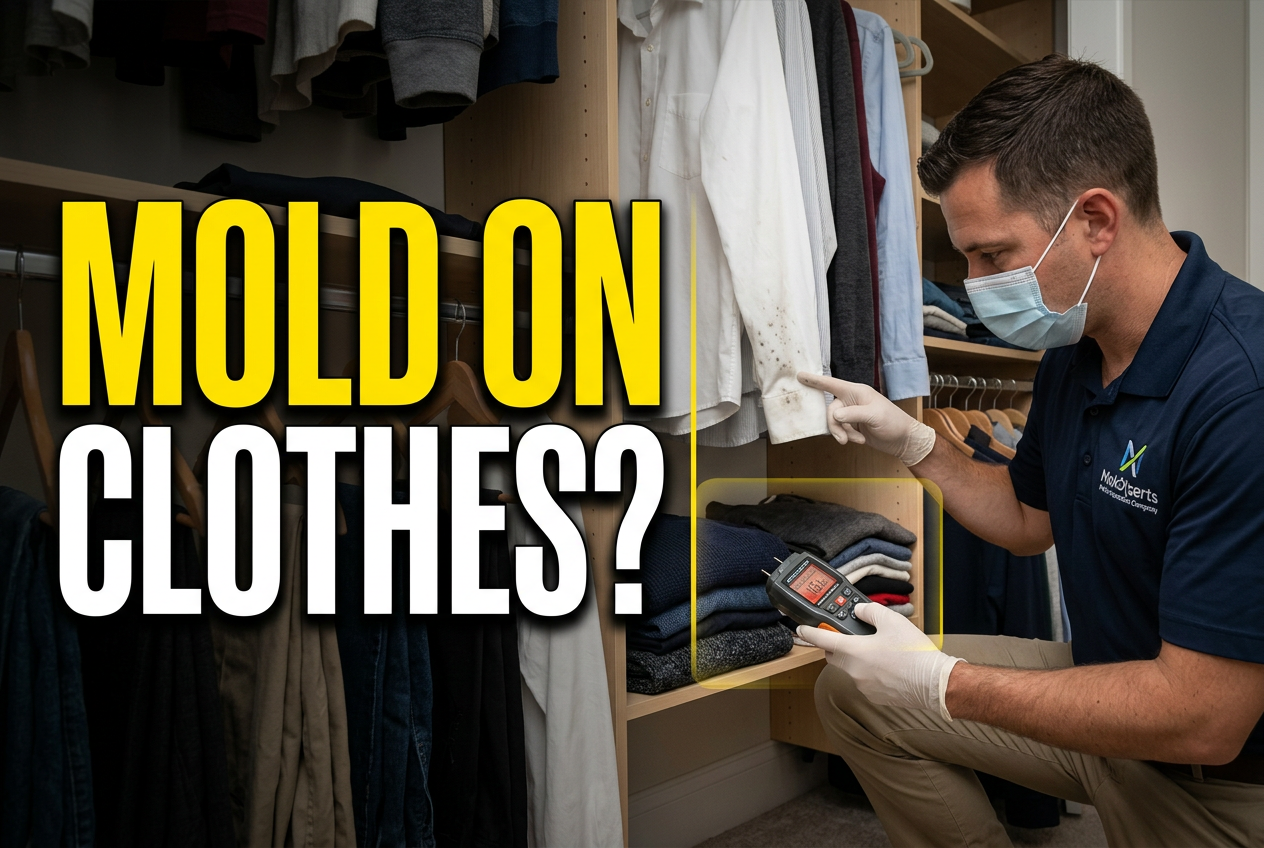
Finding spots on clothes, shoes, luggage, or boxes in a Fort Lauderdale closet can be unsettling. The marks may be mold, but appearance alone cannot confirm what they are or explain why they appeared. In South Florida’s warm, humid conditions, closet items can be affected by excess moisture, limited airflow, a leak, or condensation. A careful check of the closet and nearby areas can help you decide what to do next.
Key Takeaways
- Spots or a musty odor on stored items are clues to investigate, not proof of a particular mold type or moisture source.
- Check for dampness, leaks, condensation, and signs of water damage in and around the closet.
- Addressing moisture is important; testing alone does not locate or fix the source.
- Professional mold testing in Fort Lauderdale, FL may be useful when there are persistent concerns, unexplained odors, or signs of a wider problem.
What might spots on closet items mean?
Dark, fuzzy, or discolored marks can have several explanations, including mold, mildew, dirt, dye transfer, or other staining. A musty smell may raise concern about damp conditions, but it does not identify the cause by itself. Likewise, a photograph or visual check cannot determine the type of growth or whether airborne mold is present.
Consider the pattern and context. Are marks limited to one damp garment, or are they appearing on several items? Are stored items touching an exterior wall? Does the odor linger after the closet has been emptied and aired out? Are there water stains, peeling paint, swollen trim, or a wet floor nearby? These details can help guide an inspection, but they are not a substitute for a professional assessment when the cause is unclear.
How to check the closet for moisture
Start with a visual check, taking care not to disturb suspicious material. Look over the closet ceiling, walls, floor, baseboards, shelving, and the wall adjoining a bathroom, laundry area, or plumbing. Check nearby rooms too. A leak or damp building material may be outside the closet itself.
- Look for water clues: Note staining, bubbling or peeling paint, warped shelving, soft trim, or visible dampness.
- Notice temperature and condensation: A cool surface, condensation, or damp-feeling items can point to moisture conditions worth investigating.
- Check airflow and storage: Closets packed tightly with clothing or boxes may have limited air circulation. Items pressed against walls can also make it harder to spot dampness.
- Consider recent events: Think about plumbing leaks, roof or window leaks, flooding, air-conditioning problems, or a recent period when the home was closed up.
- Use a hygrometer as a clue, not a diagnosis: A household humidity reading can help you understand indoor conditions, but it cannot show whether hidden materials are wet or whether mold is present.
If you find an active leak or wet building material, contact the appropriate qualified professional to address the water problem. Mold testing does not repair leaks, dry a building, or remove mold. Avoid opening walls or taking samples yourself if doing so could spread dust or disturb materials.
What should you do with affected clothes and stored items?
If an item appears affected, avoid shaking or brushing it indoors. You may want to separate it from clean belongings while you assess the situation. Follow the care label for washable fabrics, and consider a qualified textile or contents specialist for valuable, delicate, or difficult-to-clean items. Do not assume that cleaning one garment will resolve the problem if the closet or surrounding materials remain damp.
For boxes, shoes, luggage, and other stored belongings, check whether the marks are limited to the items or also appear on shelves, walls, or flooring. Take notes and photographs from a safe distance if useful. If you have concerns about a health condition or symptoms, seek advice from a medical professional; an environmental inspection cannot diagnose illness.
When may mold testing in Fort Lauderdale, FL help?
Testing may be worth discussing when a musty odor continues without an obvious explanation, suspicious growth is present in more than one area, moisture signs persist, or you need an independent assessment before making a property decision. It can also help clarify what to investigate when a visual review does not answer your questions. Testing is not automatically necessary for every isolated stain, and the appropriate approach depends on the property and the concern.
An independent mold inspector may review the closet and adjacent rooms, look for visible moisture indicators, ask about leaks or past water events, and consider whether further assessment or sampling is appropriate. MoldXperts offers mold inspection, mold testing, indoor air quality testing, and thermal imaging as part of mold and moisture inspections. Thermal imaging can help identify temperature patterns that merit closer evaluation, but it does not confirm mold or moisture on its own.
When sampling is appropriate, the inspector should explain what is being sampled and why. Results are a snapshot of the conditions and locations assessed at that time. They may help characterize sampled material or airborne particles, but they do not necessarily reveal every hidden condition, identify the moisture source, establish a health risk, or determine whether a home is entirely free of mold. Findings should be considered alongside the inspection and the property’s history.
MoldXperts is an independent inspection and testing company and does not provide mold remediation or mold removal. An inspection can help you understand observations and possible next steps, but correcting the moisture source and any cleanup are separate matters.
Watch: MoldXperts on YouTube
For more information about mold inspection and testing, visit the official MoldXperts YouTube channel.
Arrange an independent assessment in Fort Lauderdale
If spots or musty odors keep returning, or you have found signs of moisture around a closet, a professional assessment may help clarify what is happening and whether testing is appropriate. MoldXperts serves Fort Lauderdale and communities across Broward, Miami-Dade, and Palm Beach counties. Call (954) 464-4538 or visit moldxperts.com to discuss independent mold inspection and testing options.


Leave a Reply