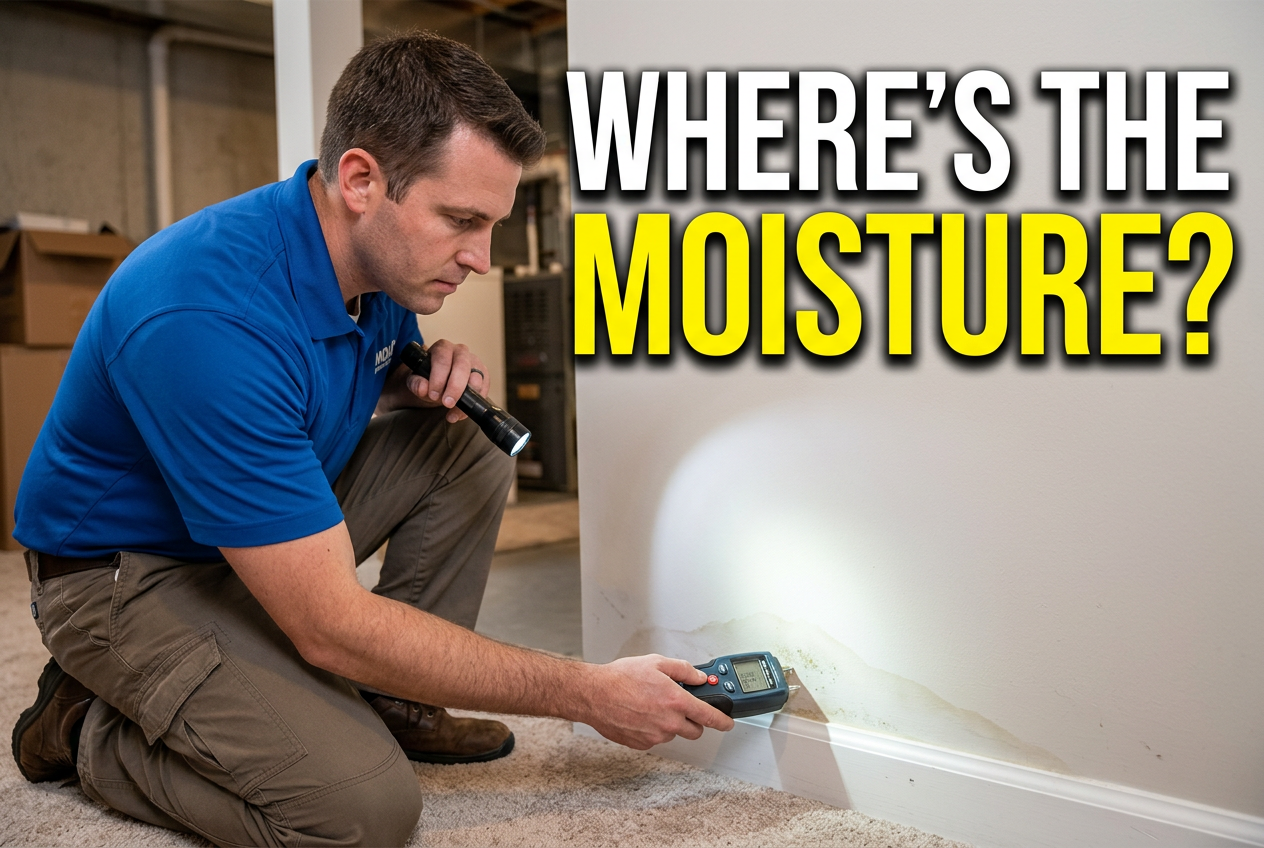
An unexplained musty odor, a recurring damp spot, or a past leak can leave Kensington property owners wondering whether to book a mold inspection or mold testing. These services are related, but they answer different questions. In many cases, looking for moisture and visible conditions is the more useful starting point; testing may help when there is a specific reason to collect samples.
What Is the Difference Between Mold Inspection and Mold Testing?
A mold inspection is a visual assessment of accessible areas, often paired with a moisture investigation. The inspector may look for visible growth, water staining, condensation, damp materials, or signs of past leaks. Moisture-measuring tools may help locate or assess dampness, depending on the property and the service scope.
Mold testing involves collecting samples—such as air or surface samples—for analysis. Results can provide information about the samples collected, but they are a snapshot of particular locations and conditions. Testing does not, by itself, identify the moisture source, explain every odor, or establish whether a home is free of mold.
These terms are sometimes used interchangeably, so ask what a provider means by “inspection” or “testing.” Clarify whether the service includes a visual assessment, moisture checks, sampling, or some combination, and what the findings can and cannot tell you.
When an Inspection May Be the Better First Step
If the concern is an unexplained moisture problem, an inspection may help establish what is happening before deciding whether sampling is worthwhile. It can focus on accessible areas around the concern and look for conditions that could support mold growth.
Consider asking about an inspection when you notice:
- A ceiling, wall, floor, or cabinet area that appears damp or has water staining.
- A leak or water intrusion that may not have fully dried.
- Repeated condensation or dampness around a window, pipe, or other surface.
- A musty odor that persists, even though its source is not obvious.
- Visible growth or discoloration that you want assessed.
- A moisture concern in a home you are buying, selling, or managing.
These signs do not prove that mold is present. For example, an odor alone cannot confirm mold, and a stain may have more than one possible cause. An inspection can help assess visible conditions and possible moisture sources, but hidden areas may not be accessible without further evaluation.
When Mold Testing May Make Sense
Testing may be useful when there is a clear question that sampling could help address. For example, a property owner may want samples collected from a particular area after discussing the findings of an inspection. A buyer or seller may also ask about testing as part of a property decision, while keeping in mind that sampling only represents the places and conditions tested.
Testing is not automatically necessary whenever there has been a leak or a musty smell. If the source of moisture is apparent, addressing that source and drying affected materials may be more important than collecting samples. If there is no visible concern or specific question, broad testing may provide results that are difficult to interpret in isolation.
Before scheduling, ask:
- What question is the sampling intended to answer?
- Which locations or materials would be sampled, and why?
- Will the service include an inspection or moisture investigation?
- How will results be explained, including their limitations?
- What practical next steps may follow from different findings?
The EPA’s guidance on mold and moisture in homes also emphasizes the importance of addressing the source of moisture. Sampling results should be considered alongside the property’s condition and history, not as a standalone diagnosis.
What to Do Before a Professional Visit
You do not need to investigate inside walls or disturb materials to prepare. Note where and when you have seen dampness, whether it returns, and any known leaks or water events. If you can do so safely, take photographs of visible conditions and share them with the inspector.
For an active leak, contact the appropriate professional to address the water source. Avoid covering a damp area before it has been assessed, and do not assume that a surface that looks dry has fully dried underneath. If an area is extensive or you are unsure how to handle it, seek qualified guidance rather than attempting a risky cleanup.
What to Expect From an Inspection or Testing Appointment
The provider should explain the planned scope and ask about your concerns and the property’s history. An inspection may include a visual review of accessible areas and moisture checks where appropriate. If testing is part of the plan, ask how samples will be collected and analyzed, and when you can expect an explanation of the results. Do not assume that an inspection includes laboratory testing unless the scope says so.
MD Mold Testing offers mold inspection and mold testing. Property owners can review the company’s BestMoldTestingUSA listing for MD Mold Testing or visit its website to learn more. When contacting a provider, describe the moisture concern and ask which service best fits the question you want answered.
Choosing a Starting Point in Kensington
For a Kensington home or property with unexplained moisture, begin with the observable facts: where the concern is, whether it returns, and whether there is a known source of water. An inspection may help assess visible conditions and moisture clues. Testing may be a reasonable next step if it addresses a specific question that remains after that assessment.
Neither service replaces fixing the moisture source. Keep records of leaks and repairs, and ask for clear explanations of any findings and recommended next steps. The right starting point is the service that fits the concern—not simply the one that collects the most samples.
Frequently Asked Questions
Can a musty smell confirm that mold is present?
No. Odor can be a reason to investigate, but it does not confirm mold or identify its source. An assessment of accessible areas and moisture conditions may help clarify what to consider next.
Does every water leak require mold testing?
No. The need for testing depends on the circumstances and the question you need answered. Addressing the water source and drying affected materials are important steps; testing may be considered when it has a clear purpose.
Can a mold test prove that a home is mold-free?
No single set of samples can establish that every area of a home is free of mold. Results reflect the samples and conditions at the time and locations tested.
Should I request inspection, testing, or both?
Describe the concern and ask the provider what each service includes. If the main issue is unexplained dampness, an inspection and moisture investigation may be a useful starting point; sampling can be discussed if it would answer a specific question.
Need Help Choosing a Mold Inspection or Test in Kensington?
MD Mold Testing offers mold inspection and mold testing for property owners considering how to investigate an unexplained moisture concern. Call to discuss your situation and ask which service may fit your needs.
MD Mold Testing
Call: (301) 717-1454




Leave a Reply