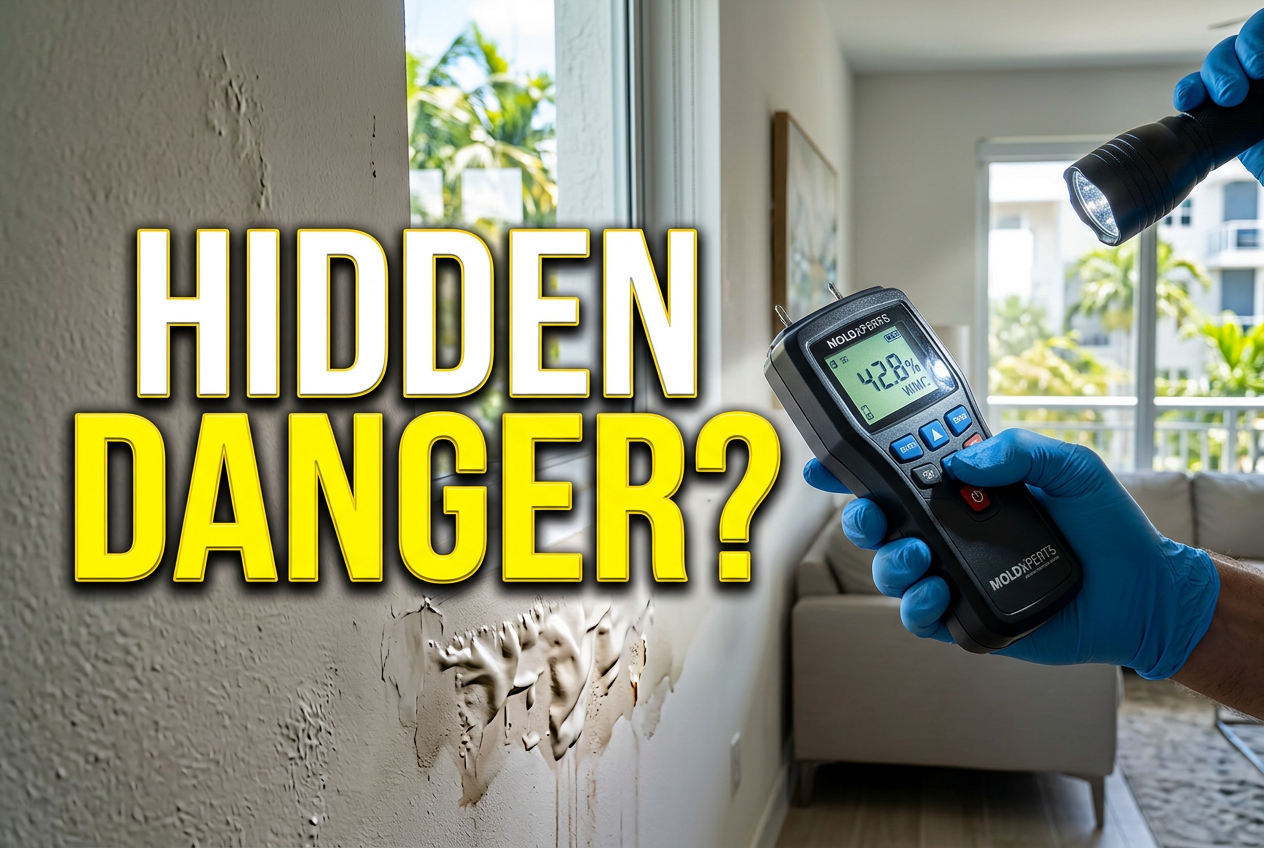
Bubbling or peeling paint on an interior wall can be frustrating, especially when a fresh coat seems like an easy fix. But in a Miami home, paint bubbles may sometimes be a visible clue that moisture is affecting the wall or the paint’s bond to the surface. The appearance alone cannot confirm the cause or establish whether mold is present. Before repairing the finish, it can help to understand what may be behind it and whether further evaluation makes sense.
Key Takeaways
- Bubbling paint can result from moisture, poor surface preparation, incompatible paint, heat, or other conditions; it does not prove mold is present.
- Look for patterns and related clues, such as recurring damage, water stains, musty odors, or nearby plumbing and window openings.
- A professional inspection may assess visible conditions and moisture-related clues, with testing considered when appropriate.
- Inspection and sampling provide information about conditions at a particular time and place; they do not identify every hidden problem or guarantee that an area is free of mold.
What bubbling paint may mean
Paint can bubble when its bond with the wall weakens. Moisture behind or within the finish is one possible cause: water may enter through a leak, move through a building material, or collect through condensation. However, moisture is not the only explanation. Paint applied to a dirty, damp, or poorly prepared surface may fail to adhere, and an unsuitable paint or application conditions can also contribute.
In Miami’s warm, humid climate, moisture can come from several sources. Heavy rain, wind-driven water, plumbing leaks, air-conditioning drainage problems, or humid air meeting a cool surface may all be worth considering depending on the home and the location of the damage. These are possibilities to investigate, not conclusions that can be drawn from a bubble in the paint.
Notice the pattern and surrounding clues
Before covering or scraping the area, take a few photos and note when you first saw the change. Record whether it grows after rain, appears near a bathroom or kitchen, or returns after previous repairs. The location and pattern may help an inspector consider what to evaluate.
Look for other observations nearby, such as discoloration, softened or crumbling drywall, a visible stain, a musty odor, or a wall that feels damp. Check whether the area is close to a roofline, window, exterior wall, plumbing fixture, air-conditioning equipment, or supply vent. These signs can help guide an assessment, but none alone confirms mold or identifies the source of moisture.
If the paint is actively wet, the damage is spreading quickly, or you suspect a plumbing or building leak, contact an appropriate qualified professional to address the suspected water source. If water is near electrical equipment or outlets, avoid touching the affected area and seek qualified help promptly. For extensive water intrusion or structural concerns, an inspection focused on mold may not be a substitute for the relevant building, plumbing, or electrical evaluation.
What a mold and moisture inspection may investigate
A mold inspection in Miami, FL may begin with a discussion of the property’s history and your observations, followed by a visual assessment of accessible areas. An independent inspector may examine the bubbling paint and nearby surfaces, look for visible signs of moisture or water damage, and consider likely moisture pathways based on the location and building conditions. The scope depends on the property, the reported concern, and what can be safely accessed.
Moisture-measuring tools may help assess certain materials or compare conditions in and around the affected area. Thermal imaging may also be used as part of a mold and moisture inspection to identify temperature patterns that warrant closer investigation. A thermal image does not show mold and does not, by itself, prove that a wall contains water. It is one tool among others, and findings may need to be interpreted alongside visual observations and moisture measurements.
Inspection can help clarify what is visible and what additional evaluation may be appropriate. It cannot automatically reveal every condition behind finished surfaces. Opening walls or other invasive work may require separate authorization and qualified trades, and is not appropriate in every situation.
When mold testing may make sense
Testing is not necessary for every paint bubble. An inspector may discuss whether sampling is useful after considering the inspection findings, the purpose of testing, and whether the results could help answer a specific question. For example, sampling may be considered when there is a particular concern about suspected mold or when a client needs information about conditions in a defined area.
Testing has limits. A sample represents the location and conditions at the time it was collected; it cannot establish the full history of a building or rule out mold in every hidden space. Results also need context, including the inspection observations and the reason the sample was collected. If testing is recommended, ask what the proposed method can answer, where samples would be collected, and what the results cannot establish.
Why repairs should follow a look at the cause
Painting over bubbling or peeling areas without understanding why the finish failed may lead to the same problem returning. If moisture is involved, the source and affected materials may need to be evaluated by the appropriate professional before cosmetic repairs. The right next step depends on the findings; an inspection report is not a repair plan for every trade, and mold testing does not repair a leak or remove damaged materials.
Avoid disturbing material that may be damaged or mold-affected until you understand the situation, particularly if the affected area is large or you have health concerns. Do not rely on a musty smell, a home test, or the appearance of paint alone to determine whether a property has a mold problem.
Choosing an independent inspector in Miami
When seeking a mold inspection in Miami, FL, ask what the inspection includes, whether moisture assessment or thermal imaging may be considered, and how the inspector distinguishes observations from conclusions. It is also reasonable to ask whether testing is recommended and why. MoldXperts provides independent mold inspection and testing, along with indoor air quality testing and thermal imaging as part of mold and moisture inspections, in Broward, Miami-Dade, and Palm Beach counties. The company does not provide mold remediation or mold removal.
An independent inspection can give property owners an assessment from a company that is not also selling remediation work. That may be useful when you want inspection and testing findings before deciding what other services, if any, to pursue.
Watch: MoldXperts on YouTube
For more information, visit the official MoldXperts YouTube channel.
Request an inspection in Miami
If bubbling paint keeps returning, you have noticed other moisture-related clues, or you want a professional assessment before repairs, contact MoldXperts to discuss your Miami property. Call (954) 464-4538 or visit moldxperts.com to ask about independent mold inspection and testing in Miami-Dade County and across South Florida.



Leave a Reply