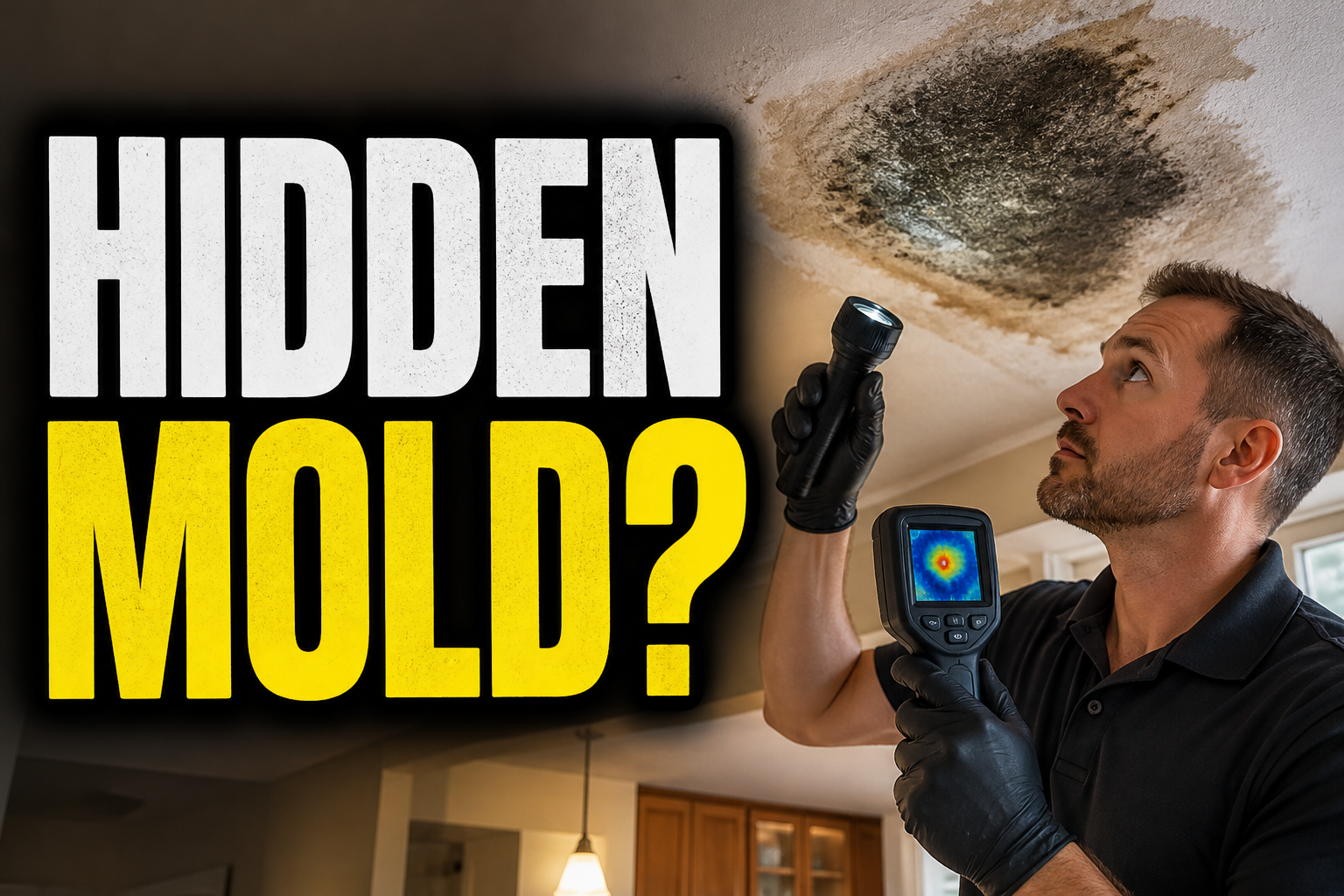
Before listing a Scottsdale home with old water stains, find out whether the area is dry and whether the moisture source was addressed. A stain alone does not prove mold is present, and an odor or visible discoloration cannot identify a mold species. A mold inspection before selling a home in Scottsdale, AZ, may help clarify the condition when there are signs of ongoing moisture, hidden damage, or uncertainty about what happened.
Document old water stains and look for evidence that the source of moisture has been corrected. If the area remains damp, smells musty, or may conceal damage, consider a qualified inspection before listing; testing may be useful when the findings are unclear.
Why old water stains deserve a closer look before listing
Ceiling, wall, or baseboard stains can remain after a leak has stopped and materials have dried. They may also point to a moisture problem that was never fully resolved. The mark itself cannot tell you when the water intrusion occurred, whether materials stayed wet, or whether mold is present behind the surface.
Before listing, it helps to understand the difference between a cosmetic stain and a continuing problem. A stain that has stayed unchanged may call for a different response than one that is spreading, feels damp, or appears alongside peeling paint or a musty odor. The EPA’s guide to mold, moisture, and the home explains why controlling moisture is central to addressing mold concerns.
What to check before making repairs
Start by recording what you can observe without opening walls or disturbing suspect materials. Photograph the affected area, note when you first noticed it, and gather any information you have about past leaks or repairs. If you know the likely source, such as plumbing or a roof leak, note whether it was repaired and when.
- Look for changes in the stain’s size, color, or surrounding finish.
- Check whether the surface feels damp, if it is safe and practical to do so.
- Notice whether there is a musty odor or visible discoloration nearby.
- Look for bubbling paint, warped trim, or other signs of moisture damage.
- Keep records of repairs, invoices, or prior inspection findings that are available to you.
Do not assume that painting over a stain resolves the underlying concern. If moisture remains or the source is active, covering the area can make it harder to assess what is happening. Avoid cutting into walls or disturbing suspected mold just to investigate; a qualified professional can help determine an appropriate next step.
Inspection, moisture investigation, and mold testing are different
A visual mold inspection looks for observable conditions that may indicate mold or water damage. A moisture investigation focuses on whether building materials are wet and where moisture may be entering or lingering. Mold testing collects samples for analysis; it may be considered when an inspection leaves a specific question unanswered, but it is not automatically necessary for every stain.
Testing does not replace finding and addressing a moisture source. The result also needs context: a sample is a snapshot of the conditions at a particular location and time, not a complete guarantee about every part of a home. The EPA’s information on identifying a possible mold problem can help homeowners understand why inspection findings and moisture conditions matter.
When an inspection or testing may make sense
Consider arranging an inspection if the stain has returned, the area still feels damp, there is a persistent musty odor, or the history of a leak is unclear. It may also be useful when a stain is near an area with signs of moisture damage or when you need a clearer understanding of a suspected hidden problem before discussing the home’s condition with prospective buyers.
Mold testing may be appropriate when a qualified professional identifies a specific reason to sample, such as uncertainty about whether suspected growth is present or a need to investigate a concern that cannot be resolved through visual assessment alone. Ask what question the testing is intended to answer and how the findings will be interpreted. For an overview of providers, browse the directory’s mold testing services.
How to handle findings before listing
If an inspection identifies a moisture source, address that source before focusing on surface repairs. Materials that are wet or damaged may need appropriate attention, but the right response depends on the location and extent of the problem. Not every concern calls for extensive removal or remediation.
If mold is found, ask for a clear explanation of the observed conditions and recommended next steps. Mold remediation may be appropriate when there is a confirmed problem requiring cleanup, while the underlying moisture issue also needs to be corrected. Avoid making claims about the home based only on a test result or a visual stain; keep records and discuss any questions about disclosures with your real estate professional or an appropriate legal adviser.
ALM Services provides mold inspection, mold testing, and mold remediation. You can review the ALM Services directory listing for more information. ALM Services also shares information on its YouTube channel.
Frequently Asked Questions
Does an old water stain mean there is mold?
No. A stain may remain after materials have dried, and its appearance alone cannot confirm mold. Check for ongoing moisture or other signs, and consider an inspection if the history or condition is uncertain.
Should I test for mold before listing my Scottsdale home?
Not necessarily. Testing may be useful when an inspection identifies a specific unanswered question, but it is not required for every old stain. First consider whether the area is dry and whether the source of moisture was repaired.
Can I cover an old stain with paint before putting the home on the market?
It is better to understand the stain’s cause and confirm that the area is dry before covering it. Paint will not correct an active leak or resolve moisture within building materials.
What if the inspection finds mold?
Ask what was found, whether moisture is still present, and what steps are recommended. Depending on the findings, remediation may be appropriate; addressing the moisture source is also important.
Need Mold Testing in Scottsdale?
ALM Services can help Scottsdale homeowners assess old water stains and possible hidden mold with mold inspection and testing, and can provide mold remediation when appropriate.
ALM Services
Call: 602-257-8000




Leave a Reply