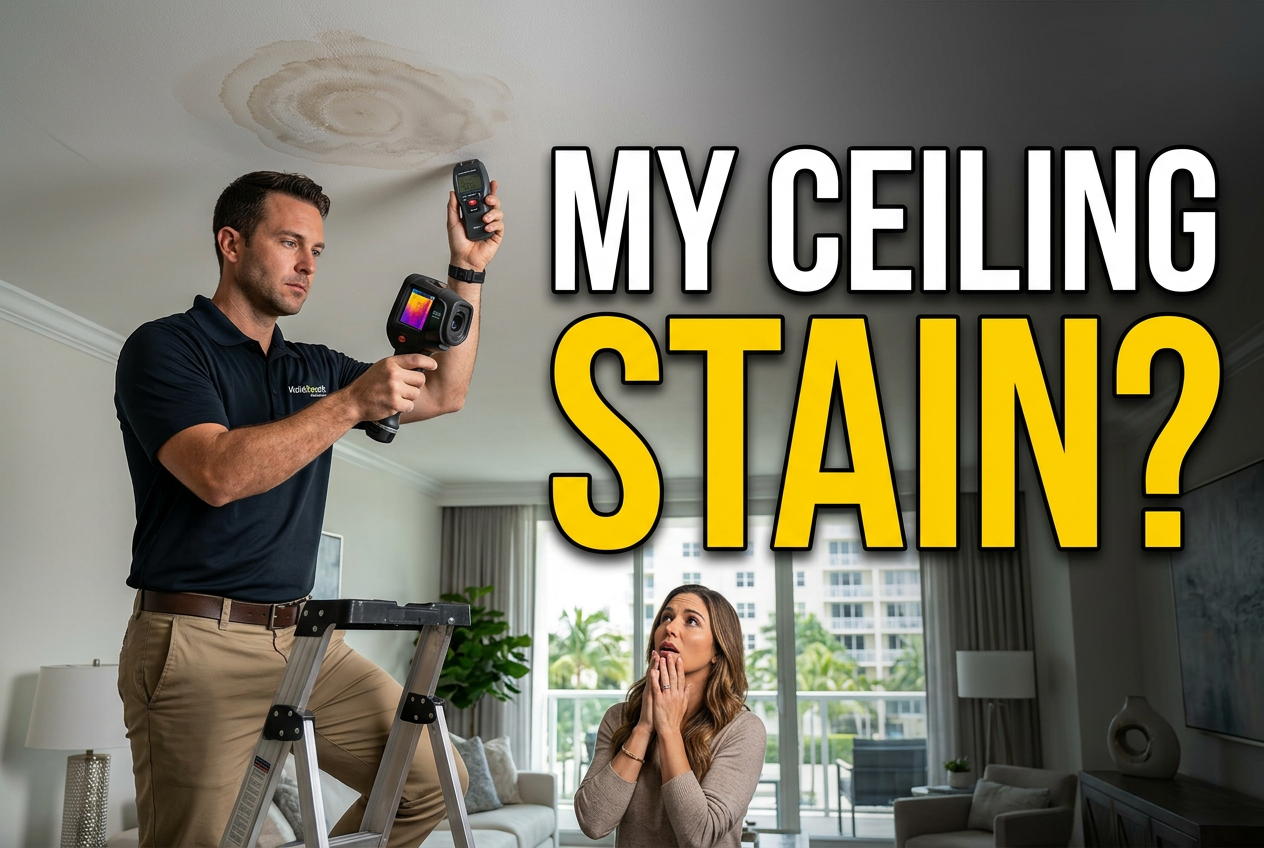
Ceiling Stain in a Pompano Beach Condo? What an Independent Mold Inspection Can Clarify
A new ceiling stain in a Pompano Beach condo can raise practical questions: Is water still getting in? Is there mold? Should you contact the upstairs neighbor, the condominium association, or a maintenance professional first? The stain is a clue, but it does not identify the source or prove that mold is present. A careful assessment can help clarify visible conditions and possible moisture concerns before you coordinate what happens next.
Key Takeaways
- A ceiling stain can result from an active or past leak, condensation, or another moisture problem; its appearance alone cannot confirm the cause.
- Document the stain and report it promptly to the appropriate property contact, especially if it is growing, damp, or near a light fixture.
- An independent mold inspection can assess visible conditions and moisture indicators, but it may not establish who is responsible for a leak or what repairs are required.
- Mold testing is most useful when it addresses a specific question and is interpreted alongside the inspection findings.
What a Ceiling Stain May—and May Not—Mean
Brown, yellow, or gray discoloration may be consistent with water exposure, but a mark can remain after a leak has stopped. A fresh or expanding stain, bubbling paint, soft drywall, peeling finish, or a damp surface may indicate that moisture is ongoing. A musty odor or visible spotting can also warrant attention, though neither determines the source of water.
In a multi-unit building, possible sources may include plumbing or fixtures in the unit above, a shared pipe or building component, a roof or exterior opening, or condensation around building systems. In South Florida’s humid conditions, moisture can also persist if a wet area does not dry adequately. These are possibilities, not conclusions: tracing the source may require access to other areas or evaluation by the relevant maintenance or building professional.
Do not assume the upstairs unit is responsible just because the stain is on your ceiling. Nor does a stain by itself establish that mold has developed. Mold growth depends on moisture and other conditions, and a visual mark cannot identify what is behind a ceiling surface.
What to Do Before the Inspection
If it is safe, take dated photos of the stain from several angles and note when you first noticed it. Keep a simple record of changes, such as whether the mark expands after rain or after water use in the unit above. Avoid cutting into the ceiling or removing materials to investigate; opening a surface can create additional damage and may expose concealed materials.
Notify the property manager, association, landlord, or other designated contact according to your building’s procedures. Share the photos and describe any active dripping, dampness, odor, or changes. Ask about the process for checking the unit above or shared building systems. Review your condo documents and applicable insurance guidance for reporting procedures, but do not treat an inspection as a determination of legal or financial responsibility.
If water is actively entering, the ceiling is sagging, or water is near electrical fixtures, prioritize safety and contact the appropriate building or emergency professionals. A mold inspection is not a substitute for urgent leak response, electrical evaluation, or structural assessment.
What an Independent Mold Inspection Can Clarify
An independent mold inspection Pompano Beach FL property owners arrange may help document what is observable and identify moisture-related concerns in the inspected areas. Depending on site conditions and the agreed scope, an inspector may look for visible mold-like growth, water staining, damp materials, musty odors, and other signs that merit follow-up. Moisture measurement tools and thermal imaging may help identify temperature patterns or areas that warrant closer attention.
Thermal imaging does not see through walls or confirm mold. It can show temperature differences that may be associated with moisture or other conditions, which need to be interpreted alongside other observations and, when appropriate, moisture measurements. A stain that appears dry during the visit also does not necessarily establish that there was never a leak.
An independent company focused on inspection and testing can provide an assessment without also selling mold-removal work. That separation may be useful to owners seeking an evaluation before deciding which other professionals to contact. It does not mean that every company offering inspection and remediation has a conflict of interest; the key is understanding the scope, findings, and any services being proposed.
When Mold Testing May Make Sense
Testing may be considered when there is a specific question that sampling could help address—for example, when an inspector sees suspicious material or when a concern remains after a moisture assessment. The appropriate method depends on the conditions and purpose of the evaluation. Testing is not automatically necessary for every stain, and a sample is only a snapshot of the area and time tested.
Results should be interpreted with the inspection findings and the property’s history. A laboratory result cannot, by itself, identify where water came from, determine how long a condition has existed, or establish who is responsible for repairs. Testing also cannot guarantee that every concealed area is free of mold. If sampling is recommended, ask what question it is intended to answer and how the results will guide next steps.
Coordinate Findings With the Right People
An inspection report can help you communicate observations and questions to your association, property manager, upstairs neighbor, or maintenance provider. It may document conditions in the areas inspected, but it is not necessarily a plumbing diagnosis, a repair specification, a code assessment, or a decision about responsibility. The association or a qualified building professional may need to investigate shared systems or areas outside your unit.
Ask the inspector to explain the scope, any limitations on access, the basis for recommendations, and whether testing was performed. If moisture is found, the underlying water source should be evaluated by the appropriate professional. Addressing visible staining without understanding whether moisture remains can leave important questions unanswered.
Arrange an Independent Assessment in Pompano Beach
MoldXperts provides independent mold inspection, mold testing, indoor air quality testing, and thermal imaging as part of mold and moisture inspections in South Florida, including Broward County. MoldXperts does not provide mold remediation or mold removal. For condo owners, an inspection may offer a clearer record of observed conditions to share while coordinating with the association or other responsible parties.
Watch: MoldXperts on YouTube
Visit the MoldXperts YouTube channel for educational information about mold inspection and testing.
Talk With MoldXperts
If you have a ceiling stain in a Pompano Beach condo and want an independent assessment of visible conditions or moisture concerns, contact MoldXperts at (954) 464-4538 or visit moldxperts.com. MoldXperts serves Broward, Miami-Dade, and Palm Beach counties.



Leave a Reply