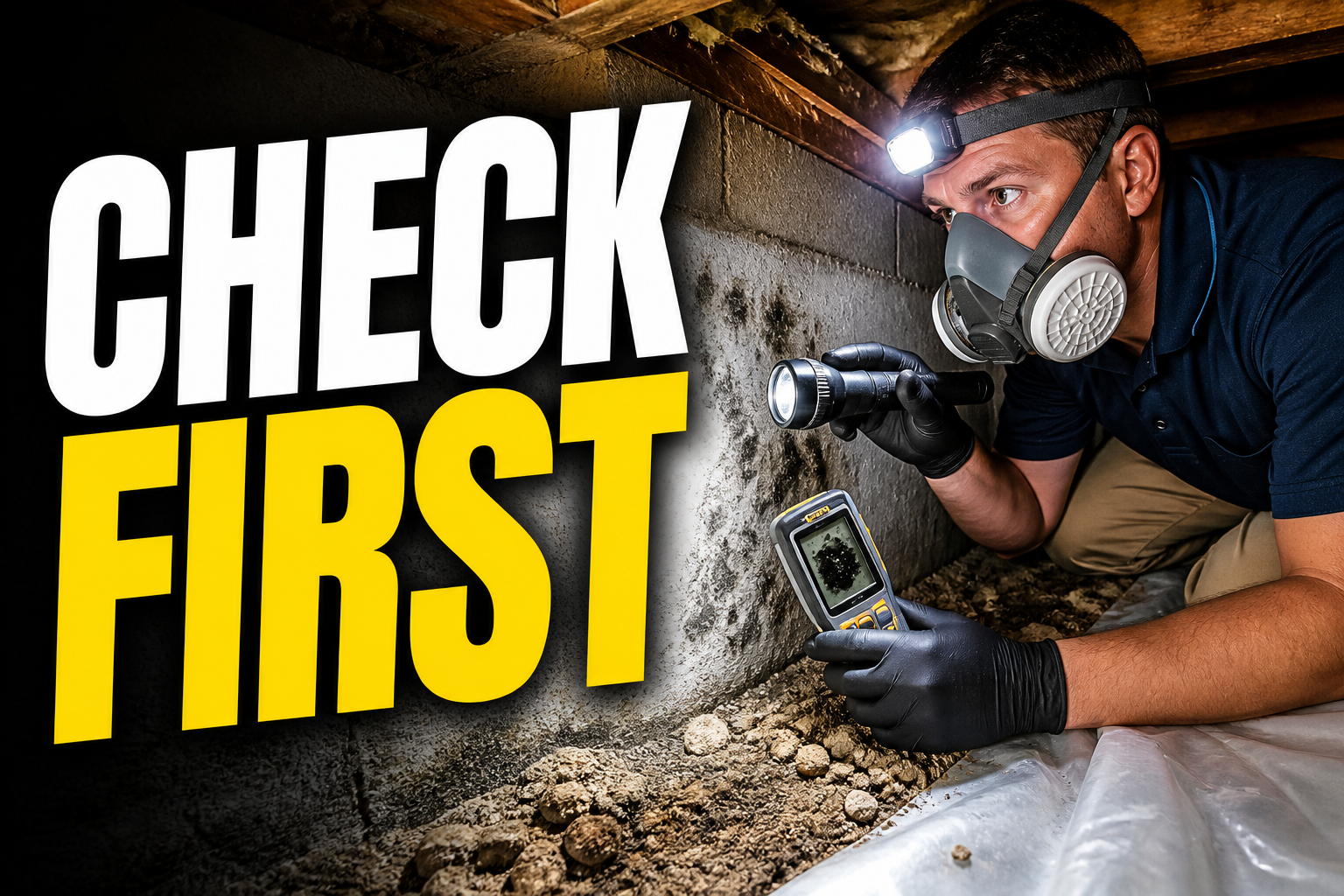
Yes—consider a mold inspection before crawl space encapsulation in Phoenix, AZ, especially if you have noticed a musty odor, water intrusion, damp materials, or unexplained staining. An inspection can help identify visible concerns and investigate moisture before the space is enclosed. It cannot guarantee that mold is present or absent, and testing is not automatically needed in every crawl space.
Before encapsulating a crawl space, check for signs of moisture and any visible material damage. If there are concerns, an inspection can help determine whether further evaluation or mold testing makes sense before work proceeds.
Why inspect before encapsulating a crawl space?
Crawl space encapsulation changes how the area is separated from the rest of the home and its surroundings. If moisture problems or suspected mold growth are already present, it is useful to understand their extent and possible source before the work makes the space less accessible.
Encapsulation is not a substitute for investigating water intrusion or addressing affected materials. A moisture source that continues after the work may still create problems, and simply covering or enclosing a stained area does not establish whether mold is present. The right sequence depends on the conditions in the individual property and the scope of the planned work.
For general background, the EPA’s guide to mold, moisture, and the home explains why controlling moisture is central to managing mold concerns.
What a crawl space inspection can—and cannot—tell you
A visual mold inspection looks for observable signs such as discoloration, damaged materials, or conditions that may support mold growth. An inspector may also investigate moisture concerns and consider whether water intrusion or another source needs attention. Odor, staining, or dampness can be reasons to look closer, but none of them alone proves that mold is present.
Mold testing is different. It may be considered when a specific question remains after an inspection, such as whether sampling could help evaluate a suspected issue. Testing has limits: results represent the samples and conditions at the time they were collected, and a test does not replace finding and correcting a moisture source. You can browse the BestMoldTestingUSA mold testing provider directory to learn about this service category.
A useful evaluation focuses on the property’s conditions and the questions the homeowner needs answered. It should not treat every mark as mold or assume testing is necessary simply because encapsulation is planned.
Signs that may warrant a closer look
Before the crawl space is enclosed, note any conditions that may justify inspection or further evaluation:
- A musty or earthy odor that seems to come from the crawl space.
- Visible discoloration or unusual growth on accessible materials.
- Water stains, damp surfaces, or materials that appear to have been wet.
- Evidence of a plumbing leak, drainage issue, or other possible water intrusion.
- Previous water damage or a recurring moisture concern that has not been explained.
These signs are reasons to investigate, not proof of mold. For more information on recognizing possible concerns, see the EPA’s guidance on how to tell if you have a mold problem.
Practical steps before the encapsulation work begins
Start by asking the encapsulation contractor how the work will affect access to the crawl space and whether any concerns have already been observed. If there are signs of moisture or suspected mold, consider having the area evaluated before work makes it harder to inspect. Keep the scope clear: an inspection, testing, and remediation answer different questions and may not all be needed.
- Photograph visible staining or damage from a safe, accessible location.
- Share known leaks, prior water damage, and recurring moisture observations with the relevant professionals.
- Ask whether the suspected moisture source has been identified and what follow-up may be appropriate.
- Avoid disturbing suspected mold or entering an area that appears unsafe or difficult to access.
- After any evaluation, discuss findings and next steps before deciding whether additional testing or remediation is appropriate.
Do not climb into a crawl space if access is unsafe. A qualified professional can advise whether an inspection is appropriate and how to proceed. The goal is to understand the conditions before they are covered—not to delay necessary work without a reason.
When mold testing or remediation may be appropriate
Mold testing may be useful when an inspection identifies a specific question that sampling could help address. It is not a routine requirement for every encapsulation project. If visible growth or moisture-affected materials are found, the next step depends on the findings, the materials involved, and whether the moisture source has been corrected.
When remediation is appropriate, addressing the moisture source is part of the overall plan. Encapsulation alone should not be treated as proof that an existing mold or water-damage concern has been resolved. ALM Services offers mold inspection, mold testing, and mold remediation in Phoenix. To understand the company’s listed services, see the ALM Services directory listing or visit the ALM Services website.
Choosing the right order of work
For a Phoenix property with a crawl space, a practical order is to identify visible concerns, investigate suspected moisture, and decide whether testing or remediation is warranted before encapsulation limits access. Then coordinate with the professionals responsible for the evaluation and the encapsulation so they understand the findings and any unresolved issues.
If the inspection does not identify a mold concern, additional mold testing may not be necessary. If it does identify a concern, the findings can help inform next steps. Either way, decisions should be based on the property’s actual condition rather than an assumption that every crawl space has mold.
For additional information about ALM Services, homeowners can also visit the company’s YouTube channel.
Frequently Asked Questions
Does crawl space encapsulation prevent mold?
Encapsulation is not a guarantee against mold. Moisture conditions and any existing concerns still need to be evaluated, and ongoing water intrusion should be addressed.
Should every Phoenix homeowner test for mold before encapsulating a crawl space?
No. Testing is not automatically needed. An inspection may help determine whether there is a specific question that mold testing could answer.
Does a musty smell confirm mold in the crawl space?
No. An odor may prompt further investigation, but it does not confirm mold or identify its source. A professional inspection can help assess the conditions.
What if mold is found before the space is encapsulated?
Discuss the findings with a qualified professional. The appropriate response depends on the affected materials and moisture source; remediation may be appropriate in some situations, but the scope should be based on the evaluation.
Need Mold Testing in Phoenix?
ALM Services can help Phoenix property owners evaluate crawl space mold concerns with mold inspection, mold testing, and mold remediation services as appropriate.
ALM Services
Call: 602-257-8000


Leave a Reply