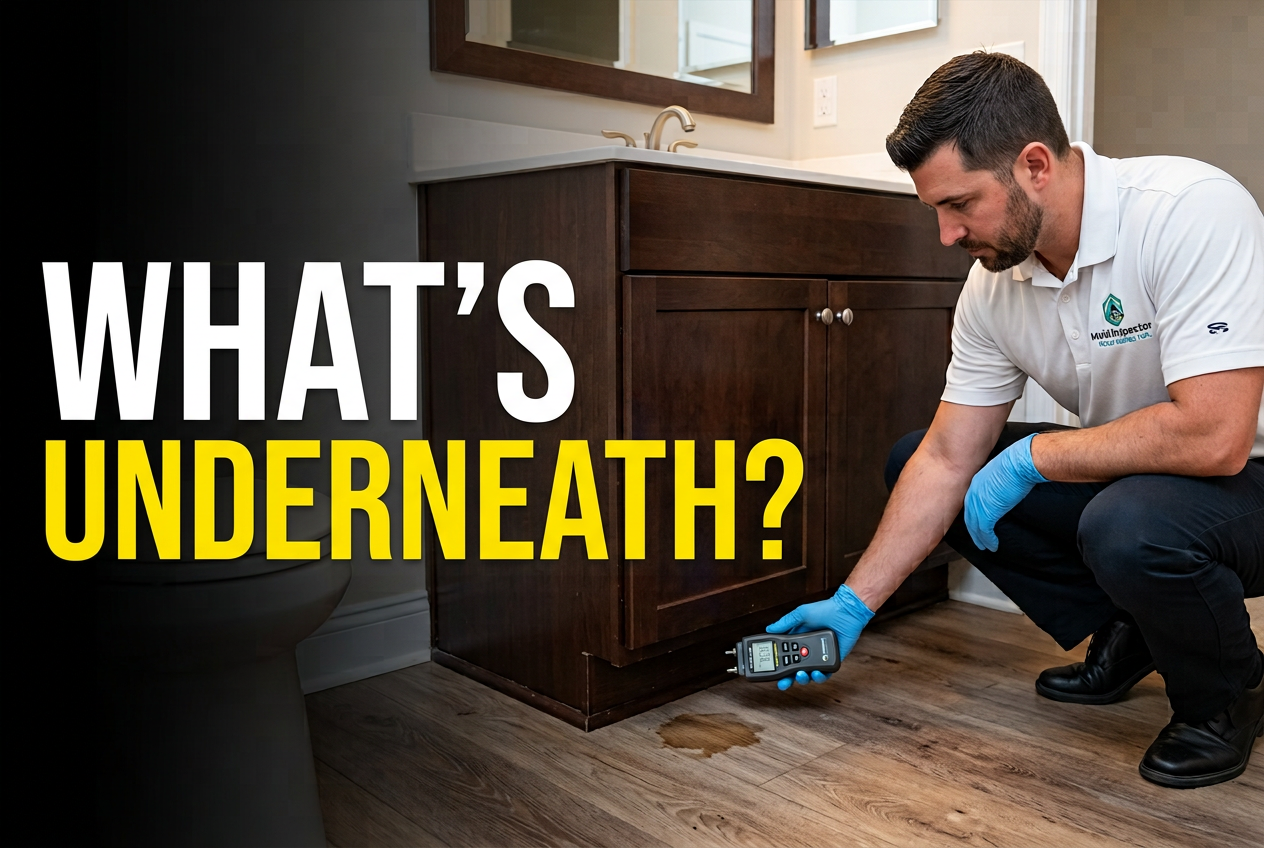
A slow leak beneath a bathroom vanity can go unnoticed while water seeps into the cabinet base, flooring, or nearby wall. Before re-renting a property in Davie, landlords should confirm the plumbing issue is repaired and check whether surrounding materials have dried and remained in good condition. A clean-looking cabinet alone may not tell the whole story, especially if water reached hidden edges or seams.
Key Takeaways
- Repair the leak first, then check the cabinet, floor edges, and adjacent materials for moisture or damage.
- Look for swelling, staining, soft spots, musty odors, or signs that water traveled beyond the vanity.
- Drying and visual checks are useful, but they may not reveal moisture trapped behind or beneath finished surfaces.
- A professional inspection can help evaluate moisture conditions; mold testing may be appropriate when there is a specific question to investigate.
Why a Small Vanity Leak Deserves a Careful Check
A loose supply connection, drain fitting, or faucet line may release only a small amount of water at a time. That can still leave the cabinet floor damp or allow water to run beneath flooring and along the wall. In South Florida’s humid climate, it is especially important to address the source and check that affected materials are drying properly rather than assuming the problem has resolved because the visible puddle is gone.
Before re-renting, a landlord’s goal is not to diagnose every building material personally. It is to confirm the leak has been corrected, note any visible damage, and decide whether the area needs further evaluation. If a tenant reported an odor, repeated dampness, or a soft floor, include those details in the assessment.
Start With the Cabinet and Plumbing Area
Remove items stored under the sink so the cabinet base and plumbing connections are accessible. If the area is still wet, avoid using the sink until the leak is repaired. A plumber can address the source; mold inspection and testing are separate services and do not replace plumbing repairs.
Once it is safe to inspect, use a flashlight to look closely at:
- The cabinet floor, corners, seams, and the area around pipe openings
- The underside and edges of the vanity, including the toe kick
- Supply lines, shutoff valves, drain connections, and the wall behind the pipes
- Nearby baseboards, caulking, and the flooring where it meets the cabinet
Watch for discoloration, bubbling or peeling finishes, swollen particleboard, rust, loose trim, or a persistent musty smell. Pressing gently on a surface may reveal unusual softness, but do not cut into walls or remove built-in materials simply to investigate. If the cabinet base is visibly deteriorated or the floor feels unstable, arrange appropriate repair or professional evaluation before placing the unit back on the rental market.
Check the Flooring Beyond the Vanity
Water can move beyond the spot where it first appeared. Inspect the floor in front of and beside the vanity, including seams, grout lines, transitions to other flooring, and the edges near the toilet or doorway. Look for lifted, cupped, stained, or loose flooring, and note whether the surface feels spongy or unusually cool and damp. These clues do not prove mold is present, but they can indicate that moisture or material damage needs attention.
Also consider what is below or next to the bathroom. In a multi-story property, a ceiling stain or odor in the room beneath may warrant a closer look. In any home, a shared wall or adjoining closet could be affected if water traveled through an opening or along a concealed surface. The extent depends on the leak, construction, and how long materials remained wet.
Drying, Documentation, and Re-Rental Decisions
Keep a record of when the leak was discovered, what was repaired, and any steps taken to dry the area. Photos taken before and after repairs can help document visible conditions. If materials remain damp, drying may require more than leaving the cabinet doors open; the right approach depends on the materials and the amount of water involved.
Do not cover damp or damaged materials with new finishes, stored items, or a fresh coat of paint before the underlying condition is understood. If the area was wet for an extended period, has a recurring odor, or shows deterioration, consider getting an independent assessment before re-renting. Whether additional work is needed should be based on the actual condition of the property, not on a single visual clue alone.
When to Consider Mold Inspection or Testing in Davie
A professional mold inspection Davie FL landlords arrange after a leak can help evaluate the affected area and identify signs of moisture or suspected microbial growth. An inspector may examine the vanity, accessible flooring edges, adjoining surfaces, and other areas indicated by the leak history. Depending on the circumstances, moisture meters or thermal imaging may help locate temperature or moisture patterns that deserve further evaluation. These tools support an inspection; they do not, by themselves, identify mold or establish that a hidden area is free of it.
Mold testing is not automatically necessary after every leak. It may be considered when there is a specific concern, such as unexplained odor, suspected growth, or a need for sampling information. Testing provides results for the samples and conditions evaluated at that time. It cannot guarantee that no mold exists elsewhere or predict future conditions. A thorough visual and moisture assessment helps determine whether sampling would answer a useful question.
MoldXperts is an independent mold inspection and testing company serving Davie and communities across Broward, Miami-Dade, and Palm Beach counties. The company does not provide mold remediation or mold removal. An independent assessment can help a property owner receive inspection or testing information from a company that is not also selling remediation work. If remediation or repairs are indicated, those are separate services to arrange with an appropriately qualified provider.
Watch: MoldXperts on YouTube
For more information about mold inspection and testing, visit the MoldXperts YouTube channel.
Arrange an Independent Assessment Before Re-Renting
If a slow vanity leak left a persistent odor, visible damage, or uncertainty about the nearby flooring, contact MoldXperts to discuss independent mold inspection or testing in Davie. Call (954) 464-4538 or visit MoldXperts.com to ask about service in Broward, Miami-Dade, or Palm Beach County.



Leave a Reply