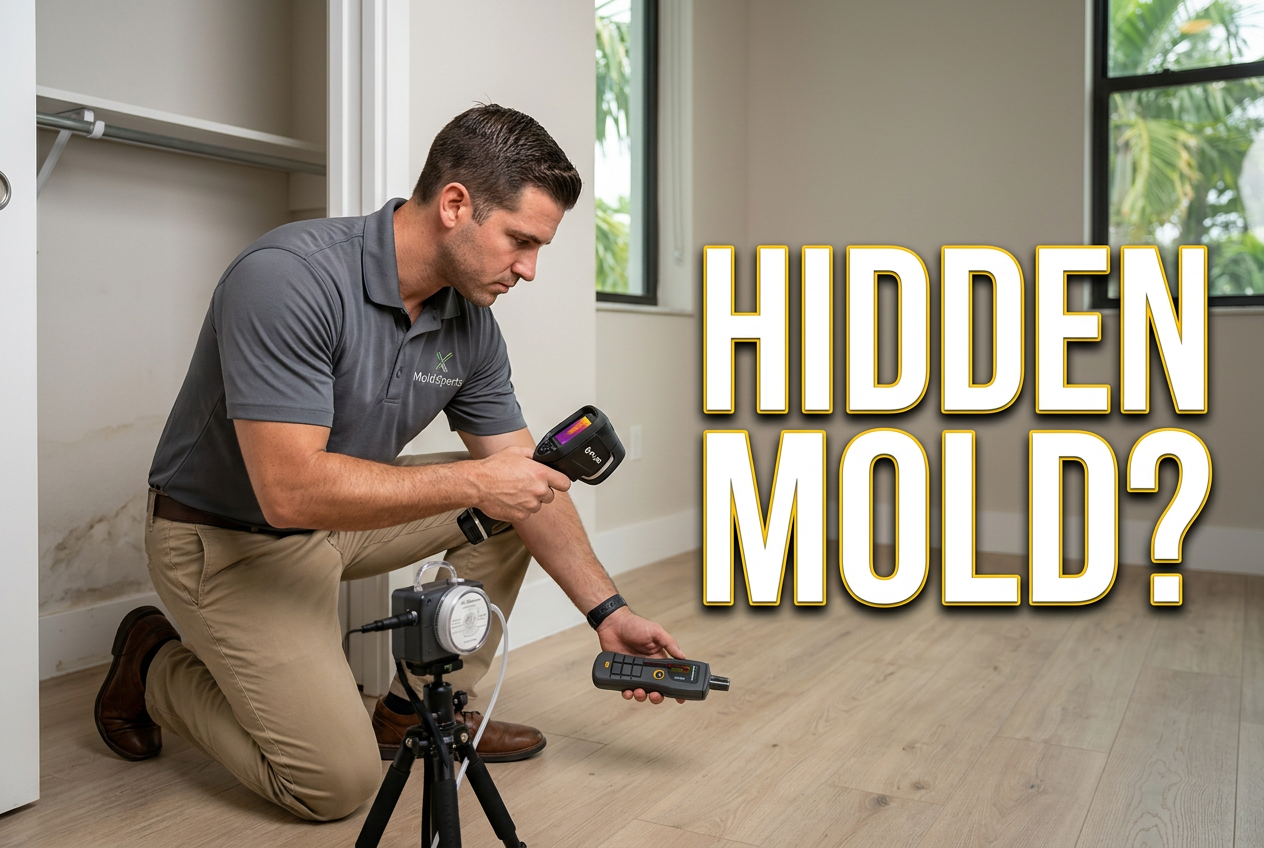
A seller’s disclosure of past water damage does not automatically mean a Miami home has a current mold problem. It does mean you should understand what happened, whether the source of moisture was addressed, and whether any dampness or damage remains. In South Florida’s humid climate, a careful review before closing can help you make a more informed decision.
Key Takeaways
- Ask what caused the water damage, where it occurred, and what work was completed.
- Look for signs of current moisture or incomplete repairs, not just evidence of old staining.
- Mold testing may be useful when there are concerns that a visual inspection alone cannot resolve.
- Sampling provides information about conditions at the time of testing; it cannot guarantee that hidden mold is absent.
- Consider arranging an independent inspection before your purchase deadlines, and discuss contract timing with your real estate professional.
What a Past Water-Damage Disclosure Can Tell You
A disclosure is a starting point for questions, not a complete diagnosis of the property. Water may have entered through a roof leak, plumbing failure, appliance leak, air-conditioning condensate issue, flooding, or another source. The location and duration of the moisture, the materials affected, and how the area was dried and repaired all matter.
Ask the seller for available documentation, such as repair invoices, contractor reports, photographs taken before and after the work, insurance claim records, permits where applicable, and any prior inspection or testing reports. Find out whether the water source was corrected and whether damaged materials were removed or simply covered. A new coat of paint or a replaced baseboard may improve appearance without answering whether the area is now dry.
If the seller cannot provide records, that does not by itself establish that a problem remains. It does leave you with less information, so a focused evaluation may be worth considering. Your real estate agent can help coordinate access and clarify relevant inspection or contract deadlines. For legal or contract questions, consult a qualified professional.
Warning Signs to Look for During a Miami Home Purchase
During a walkthrough or inspection, note musty or earthy odors, visible growth, bubbling or peeling paint, warped flooring, swollen trim, water staining, and areas that feel unusually damp. Pay particular attention to the disclosed location and nearby rooms, closets, cabinets, and areas around plumbing or air-conditioning equipment. A repaired area can also be worth examining where it meets surrounding walls or flooring.
In Miami, air conditioning and humidity management are important parts of the moisture picture. Ask whether the system has had condensate-drain problems or leaks, and look for signs of water near the air handler or drain line. A home’s normal humidity can vary with weather, ventilation, occupancy, and how the property is operated, so a single observation should be considered in context.
These clues are not proof of mold. A stain may be old, and an odor can have more than one cause. Conversely, mold or moisture can be concealed behind finishes or inside building cavities without obvious surface signs. A standard visual review has limits, especially when the relevant materials are inaccessible.
When Mold Testing May Make Sense
Professional mold testing in Miami FL may be appropriate when the disclosure raises unanswered questions, an odor persists, there are visible areas of concern, or a previous water-damaged area has been enclosed without clear documentation. Testing can also be considered when a buyer wants an independent assessment to help inform a purchase decision. It is not necessary in every transaction, and the right approach depends on the property and the specific concerns.
Testing is most useful when planned around a clear question. For example: Is there evidence of an indoor mold condition in the affected room? Are conditions in that area different from an appropriate comparison area? Is further evaluation of a particular location warranted? A qualified inspector can discuss whether sampling is appropriate after considering the history, visible conditions, and moisture findings.
Air or surface samples are not a universal “mold pass” or “mold fail.” Results represent the samples and conditions at a particular time, and interpretation depends on the sampling method, locations, environmental conditions, and other findings. A sample cannot identify every hidden area or predict whether moisture problems will return. Testing should be interpreted alongside the inspection, not treated as a substitute for it.
What an Independent Inspector May Evaluate
An independent mold inspector may review the water-damage history, look for visible signs of mold or moisture, and assess accessible areas associated with the reported event. Depending on the scope and conditions, the inspector may use moisture-measuring equipment and thermal imaging as part of a moisture inspection. Thermal imaging can help identify temperature patterns that merit further investigation, but it does not see through walls or confirm mold. Findings generally need to be checked with appropriate methods.
If sampling is recommended, the inspector should explain why it may help, where samples would be taken, and what the results can and cannot establish. A written report can document observations, testing performed, and recommendations for further evaluation where appropriate. If an area is concealed or inaccessible, the report should make that limitation clear rather than suggesting that it has been ruled out.
Choosing an independent inspection and testing company can give buyers an assessment from a business that does not also sell remediation work. Companies may offer different combinations of services, so ask what is included and how any findings will be reported.
Practical Steps Before Closing
- Clarify the history. Ask where and when the water intrusion happened, how long it continued, and whether it affected other areas.
- Review available records. Compare invoices, photographs, and reports with the seller’s description and the areas you observe.
- Check for current moisture. Ask your inspector to focus on the affected area and related building components, within the inspection’s agreed scope.
- Consider targeted testing. If concerns remain, discuss whether mold sampling is warranted and what questions it is intended to answer.
- Plan around deadlines. Arrange access and any additional evaluation early enough to understand the results before applicable purchase contingencies or other deadlines.
Even a thorough inspection is limited to the conditions and accessible areas at the time. If a moisture source is still active, addressing that source is important; sampling alone does not correct it. If testing or inspection identifies concerns, discuss appropriate next steps with qualified professionals and your real estate team.
Independent Mold Testing in Miami
MoldXperts provides independent mold inspection and testing, indoor air quality testing, and thermal imaging as part of mold and moisture inspections in Miami-Dade County and throughout South Florida. MoldXperts does not provide mold remediation or mold removal. For Miami homebuyers, an independent evaluation can help clarify observed conditions and inform questions to raise before closing.
Watch: MoldXperts on YouTube
Visit the official MoldXperts YouTube channel for educational videos and information about mold inspection and testing.
Discuss Your Miami Property
If a seller has disclosed past water damage and you want a professional assessment, contact MoldXperts to discuss mold inspection or testing for a Miami property. Call (954) 464-4538 or visit the website. MoldXperts serves Broward, Miami-Dade, and Palm Beach counties.



Leave a Reply