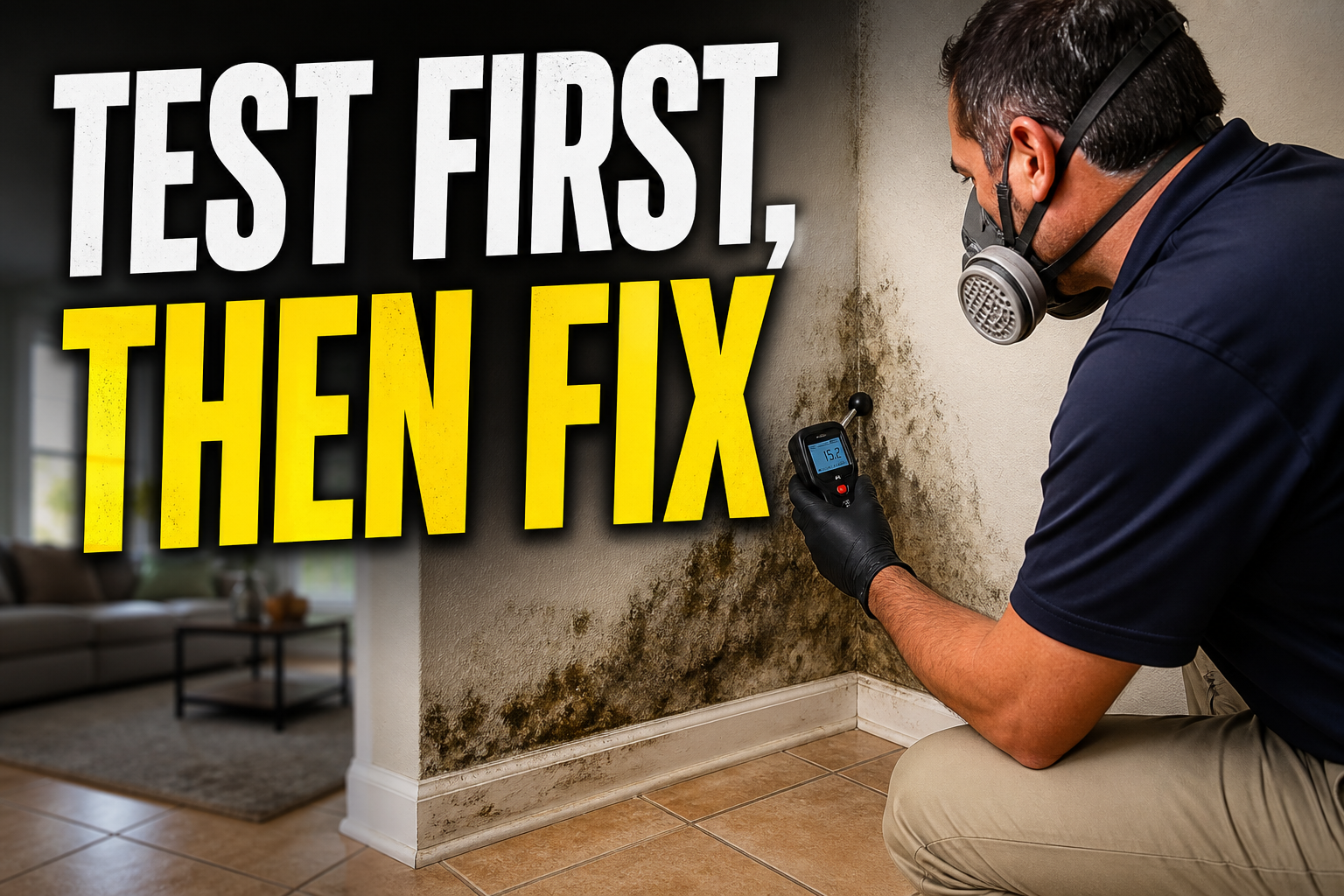
If you are planning mold remediation in Phoenix, mold testing may help clarify an uncertain situation—but it is not necessary for every project. A visual inspection and moisture investigation can often identify the likely problem and guide next steps. Testing is most useful when there is a specific unanswered question, such as whether suspected hidden mold is present or whether an area needs further evaluation.
Testing can provide information about a particular area or sample, but it does not identify or fix the moisture source. Start by investigating the water problem and the affected materials; consider testing when the results could help clarify the scope or next step.
When mold testing before remediation in Phoenix, AZ may help
Mold testing before remediation can be useful when the presence or extent of mold is uncertain and the answer could affect a decision. For example, a Phoenix property owner may notice a persistent musty odor, staining near a suspected leak, or a history of water intrusion but cannot see what is happening inside a wall or ceiling. None of these signs alone proves that mold is present, so they may warrant investigation rather than an assumption.
Testing may also be considered when a buyer, seller, landlord, or property manager needs information about a particular concern. The purpose should be clear before samples are collected. Without a defined question, test results can be difficult to interpret and may not change what should happen next.
Inspection, moisture investigation, and testing are different
These steps can work together, but they answer different questions:
- Visual inspection: Looks for visible mold-like growth, water staining, damaged materials, and other signs that may merit closer attention. Appearance alone cannot confirm a specific type of mold.
- Moisture investigation: Looks for current or past moisture conditions and possible sources, such as a plumbing leak, roof leak, or other water intrusion. Finding and addressing the source is important whether or not testing is performed.
- Mold testing: Collects samples for analysis to answer a defined question about a location or material. Results provide a snapshot and should be considered alongside the inspection and moisture information.
The U.S. Environmental Protection Agency explains that sampling is not always necessary when mold is visible. Its guidance on mold, moisture, and the home can help property owners understand why correcting moisture matters. Testing does not, by itself, determine the cause of a leak or establish whether a building is safe for a particular person.
Questions to ask before ordering a test
Before arranging sampling, consider what decision the result is meant to inform. A useful evaluation starts with the property conditions and the concern, rather than collecting samples without a plan.
- Is there visible growth, a water-damaged area, or a suspected source of ongoing moisture?
- Is the concern limited to one area, or are there signs that may point to a larger issue?
- Would a test result change the proposed remediation plan or help resolve a specific uncertainty?
- Who will explain what the results can and cannot establish?
For additional context, the EPA’s resource on how to tell if you have a mold problem discusses signs that may call for further attention. A musty smell or discoloration can be a reason to investigate, but neither identifies a mold species or confirms the full extent of a problem.
What to do before remediation begins
If you suspect a moisture problem in your Phoenix home or building, document what you can observe without disturbing affected materials. Note when the issue appeared, where staining or odor is present, and whether you know of a leak or other water event. Photos can help show whether visible conditions change over time.
Address an active water source through the appropriate qualified professional. Avoid opening walls or scraping suspected mold just to see how far it extends. If materials are wet, follow safe, situation-appropriate steps to limit further moisture while arranging an assessment. Avoid disturbing materials when their condition or the potential for contamination is uncertain.
Inspection or testing may help clarify whether remediation is appropriate and what areas need attention. However, test results should not be used in isolation to make decisions about a building. The EPA notes that the key to mold control is controlling moisture; remediation without addressing the water source may not resolve the underlying problem.
What happens if mold is found?
If an inspection or testing identifies a concern, the next step is to understand the affected area, the condition of the materials, and the moisture source. Remediation needs vary. Some situations may involve a limited area, while others may require a broader plan; a positive test does not automatically mean extensive demolition is needed.
ALM Services offers mold testing, mold inspection, and mold remediation. Property owners can review its mold testing provider category or see the ALM Services directory listing for business information. When discussing a concern, it can help to share the affected location, any known moisture history, and what you hope testing or inspection will clarify.
Frequently Asked Questions
Do I need mold testing before remediation in Phoenix?
Not always. If visible mold and a moisture source are already established, testing may not add useful information. It can help when there is a specific uncertainty that could affect the next step.
Can a mold test tell me where a leak is coming from?
No. Testing may provide information about a sample, but it does not locate or repair a water source. A moisture investigation is needed to assess possible causes.
Does a musty odor prove there is hidden mold?
No. An odor can be a reason to investigate, but it does not confirm mold or show where it may be. Inspection and, when appropriate, targeted testing can help assess the concern.
Will a positive test mean my Phoenix property needs major demolition?
Not necessarily. The appropriate response depends on the affected materials, the moisture conditions, and the extent of the issue—not on a test result alone.
Need Mold Testing in Phoenix?
ALM Services can help Phoenix property owners assess suspected mold, investigate whether testing may clarify the concern, and consider appropriate next steps, including remediation when needed.
ALM Services
Call: 602-257-8000



Leave a Reply