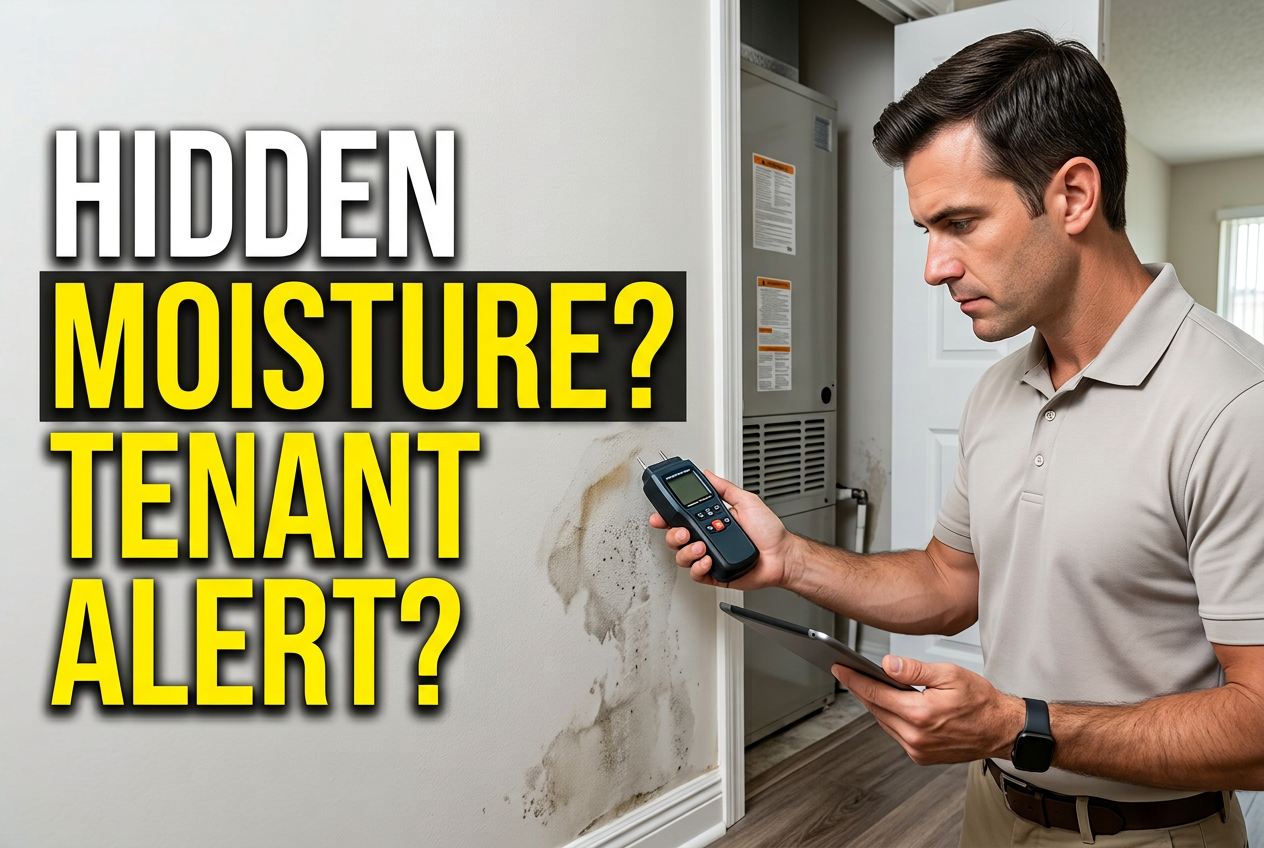
When a tenant reports recurring condensation near an air-handler closet, it is worth investigating rather than treating it as a cosmetic nuisance. In Coral Springs, warm, humid outdoor air and continuous air-conditioning use can contribute to moisture problems, but condensation may also point to an equipment, insulation, drainage, or airflow issue. Addressing the moisture source promptly can help limit property damage and clarify whether further evaluation is needed.
Key Takeaways
- Document the tenant’s observations and inspect the area for active water, staining, damp materials, or musty odors.
- Condensation can have several causes, including humid air meeting a cold surface, drainage concerns, or inadequate insulation.
- Recurring moisture deserves attention even if no visible mold is present.
- An independent mold inspection can assess visible conditions and moisture concerns, but testing cannot identify every hidden problem or prove that a home is entirely mold-free.
What recurring condensation may indicate
Condensation forms when moisture in the air contacts a surface that is cool enough for water vapor to turn into liquid. Near an air handler, cold equipment or refrigerant lines may be involved, as can a poorly insulated surface or humid air entering the closet. The equipment’s condensate drainage system is another area to have appropriately qualified HVAC personnel evaluate if water is collecting around the unit or drain components.
The location and pattern can offer clues, but they do not establish the cause on their own. Water on a pipe, dampness at the base of the unit, staining on a ceiling, and moisture on the closet wall may have different explanations. A landlord should avoid assuming that all water near an air handler is normal condensation—or that it necessarily means mold is present.
Respond promptly and document the report
Start by acknowledging the tenant’s report and arranging a timely look at the area. Ask when the condensation appears, how often it occurs, whether it gets worse during particular weather or when the air conditioning runs, and whether the tenant has noticed a musty odor or other damp areas. Request photographs if the condition is intermittent, and keep a dated record of reports, observations, and steps taken.
During a visual check, look for wet or discolored flooring, peeling paint, water stains, corrosion, damp stored belongings, or visible growth. Do not disturb suspected mold or conceal stains with paint before the underlying moisture concern has been assessed. If there is active water or a suspected mechanical problem, arrange evaluation by the appropriate qualified professional. Mold inspectors assess mold and moisture conditions; they are not a substitute for HVAC repair or plumbing work.
Practical steps while the cause is being assessed
- Keep the area accessible. Ask the tenant to move items away from wet surfaces, without handling or disturbing suspected growth.
- Note the extent of moisture. Record where it appears and whether nearby materials seem damp. Photos can help track changes over time.
- Check for obvious moisture sources. Look for water collecting near the air handler, wet insulation, or signs that moisture may be coming from another part of the property.
- Arrange appropriate technical evaluation. An HVAC professional can assess equipment operation and drainage concerns. Other building professionals may be needed if the source appears to involve a roof, plumbing, or building-envelope issue.
- Follow up. Confirm whether the moisture returns after a reported repair or adjustment, and keep communication with the tenant documented.
These observations are not a substitute for a professional diagnosis. Avoid directing a tenant to take apart equipment, clean a potentially affected area, or make repairs that require specialized training.
When an independent mold inspection may help
Consider an independent mold inspection if condensation keeps returning, building materials remain damp, there is a persistent musty odor, visible growth appears, or the moisture has affected a larger area. An inspection may also be useful when the source is unclear or when the landlord needs a documented assessment to guide next steps. In Coral Springs, an independent mold inspection Coral Springs FL can help evaluate conditions without bundling the inspection with a sale of mold-removal work.
An independent inspector may visually assess accessible areas, look for signs of moisture, use tools such as a moisture meter, and use thermal imaging as part of a moisture inspection when appropriate. Thermal imaging can show temperature patterns that warrant closer investigation; by itself, it does not confirm moisture or identify mold. Depending on the circumstances, the inspector may discuss whether air or surface sampling is appropriate. Testing is not automatically necessary for every condensation complaint.
What inspection and testing can—and cannot—establish
A mold inspection can document visible conditions and help identify areas that may need further attention. Testing, when recommended and properly interpreted, can provide information about the samples collected at the time and locations tested. Neither a limited visual inspection nor a sample can guarantee that every concealed area has been evaluated, determine every cause of moisture, or certify that a property is completely free of mold.
Results should be considered alongside the property’s history, visible conditions, moisture observations, and any evaluation of the air-conditioning system or other possible sources. If mold is found or suspected, the property owner may need to consult a qualified remediation professional separately. MoldXperts provides inspection and testing, not mold remediation or mold removal.
Keep communication clear and local
For landlords, a useful response combines timely communication, careful documentation, and attention to the source of moisture—not just the visible water. Explain what has been observed and what professional evaluations are being arranged. If the tenant reports worsening conditions or additional affected areas, update the assessment plan rather than relying on an earlier observation.
MoldXperts is an independent mold inspection and testing company serving Broward, Miami-Dade, and Palm Beach counties, including Coral Springs. Its services include mold inspections, mold testing, indoor air quality testing, and thermal imaging as part of mold and moisture inspections.
Watch: MoldXperts on YouTube
Visit the MoldXperts YouTube channel for company videos and information related to mold inspection and testing.
Request an independent assessment in Coral Springs
If condensation keeps returning near an air-handler closet, or you have concerns about damp materials, visible growth, or a musty odor, contact MoldXperts to discuss whether a professional mold inspection or testing may be appropriate. Call (954) 464-4538 or visit moldxperts.com.




Leave a Reply