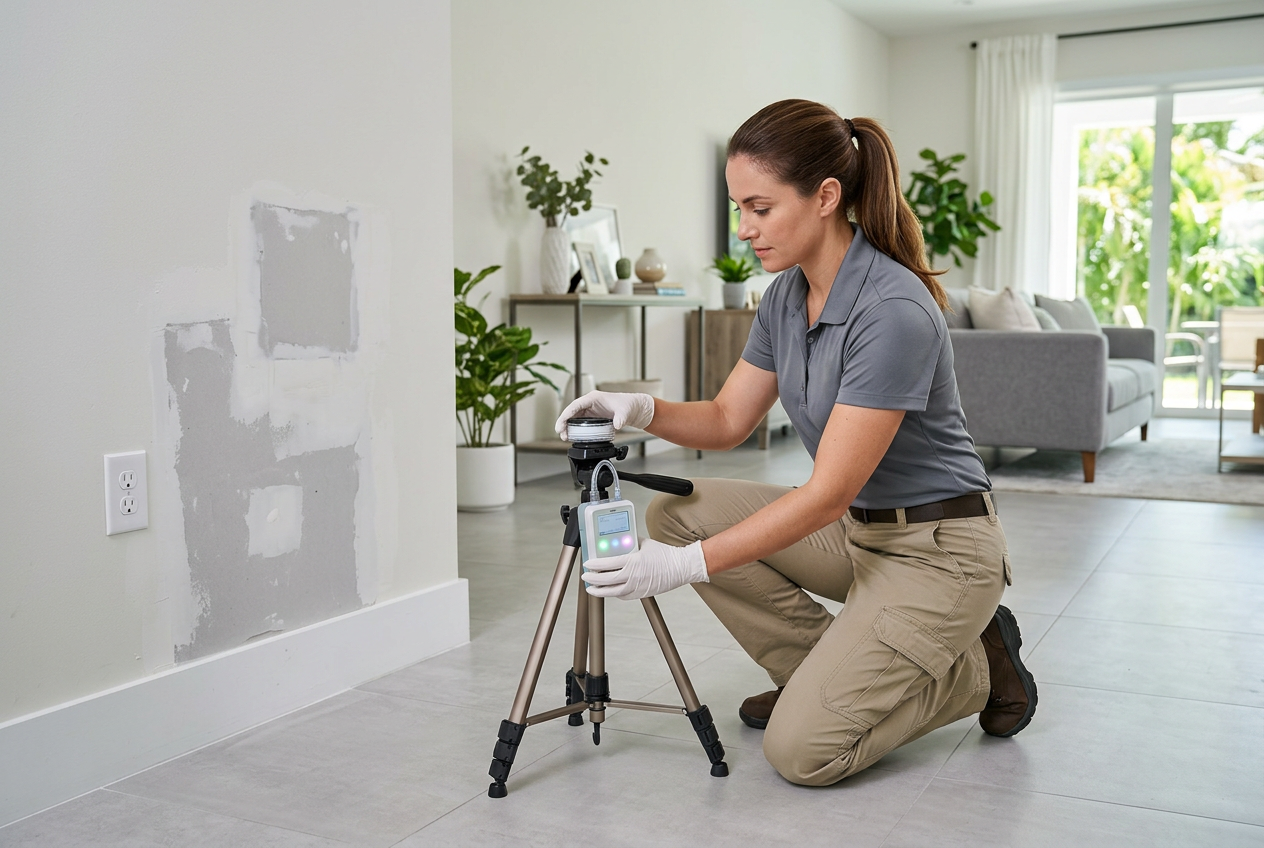
After water damage in a Miami home, cleanup may make the visible mess disappear—but it may not answer whether damp materials dried fully or whether indoor air conditions have changed. Indoor air quality testing can sometimes provide useful information, especially when concerns remain after a leak, storm intrusion, or plumbing problem. It is not a stand-alone guarantee that a home is mold-free or that a particular health concern has been resolved.
Key Takeaways
- Testing may be useful when musty odors, visible growth, or unexplained concerns remain after cleanup.
- A moisture-focused inspection helps put any air sample results in context.
- Air testing is a snapshot of sampled locations and conditions—not a complete assessment of every surface or hidden space.
- Test results cannot diagnose illness, identify every source of moisture, or guarantee that a home is free of mold.
Why follow-up may matter after water damage in Miami
South Florida’s warm, humid climate can make moisture management especially important. Water may enter a Miami home through roof or window leaks, flooding, air-conditioning drainage problems, or plumbing failures. Even after standing water is removed and affected areas are cleaned, materials such as drywall, flooring, insulation, or cabinetry may retain moisture if they were not dried adequately or if water reached concealed spaces.
That does not mean mold is necessarily present whenever a home has experienced water damage. It does mean that the extent of the water intrusion, the materials involved, how quickly they were dried, and whether moisture remains are relevant when deciding on next steps. A persistent musty smell, visible growth, recurring dampness, or signs of water returning can justify a closer look.
When indoor air quality testing may be useful
Indoor air quality testing in Miami, FL may be worth discussing with an independent professional when there is a specific question that sampling could help address. For example, a property owner may want additional information when a musty odor continues after cleanup, when there are concerns about a particular room, or when visible conditions and occupants’ concerns do not seem to match.
Testing may also be considered during a real estate transaction or after repairs when a buyer, seller, or landlord wants an independent assessment of indoor conditions. The purpose should be clear before samples are collected. Depending on the situation, an inspector may recommend visual evaluation and moisture checks first, with air sampling only if it is likely to add useful information.
Air samples are not automatically the best next step in every water-damage case. If there is an obvious active leak or visibly wet material, addressing the moisture condition is more fundamental than collecting an air sample. Testing cannot make an unresolved water source disappear.
What an independent inspector may evaluate
A professional mold inspection can look for visible signs of growth, water staining, odors, and conditions that may support unwanted moisture. The inspector may ask about the water event, cleanup, drying, repairs, and areas affected. Moisture-measuring tools can help evaluate accessible materials, while thermal imaging may be used as part of a mold and moisture inspection to identify temperature patterns that warrant further investigation.
Thermal imaging does not show mold behind a wall, and it does not confirm that a surface is wet. Any unusual pattern needs interpretation and, where appropriate, verification with other methods. An inspection may also consider nearby rooms, HVAC-related conditions, or other locations relevant to the reported water event.
If sampling is appropriate, the inspector should explain what will be sampled and why. Air sampling generally represents the air conditions at a specific place and time. Depending on the question, an inspector may consider comparison locations or other sampling approaches. Results should be interpreted alongside the inspection findings, moisture conditions, and the history of the water damage—not in isolation.
What indoor air quality testing can and cannot tell you
Testing can provide information about the types and amounts of airborne particles collected in the sampled locations under the conditions present during sampling. In some situations, those results may help assess whether an indoor sample differs from an outdoor comparison or whether further investigation is warranted. The usefulness depends on the sampling plan, the conditions at the time, and how the results relate to what was observed in the home.
But a sample is not a full inventory of a home. It cannot establish that every room, wall cavity, or building material is free of mold. It may not identify the source of a particle, prove where growth is located, or capture conditions that change over time. A result that does not show an unusual finding does not rule out hidden moisture or growth outside the sampled area.
There is also no single air test that can determine whether a home is “safe” for every person. Results do not diagnose symptoms or establish that mold caused a health problem. People with health concerns should consult a qualified healthcare professional. Likewise, a laboratory result should not be treated as a substitute for a careful visual and moisture assessment.
Reasonable next steps after cleanup
- Keep a record: Note where water entered, which rooms and materials were affected, and what cleanup or drying work was completed.
- Watch for recurring signs: Pay attention to musty odors, visible changes, damp spots, or water intrusion that returns.
- Address ongoing moisture: If there is a continuing leak or dampness, arrange for the underlying water issue to be evaluated and corrected.
- Ask what testing is meant to answer: Before sampling, discuss the concern, locations, methods, and limitations with the inspector.
- Consider an independent assessment: An inspection and testing company that does not sell remediation work can provide an assessment separate from remediation sales.
Not every situation calls for air sampling. An inspector may find that a visual and moisture-focused evaluation is more appropriate, or that additional testing could help clarify a specific concern. The goal is a useful assessment, not simply collecting samples.
Independent mold testing in Miami
MoldXperts provides independent mold inspection, mold testing, indoor air quality testing, and thermal imaging as part of mold and moisture inspections in South Florida, including Miami-Dade County. MoldXperts does not provide mold remediation or mold removal services. For Miami homeowners and property professionals, an independent evaluation can help clarify observed conditions and whether additional investigation may be appropriate.
Watch: MoldXperts on YouTube
Visit the MoldXperts YouTube channel for information about mold inspection and testing.
Arrange an assessment for your Miami property
If water-damage cleanup is complete but you still have concerns about odor, moisture, or indoor air conditions, contact MoldXperts to discuss whether an inspection or testing may fit your situation. MoldXperts serves Broward, Miami-Dade, and Palm Beach counties. Call (954) 464-4538 or visit moldxperts.com.


Leave a Reply