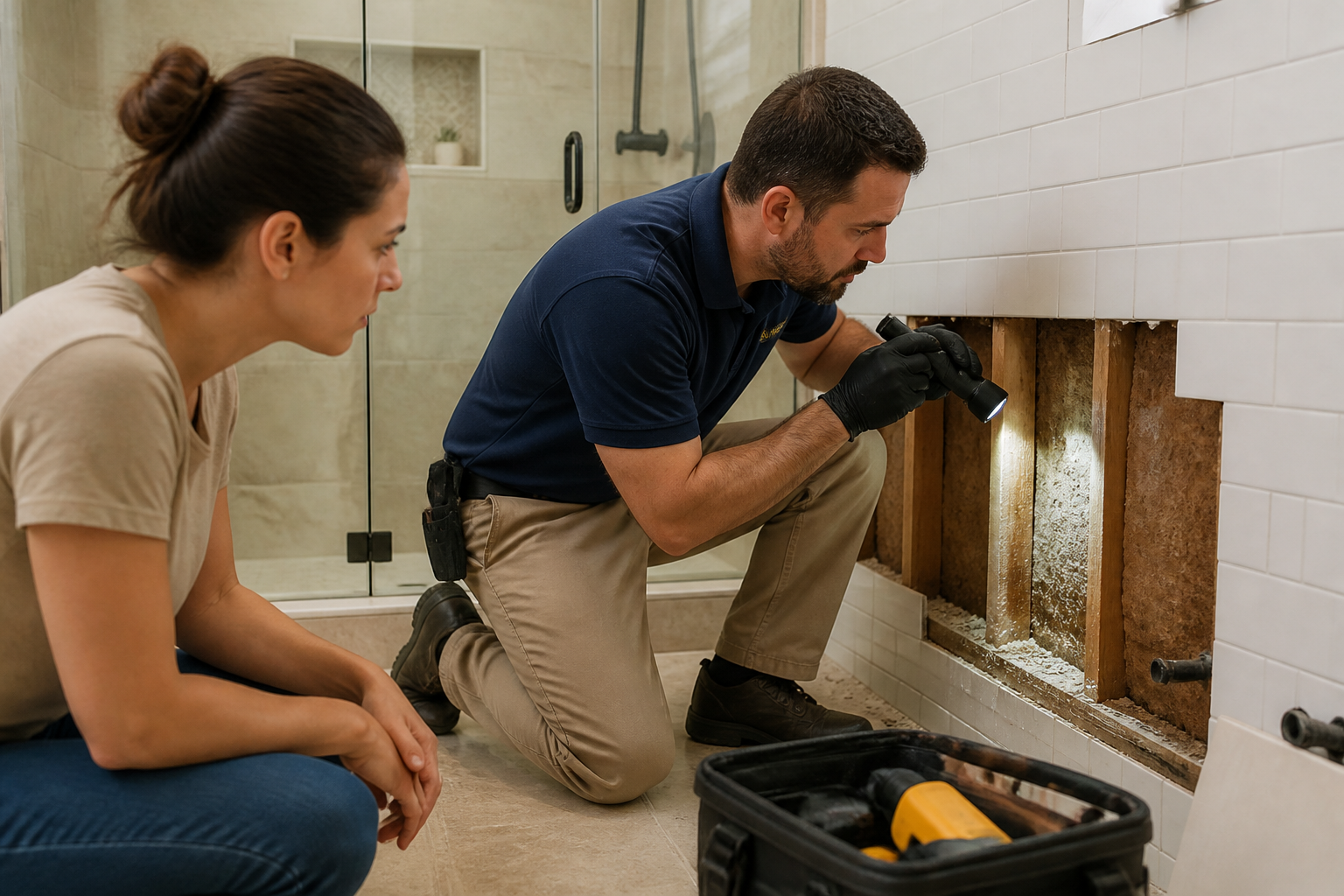
If you uncover suspected mold behind tile during a bathroom renovation in Scottsdale, pause work in that area and avoid disturbing the material further. Staining, a musty odor, or dampness can signal a moisture problem, but none of those signs alone confirms that mold is present. A careful inspection can help assess the affected area and identify whether mold testing is useful before renovation work continues.
Stop demolition around the suspected growth, document what you can see, and check whether there is an active moisture source. A mold inspection can help clarify the extent of the concern; testing may be appropriate when the results would help guide a specific decision.
Why mold may be hidden behind bathroom tile
Tile and grout are not a guarantee that the materials behind them stay dry. Water can get past gaps, damaged grout, or failed sealant, and plumbing leaks can also wet wall or floor materials. If those materials remain damp, mold may develop out of sight.
During renovation, removing tile can expose staining, softened materials, or growth that was not visible before. These observations are reasons to investigate, but they do not identify the material or prove the presence of mold. The U.S. Environmental Protection Agency explains how moisture and mold relate in homes.
What to do when you uncover suspected mold
- Pause work in the affected area. Avoid scraping, sanding, or pulling away more material around the suspected growth. Disturbing it can spread dust and debris through the room.
- Document what is visible. Take photographs from a safe distance and note where the material was found, whether it appeared damp, and when it was uncovered.
- Look for signs of ongoing moisture. Consider whether there is a plumbing leak, water intrusion, or another source that needs attention. Do not open walls or handle damaged materials if doing so could create a safety risk.
- Coordinate with the renovation team. Let the contractor know what was found and agree on a plan for the affected area before resuming demolition or installing new materials.
- Consider an independent mold inspection. If the affected area is unclear, moisture may remain, or the findings could change the renovation scope, a qualified inspection may help inform next steps.
Do not cover suspected growth with new tile, paint, or wallboard before the underlying moisture concern has been evaluated. Simply replacing the visible finish may leave damp or affected materials in place.
When a mold inspection during bathroom renovation in Scottsdale, AZ may help
A mold inspection during bathroom renovation Scottsdale AZ homeowners arrange can help distinguish visible conditions from questions that need further investigation. A visual inspection looks for signs of mold or water damage. A moisture investigation checks materials or areas for evidence of excess moisture. Mold testing collects samples for analysis, when testing is appropriate to the situation.
These are related but different steps. Not every stain or damp spot requires testing, and a sample is not always needed to decide what to do. Testing may be useful when there is no visible growth but a concern remains, when the extent of a problem is uncertain, or when information about the material would help guide a decision. The EPA notes that testing is not necessary in every situation.
Ask what question an inspection or test is intended to answer before proceeding. Results are most useful when interpreted alongside the room’s condition, the moisture source, and the renovation plans—not in isolation.
What an inspection may involve
An inspection may include a visual review of the exposed area and nearby surfaces, questions about when the concern was discovered, and an investigation for possible moisture sources. The approach depends on what is accessible and what information is needed. If testing is recommended, ask what will be sampled and how the findings may affect the renovation plan.
ALM Services offers mold inspection, mold testing, and mold remediation. Homeowners can review the ALM Services directory listing or explore the directory’s mold testing providers when considering next steps.
If mold is confirmed, address the moisture source too
If an inspection or testing indicates mold is present, the response depends on the extent of the affected materials and the reason they became wet. Some situations may call for mold remediation; others may require a limited repair and replacement of damaged materials. Extensive demolition is not automatically necessary in every case.
Before the renovation is closed up, the moisture source should be identified and addressed. Depending on the findings, that may involve fixing a leak or correcting another water-entry problem. Replacing tile without resolving continuing moisture can allow the underlying issue to persist. The EPA’s guidance on why mold grows in homes emphasizes the role of moisture.
Keep a record of the exposed area, any inspection findings, and repairs made. Share relevant information with the renovation contractor so the work plan accounts for the condition of the materials before new finishes are installed.
Frequently Asked Questions
Does black staining behind tile prove that it is mold?
No. Color and appearance alone cannot confirm whether a material is mold or identify its type. An inspection can assess the visible condition, and testing may be considered if it would help answer a specific question.
Should I continue removing tile if I see suspected mold?
Pause work around the area and avoid scraping or disturbing the material. Document what you can see and coordinate with the renovation contractor about an appropriate inspection or evaluation.
Is mold testing always needed before replacing bathroom tile?
No. Testing is not necessary in every case. Whether it is useful depends on the visible conditions, moisture concerns, and whether the results would change the decisions about the renovation.
Can new tile be installed over the affected area?
Do not cover a suspected problem before assessing it and addressing any moisture source. The affected materials and the condition behind them should be considered as part of the renovation plan.
Need Mold Testing in Scottsdale?
ALM Services provides mold testing, mold inspection, and mold remediation for concerns such as suspected mold uncovered during a bathroom renovation. Contact the team to discuss what was found and what kind of evaluation may be appropriate.
ALM Services
Call: 602-257-8000



Leave a Reply