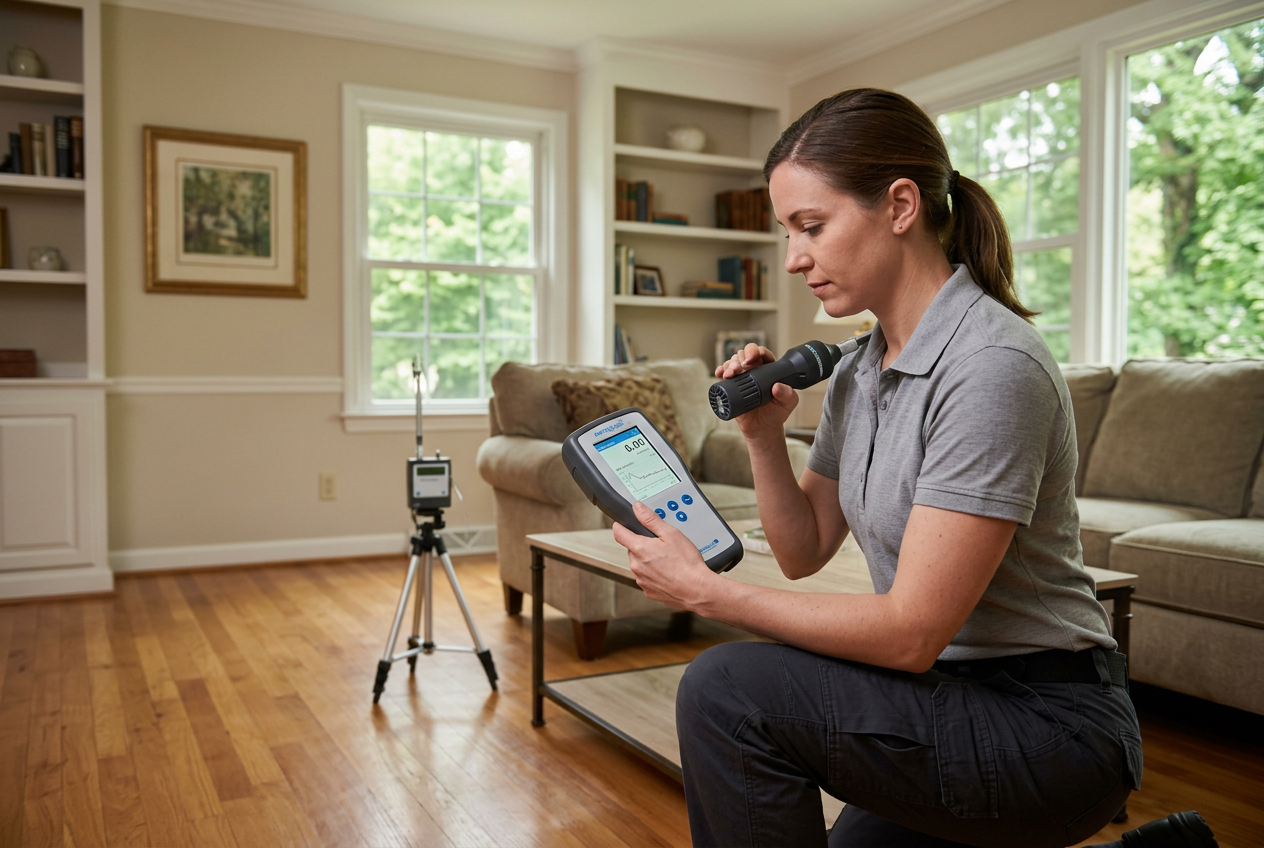
Stale or stuffy air in a Glen Echo home can make a room feel uncomfortable, but the sensation alone does not identify the cause. Ventilation, humidity, dust, household products, HVAC operation, or an underlying moisture concern may all be worth considering. Indoor air quality testing in Glen Echo, MD, may help investigate a specific concern—but useful testing starts with a clear question about the home and its conditions.
What “stale air” can—and cannot—tell you
People may use “stale” to describe air that feels stuffy, smells musty, or seems to linger after cooking or cleaning. These observations can point toward something to investigate, but they do not confirm a particular pollutant or building problem. Odor alone cannot establish that mold is present, and a room’s feel is not a measurement of air quality.
Possible contributors include limited outdoor-air exchange, blocked or poorly balanced airflow, a dirty HVAC filter, elevated indoor humidity, or emissions from products and materials. Cooking, cleaning, pets, and other ordinary activities can also affect indoor air. The relevant cause depends on the home, the room, and when the problem occurs.
Testing can be helpful when it is selected to answer a defined question. It is less useful as a broad search for “everything” if the sampling plan, timing, and limits are not clear.
Start with simple observations and maintenance
Before arranging testing, note where and when the air seems stale. Does it affect one room or the whole home? Does it change when the HVAC system runs, after cooking, or when windows have been closed for a while? A brief log of odors, visible condensation, humidity readings, and recent leaks can help a professional understand the concern.
- Check that supply and return vents are not blocked by furniture, rugs, or stored items.
- Review the HVAC filter and replace it according to the equipment and filter manufacturer’s guidance.
- Use kitchen and bathroom exhaust fans when appropriate, and make sure they discharge as intended.
- Look for visible moisture, plumbing leaks, condensation, or water staining, without disturbing suspect materials.
- Consider whether recently used cleaners, paints, furnishings, or other products could be contributing odors.
These steps may reveal a practical issue, but they are not a substitute for investigating persistent concerns. Avoid masking an unexplained odor with fragrance products before trying to identify its source.
What indoor air quality testing may investigate
There is no single test that measures every aspect of indoor air quality. Depending on the concern, an assessment may involve observations and measurements such as relative humidity, temperature, particulate matter, or carbon dioxide as an indicator that can help evaluate ventilation patterns. Some investigations may consider volatile organic compounds or other specific substances, but the appropriate method depends on the suspected source and the question being asked.
Carbon dioxide readings are not a general measure of whether air is “safe,” and a reading does not identify every ventilation issue. Carbon monoxide is a separate, serious safety concern: use properly installed carbon monoxide alarms and contact the appropriate emergency or qualified professional resource if an alarm sounds or exposure is suspected. Do not rely on a general indoor air quality test as a replacement for an alarm.
For mold-related concerns, a visual inspection and moisture investigation are different from mold testing. An inspection looks for visible conditions and possible moisture sources; testing may involve collecting samples for analysis when the findings and purpose justify it. Neither a musty smell nor a laboratory result, on its own, necessarily explains the full cause of a home’s air concerns. The EPA’s introduction to indoor air quality provides additional background on common indoor air considerations.
When a professional assessment may make sense
Consider seeking professional guidance if stale air persists despite routine maintenance, if a concern is limited to a particular area, or if you have observed recurring moisture, water intrusion, or unexplained musty odors. A professional can discuss what can be observed, whether moisture investigation is appropriate, and whether any testing would answer a useful question.
Before proceeding, ask what the proposed assessment includes and what it does not. Helpful questions include:
- What concern is the inspection or test intended to investigate?
- Which measurements or samples are proposed, and why?
- How will the results be interpreted, and what are the method’s limitations?
- Will the assessment consider moisture conditions and possible sources, not just a sample result?
- What practical next steps might follow different findings?
For an overview of the approved services offered by MD Mold Testing, visit its BestMoldTestingUSA directory listing. The company’s services include mold testing and mold inspection; this should not be confused with a claim that it provides every type of general indoor air quality test.
What to expect from mold inspection or testing
If the concern is specifically mold-related, an inspection may focus on accessible areas, visible conditions, and signs of moisture. Testing may be considered when it has a defined purpose, such as helping evaluate a particular suspected condition. A test result is only one piece of information; it does not automatically locate a moisture source or determine why an odor persists.
When moisture is found, addressing its source is important to preventing continued dampness. If materials may be damaged or a repair is needed, ask an appropriately qualified professional about next steps. MD Mold Testing does not offer mold remediation, so do not assume that testing or inspection includes repair or cleanup.
Frequently Asked Questions
Can indoor air quality testing identify why my home smells stale?
It may help investigate a specific suspected factor, but no single test identifies every possible cause. An assessment should consider the odor’s location and timing, the home’s ventilation and moisture conditions, and the limits of the selected measurements.
Does a musty smell mean there is mold?
No. A musty odor can be a reason to look for moisture or other sources, but odor alone does not confirm mold. A visual inspection and moisture investigation may help determine whether mold testing is appropriate.
Should I test the air before checking the HVAC system?
Basic checks—such as looking for blocked vents and reviewing the filter—can be sensible first steps. If the concern persists, a professional can help determine whether a more focused assessment or test is warranted.
Does MD Mold Testing provide general indoor air quality testing?
MD Mold Testing’s approved services include mold testing and mold inspection, along with asbestos testing and Walk and Talk Home Inspections. Contact the company to discuss whether its mold-related services fit your specific concern.
Concerned About Stale Indoor Air in Glen Echo?
If you suspect a mold-related moisture concern, MD Mold Testing can discuss whether a mold inspection or testing may be appropriate for your situation. Contact the company to ask about its services and next steps.
MD Mold Testing
Call: (301) 717-1454




Leave a Reply