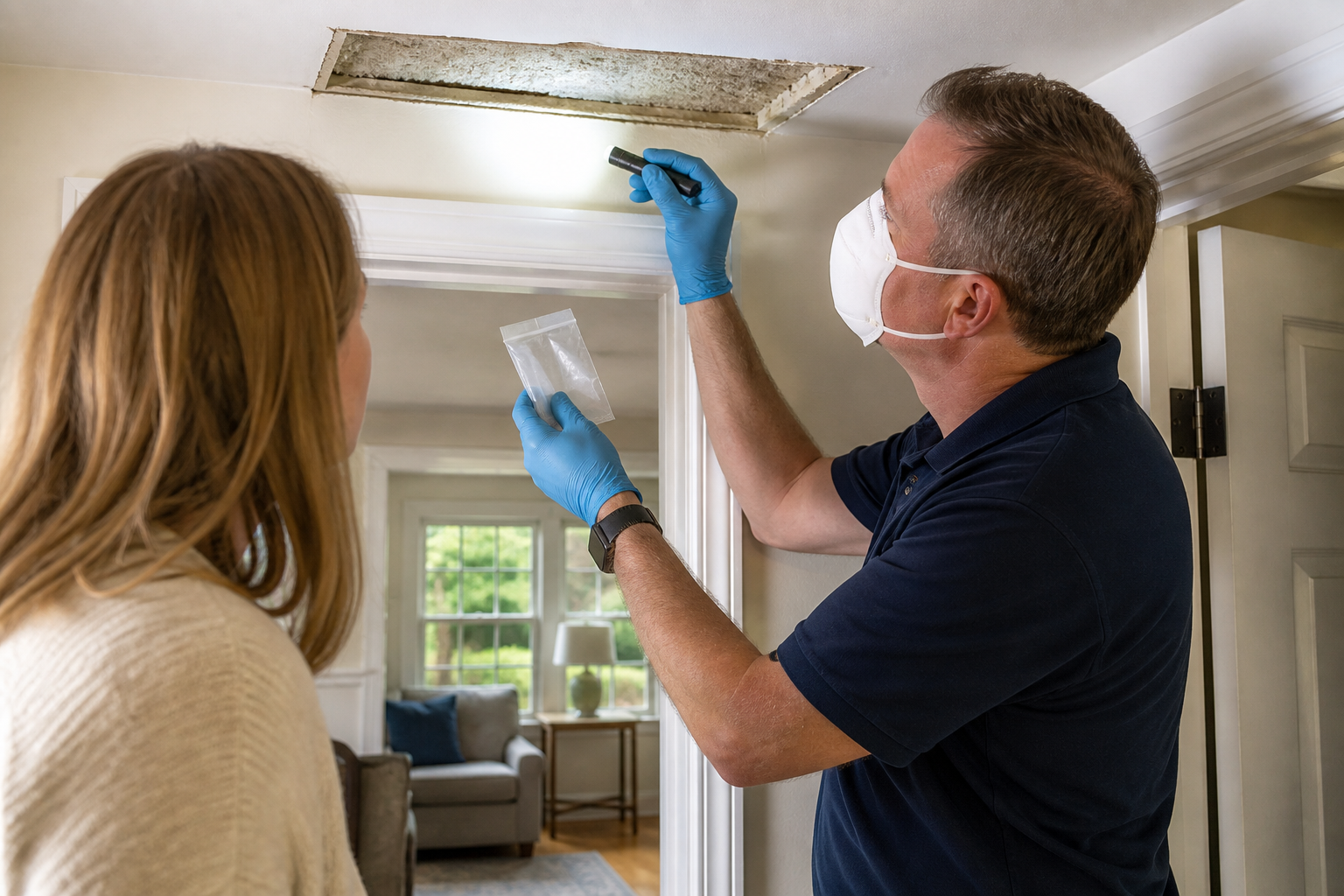
Finding a material you suspect might contain asbestos during a home tour can raise practical questions: Is it a concern? Can it be tested before closing? What should you ask the seller? The material’s appearance or the home’s age alone cannot answer those questions. Testing can help identify whether a specific suspect material contains asbestos, so you can make better-informed decisions before buying.
Quick Takeaway: Don’t disturb a suspect material to identify it. If testing is appropriate, arrange professional sampling with permission and review the results before deciding how to proceed.
What asbestos testing can—and cannot—tell you
Asbestos testing typically involves collecting a sample of a particular building material and having it analyzed by a laboratory. The result can indicate whether the sampled material contains asbestos. It does not automatically tell you whether other materials in the home contain asbestos, or whether a material is releasing fibers.
That distinction matters when you are considering a home in Chevy Chase. A test applies to the material sampled—not every visually similar surface or product elsewhere in the property. If several different materials are suspect, each may need to be assessed separately.
Testing is also different from a general visual inspection. A professional may be able to identify materials that warrant further evaluation, but you cannot confirm asbestos just by looking at them. The EPA’s information about asbestos in the home explains that asbestos-containing materials are not necessarily hazardous when they are in good condition and left undisturbed. The condition of the material and whether it may be disturbed are important considerations.
Where suspect materials may be found
Asbestos was used in a variety of building products. Some materials that may warrant further evaluation include:
- Some older resilient floor tiles and the adhesive beneath them
- Insulation on pipes, boilers, or other heating equipment
- Some textured coatings or ceiling materials
- Some cement-based siding, roofing, or other building products
This list is not a way to diagnose a material. Similar-looking products can have different compositions, and a product’s age or appearance does not prove that it contains asbestos. If you notice damaged material, or suspect it may be disturbed during planned work, avoid touching it and ask a qualified professional what steps make sense.
When testing may make sense before you buy
Testing may be worth discussing when a specific material is in poor condition, when you expect renovations that could disturb it, or when you need more information to evaluate the property. For example, a buyer planning to replace flooring may want to ask whether the existing flooring or adhesive should be assessed before work begins.
Testing may be less useful if the material is intact, will remain undisturbed, and no one needs a definitive answer for a current decision. A professional can help you consider the purpose of testing and the areas that need attention. The goal is not to test every material indiscriminately, but to get relevant information for the property and your plans.
Keep in mind that an asbestos test does not replace a full home inspection. It answers a narrower question about the sample or samples collected. A standard home inspection may note visible concerns, but it does not necessarily identify asbestos through laboratory analysis.
How to approach testing during a home purchase
If you are considering asbestos testing before buying a home in Chevy Chase, use a straightforward process:
- Note the location without disturbing it. Record what you observed and where it is. Do not scrape, cut, drill, sand, break, or remove a suspect material.
- Ask about access and permission. Sampling may require access to the home and the seller’s authorization. Work through your agent and follow the terms of your purchase agreement.
- Clarify the scope. Identify which specific materials or areas are being evaluated, and ask what the test results will and will not cover.
- Allow time for results. Ask about the testing process and anticipated timing early enough to fit your inspection and contingency schedule.
- Discuss next steps based on the findings. A positive result does not automatically mean a material must be removed. A qualified professional can help explain options, which may depend on the material’s condition and whether it will be disturbed.
Because purchase timelines and access arrangements vary, raise the question promptly if the answer could affect renovation plans or your decision to proceed. Avoid assuming that a seller’s repair or disclosure resolves the question unless you have reviewed the relevant documentation.
How a Walk and Talk can help during a tour
A Walk and Talk Home Inspection can give a buyer an opportunity to look more carefully at accessible areas of a property and ask questions while touring. If you notice a material that concerns you, an inspector may be able to help you identify what should be documented or evaluated further. A Walk and Talk can help you frame questions, but it does not confirm asbestos content unless appropriate testing is arranged.
It also is not a substitute for a traditional full home inspection, and it cannot guarantee that hidden problems will be found. For a buyer weighing possible asbestos concerns, it may be one helpful part of gathering information—alongside a full inspection, seller discussions, and testing when warranted.
MD Mold Testing offers Asbestos Testing and Walk and Talk Home Inspections. You can review the MD Mold Testing listing to learn more about the business and its approved services.
Frequently Asked Questions
Can I tell if a material contains asbestos by looking at it?
No. Appearance and age alone cannot confirm whether a material contains asbestos. Laboratory analysis of an appropriate sample may be needed.
Should I take a sample myself to speed up the home purchase?
No. Collecting a sample can disturb the material and potentially release fibers. Do not scrape, cut, drill, sand, break, or remove it yourself. Ask a qualified professional about appropriate sampling.
Does a positive test mean the material has to be removed?
Not necessarily. The appropriate response depends on the material’s condition, location, and whether it may be disturbed. Seek qualified guidance before planning work.
Does a Walk and Talk Home Inspection include asbestos testing?
A Walk and Talk can help you examine accessible areas and ask informed questions, but it does not by itself confirm asbestos content. Testing a suspect material is a separate step that may be appropriate depending on your concerns and the property.
Considering Asbestos Testing for a Chevy Chase Home?
MD Mold Testing offers asbestos testing to help buyers evaluate suspect building materials. Call to discuss your concerns and possible next steps.
MD Mold Testing
Call: (301) 717-1454


Leave a Reply