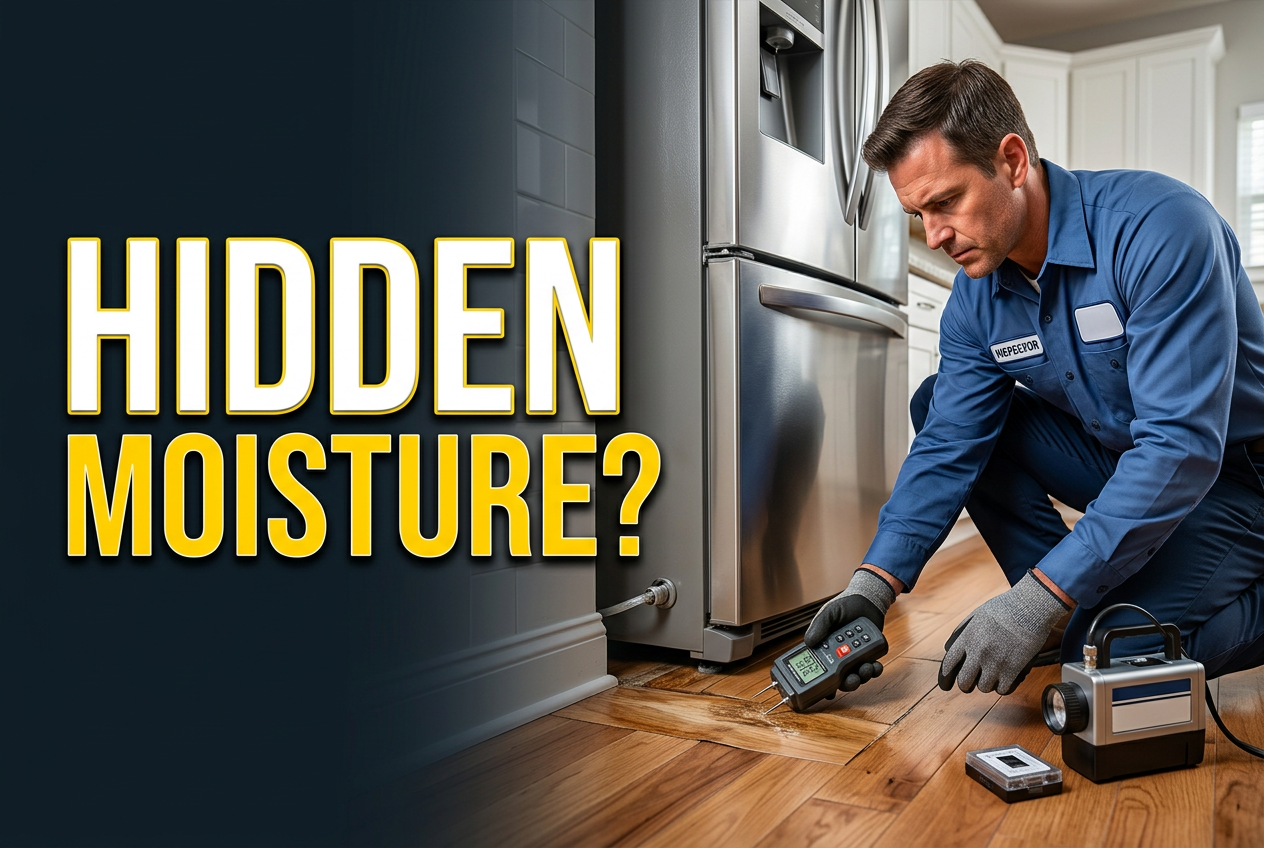
After a Refrigerator Water-Line Leak: When to Consider Mold Testing Beneath Flooring in a Pompano Beach Home
A refrigerator water-line leak can be easy to miss. Water may seep beneath the appliance, cabinets, or nearby flooring before it becomes visible, leaving moisture trapped below the surface. In a Pompano Beach home, where warm, humid conditions can make thorough drying especially important, a leak that appears small may deserve a closer look if the floor stayed wet or the source went unnoticed for a while.
Whether to arrange mold testing after water damage Pompano Beach FL depends on factors such as how long the area was wet, what materials were affected, and whether there are lingering signs of moisture or musty odor. Testing is not automatically necessary after every leak, and it cannot replace locating and addressing the source of moisture. Here are some practical ways to decide what to do next.
Key Takeaways
- Water can travel beneath flooring and remain in underlayment, seams, or the subfloor even after the surface looks dry.
- Persistent musty odor, staining, lifting, or recurring dampness can justify a professional moisture assessment.
- Mold testing may help evaluate a specific concern, but no single test can prove that every hidden area is mold-free.
- Document the leak and drying steps, and seek an inspection if the affected area was wet for an extended period or remains suspicious.
Why a refrigerator leak can affect flooring beneath the surface
A failed supply line, loose connection, or damaged fitting can release water in a concentrated area. Depending on the floor construction, water may pass through seams or edges and reach materials below the visible finish. Carpet and padding can hold moisture; laminate may swell at its joints; and hardwood can cup or discolor. With tile, the grout and tile may appear intact even if water has reached the setting materials or subfloor. The outcome varies by installation and the amount of water.
Water can also spread beyond the spot directly in front of the refrigerator. It may move along the floor, into a cabinet toe-kick, or toward an adjoining room. This is why drying only the visible puddle may not be enough to establish that all affected materials are dry.
Signs that may warrant a closer look
Consider professional evaluation if you notice one or more of these signs after the leak:
- A musty or earthy odor that persists after the appliance and surrounding area have been cleaned and dried.
- Flooring that feels soft, raised, warped, buckled, or different underfoot than nearby areas.
- Discoloration, bubbling, separated seams, or staining near the refrigerator or adjacent cabinets.
- Moisture readings that remain elevated, or dampness that returns after initial drying.
- Visible mold-like growth or a history of water reaching carpet, padding, underlayment, or the subfloor.
- A leak that may have continued for hours or days before it was discovered.
These signs do not by themselves confirm mold. They can, however, indicate that moisture may remain or that materials need further assessment. Avoid disturbing suspected growth or opening flooring without considering whether the work could spread dust or damage materials. If you are unsure, ask a qualified professional about appropriate next steps.
What to do after discovering the leak
First, stop the water source if it is safe to do so. If the shutoff or connection is difficult to access, contact an appropriate plumbing professional. Take photos of the affected area and note when the leak was discovered, when it was stopped, and what drying actions followed. This information can help an inspector understand the timeline.
Remove standing water and begin drying promptly. Fans or dehumidification may be useful when used appropriately, but air movement alone does not confirm that concealed materials are dry. If water reached electrical components, or there is extensive damage, prioritize safety and consult an appropriate professional rather than attempting to handle it yourself. Do not rely on fragrance or surface cleaning to resolve a persistent musty odor.
Prompt drying—often discussed in terms of the first 24 to 48 hours—can reduce the chance of mold growth, but it is not a guarantee. The relevant question is whether moisture remained in materials and whether they dried thoroughly.
When mold testing after water damage may make sense
Testing may be worth discussing when there is a specific, unresolved concern: for example, an unexplained persistent odor, visible suspect growth, a prolonged leak, or signs that water may have remained beneath flooring. It can also be useful when a property owner needs information to help make decisions about an affected area. The right approach depends on the building conditions and the question being investigated.
Testing is not necessarily the first step. An inspection may begin with the leak history, a visual review, and moisture evaluation. If findings point to a concern that requires sampling, the inspector can explain what type of sample may be appropriate and what it is intended to answer. Testing a room’s air alone may not identify the condition of a particular concealed layer, while a sample from one location cannot describe every part of the home.
What an independent inspector may evaluate
An independent mold inspector may review the refrigerator area, nearby flooring and cabinets, accessible adjoining spaces, and visible signs of moisture. Moisture-measuring equipment can help identify areas that may need further attention. Thermal imaging, when used as part of a moisture inspection, can help locate temperature patterns that merit follow-up; it does not detect mold directly or confirm moisture on its own.
If sampling is considered, the inspector should explain the sampling location, method, and limits. Results are a snapshot of the conditions and samples collected at that time. They do not establish that every hidden space is clear, identify the complete history of a leak, or guarantee that mold is absent elsewhere. Results should be interpreted alongside the inspection findings and moisture conditions.
MoldXperts provides independent mold inspection, mold testing, indoor air quality testing, and thermal imaging as part of mold and moisture inspections. The company does not provide mold remediation or mold removal. An independent assessment can help property owners understand observed conditions without the inspection company also selling remediation work.
Watch: MoldXperts on YouTube
For additional information, visit the official MoldXperts YouTube channel.
Arrange an assessment in Pompano Beach
If a refrigerator water-line leak left flooring damp, the leak went unnoticed, or a musty odor or flooring change persists, a professional inspection can help assess moisture concerns and whether mold testing is appropriate. MoldXperts serves Pompano Beach and communities across Broward, Miami-Dade, and Palm Beach counties. Call (954) 464-4538 or visit moldxperts.com to discuss independent mold inspection or testing.



Leave a Reply