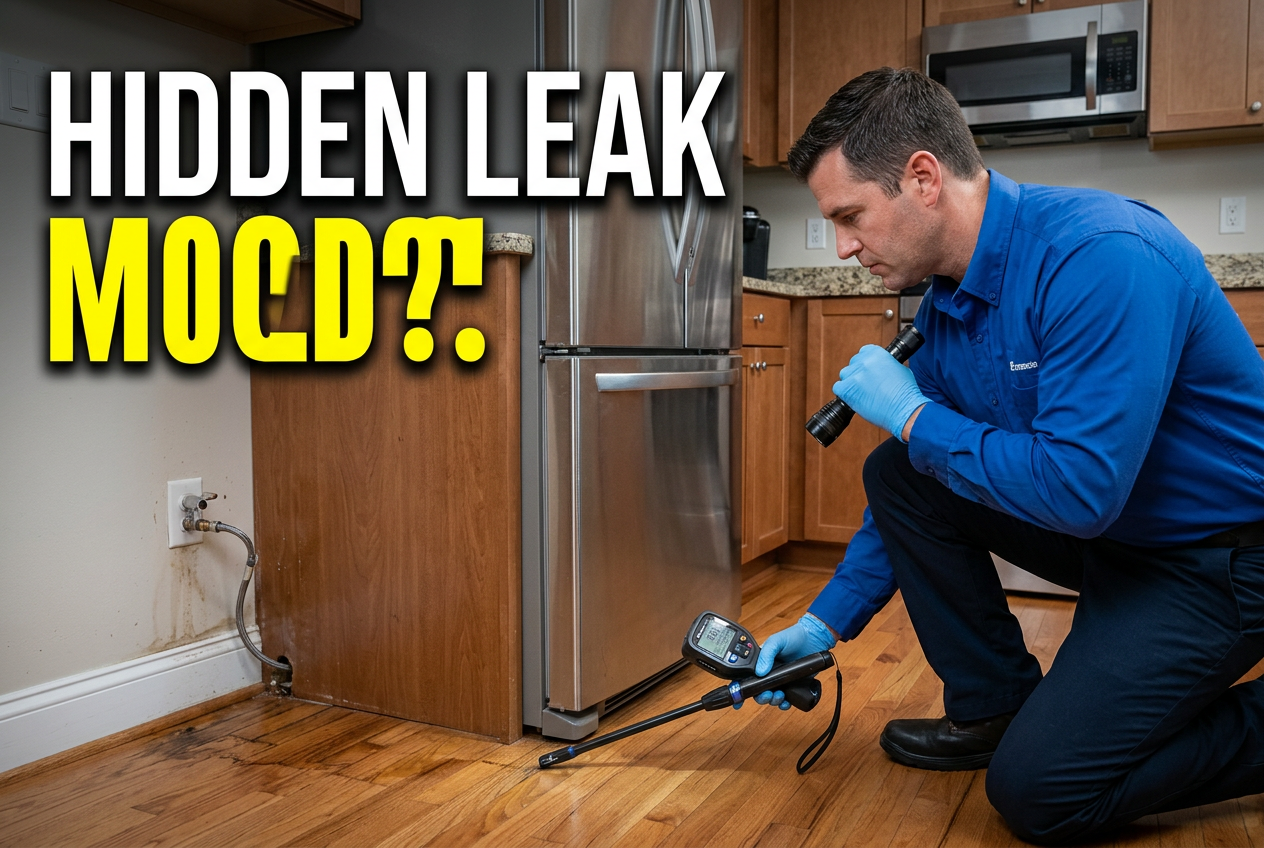
A refrigerator water-line leak can be easy to miss. Water may seep beneath the appliance or into nearby cabinets before a puddle appears, leaving flooring, baseboards, or the subfloor damp for an extended period. If a leak went unnoticed in your Bethesda home, a mold inspection after a refrigerator water-line leak may help determine whether moisture remains or visible conditions warrant further evaluation.
Why a refrigerator-line leak can be hard to assess
A small supply-line leak may release water gradually, and a refrigerator can conceal the affected area. Depending on where water travels, it may reach the flooring beneath the appliance, cabinet toe kicks, wall edges, or materials below the finished floor. The visible wet area may not show the full extent of moisture.
Finding a leak does not automatically mean mold is present or that mold testing is needed. The risk depends on factors such as how much water escaped, how long materials stayed wet, what materials were affected, and how thoroughly the area was dried. A brief leak that was found and dried promptly may not call for a mold inspection. A leak that remained hidden for days, or dampness that continues after cleanup, may deserve closer attention.
What to do after discovering the leak
First, stop the water source if you can do so safely. You may need to shut off the refrigerator’s water supply and arrange for the line or connection to be repaired. Avoid moving a heavy appliance if doing so could damage the floor, strain the line, or create another hazard.
Once the leak is stopped, remove accessible standing water and begin drying affected areas. Move items out of wet cabinets and keep a record of when the leak was discovered and what areas were affected. The U.S. Environmental Protection Agency’s mold cleanup guidance emphasizes drying wet materials promptly; its recommendations can help homeowners understand why a quick response matters.
If water appears to have reached a wall cavity, flooring layers, or other concealed spaces, drying the visible surface may not be enough to establish that everything is dry. Do not cut into walls or pull up flooring simply to investigate if you are unsure what is behind or beneath the material. A qualified professional can help assess the next steps.
Signs that a mold inspection may be useful
Consider arranging an inspection if you notice conditions that suggest moisture was present for a while or may remain in a concealed area. Relevant signs include:
- A persistent musty odor near the refrigerator, cabinets, or adjacent rooms.
- Discoloration, spotting, or changes to paint or finishes around the leak area.
- Flooring that feels soft, swollen, warped, or otherwise changed after the leak.
- Cabinet materials, baseboards, or nearby wall surfaces that remain damp or show water damage.
- A leak that was not discovered for an uncertain or extended period.
- Repeated moisture or staining after the apparent source has been repaired.
These clues do not prove that mold is present. Odor and appearance alone cannot identify a substance as mold, and a lack of visible growth does not establish that every concealed material is dry. The point of an inspection is to evaluate the conditions and decide whether further investigation is appropriate.
What an inspection and moisture investigation can tell you
A visual inspection involves looking at accessible areas for signs of water damage, visible growth, or other conditions that may merit attention. A moisture investigation uses appropriate methods to check accessible building materials and help identify areas that may still be damp. The findings can help clarify whether the concern appears limited to a surface or may involve less visible materials.
An inspection is different from mold testing. Testing may involve collecting samples for analysis, but it is not automatically necessary after every leak. Whether testing is useful depends on the questions you are trying to answer and what the inspection finds. A professional can explain the purpose and limitations of any proposed sampling before it is performed.
Neither a visual inspection nor testing should be treated as a guarantee that every hidden area has been assessed. Access may be limited by cabinets, appliances, finished walls, or flooring. Ask what areas were accessible, what methods were used, and what the results can—and cannot—tell you.
Deciding whether to arrange an inspection in Bethesda
If the leak was minor, stopped quickly, and affected materials have dried, you may be able to monitor the area without requesting mold testing. If the leak remained unnoticed, water reached concealed or porous materials, or signs of dampness continue, a professional inspection can provide more information to guide your next steps.
MD Mold Testing offers mold inspections and mold testing. You can review the company’s BestMoldTestingUSA directory listing or visit MD Mold Testing’s website to learn more. When contacting an inspector, describe where the refrigerator is located, how long the leak may have continued, which materials were wet, and what drying or repairs have already taken place.
If inspection findings indicate that materials need additional work, correcting the water source remains essential. Discuss appropriate cleanup or remediation with a qualified provider; an inspection or mold test does not itself repair the leak or remove affected materials.
Frequently Asked Questions
Does every refrigerator water-line leak require mold testing?
No. Testing is not automatically needed after every leak. The leak’s duration, affected materials, current moisture conditions, and the reason for testing all matter. An inspection may help determine whether sampling is useful.
Can I tell if there is mold by looking at a stain?
No. A stain may indicate water damage, but appearance alone cannot confirm that it is mold. An inspection can evaluate visible conditions and help identify whether further investigation is appropriate.
What information should I share when scheduling an inspection?
Share when you found the leak, whether its duration is known, where water traveled, what materials became wet, and what steps were taken to stop and dry the area. Photos taken before cleanup may also help explain what you observed.
Should I wait for an odor or visible growth before asking for an inspection?
Not necessarily. If you know water reached concealed materials or the area remains damp, you can ask about an inspection even without an odor or visible growth. Those signs are useful clues, but they are not the only reasons to investigate.
Need a Mold Inspection in Bethesda After a Refrigerator Leak?
MD Mold Testing can help you evaluate whether a professional mold inspection or testing may be appropriate after a water-line leak. Share what happened and ask about the service that fits your situation.
MD Mold Testing
Call: (301) 717-1454




Leave a Reply