After an AC Condensate Drain Overflow in an Aventura Condo: What a Mold Inspection Can Assess
An air-conditioner condensate drain overflow can leave water around an indoor HVAC unit, in a utility closet, or on nearby flooring. In an Aventura condo, water may also reach wall cavities or neighboring materials before the visible area appears dry. Once the source has been addressed and the affected area is dry, a professional assessment can help determine what materials may have been affected and whether signs of a moisture-related problem remain.
A mold inspection after an AC leak in Aventura, FL is not simply a test of the air. An inspector can evaluate visible conditions, check accessible materials for signs of remaining moisture, and help determine whether mold testing is appropriate. The inspection can inform next steps, but it cannot guarantee that every hidden area is free of mold or establish the full history of a leak.
Key Takeaways
- Dry-looking surfaces do not always mean moisture behind a wall, under flooring, or inside a cabinet has dried.
- An inspection can assess visible conditions, moisture indicators, and accessible areas around the condensate overflow.
- Thermal imaging may help identify temperature patterns that warrant closer evaluation, but it does not confirm mold or moisture by itself.
- Air or surface sampling may be considered when it addresses a specific question; results are a snapshot and need context.
- Keep records of the overflow and coordinate with your property manager or association if shared building components may be involved.
Why a condensate overflow deserves a closer look
Air conditioners remove moisture from indoor air as they cool it. That water normally drains away through a condensate line. If the line becomes blocked, disconnected, or otherwise fails to carry water away, condensate may spill from the equipment or its drain pan. The amount of water and the materials it reaches can vary considerably.
In a condo, an overflow may affect more than the floor immediately beside the air handler. Water can wick into baseboards, drywall, cabinet materials, or flooring edges. If it reaches a concealed space, the surface may dry before the material behind it does. The location of the HVAC equipment and the building’s layout also matter; an inspector can assess accessible areas but may not be able to see inside every wall or shared building assembly.
Address the drainage problem and arrange appropriate drying before relying on an inspection to assess the aftermath. If water is still present, the area is actively wet, or the equipment continues to overflow, focus first on stopping the source and having the affected materials dried. For a condo, promptly notify the property manager or association when the issue may involve common components or affect another unit. Keep photos, dates, and records of work performed.
What an inspection can assess after the area is dry
A mold inspection typically begins with a discussion of the event: where water appeared, how long it may have been present, what was removed or dried, and whether there have been previous leaks. That history helps guide a visual assessment. An inspector may examine the air-handler area, surrounding walls and flooring, nearby closets or cabinets, and other accessible locations that could have been reached by water.
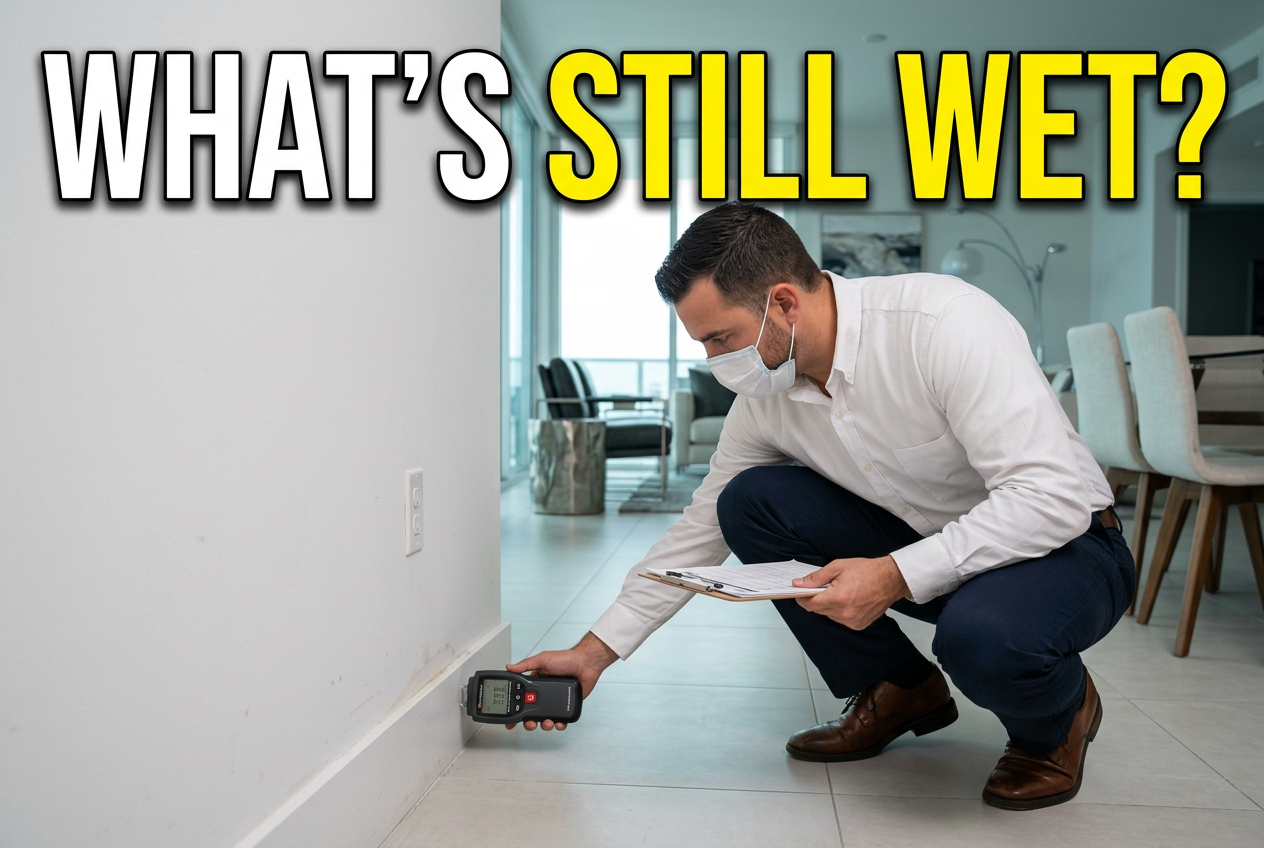
Depending on the materials and access, the inspector may use moisture-measuring equipment to check for readings that differ from expected conditions in comparable materials. These readings can help identify areas needing further attention, but they are not a mold test and do not, on their own, prove that mold is present. Materials and building conditions affect how readings should be interpreted.
Thermal imaging may also be used as part of a mold and moisture inspection. A camera displays surface temperature patterns that can help an inspector decide where to investigate further. It does not see through walls, identify mold, or confirm moisture without other evaluation. Any unusual pattern needs to be interpreted in context and, where appropriate, checked with other methods.
The assessment may include looking for visible discoloration, water staining, damaged finishes, musty odors, or conditions suggesting that moisture reached a concealed area. A professional can explain which observations are supported by accessible evidence and where limitations remain. If opening a wall or removing a finish is needed to inspect concealed materials, that work may require a separate plan and authorization from the property owner or association.
When mold testing may be useful
Mold sampling is not automatically necessary after every condensate overflow. It may be considered when there is a specific concern that an inspection cannot resolve through visual and moisture assessment alone, or when a client needs additional information for a defined decision. The inspector should explain the reason for sampling, where samples would be collected, and how the results will be interpreted before testing begins.
Air and surface samples represent conditions at particular places and times. A result cannot establish that every part of a condo is mold-free, identify all concealed growth, or prove exactly when or how a problem began. Results should be considered alongside the moisture history, observed conditions, and inspection findings—not treated as a stand-alone verdict.
Warning signs to watch for
After the area has been dried, keep an eye out for a persistent musty odor, new or spreading discoloration, bubbling or peeling paint, swollen baseboards, lifting flooring, or finishes that remain damp or change shape. These signs do not prove mold is present, but they can justify further evaluation, especially if they appear near the HVAC closet or along the route water may have traveled.
If signs return after drying or the condensate drain overflows again, ask a qualified HVAC professional to address the equipment or drainage issue. An independent mold inspector can assess moisture and potential mold concerns, but inspection is separate from correcting the HVAC fault or performing remediation.
Choosing an independent inspection in Aventura
When arranging an inspection, ask what areas will be evaluated, whether moisture measurements or thermal imaging are included, and what conditions could limit access. If sampling is recommended, ask what question it is intended to answer and what the results can and cannot establish. It is also useful to request clear documentation of observations and any recommended next steps.
MoldXperts provides independent mold inspection, mold testing, indoor air quality testing, and thermal imaging as part of mold and moisture inspections in South Florida, including Broward, Miami-Dade, and Palm Beach counties. MoldXperts does not provide mold remediation or mold removal. An independent assessment can help you understand observed conditions without bundling the inspection with remediation work.
Watch: MoldXperts on YouTube
For additional educational information, visit the MoldXperts YouTube channel.
Arrange an inspection
If an AC condensate overflow affected your Aventura condo and you want an independent assessment after the area has dried, contact MoldXperts to discuss the leak history, accessible areas, and whether inspection or testing may be appropriate. Call (954) 464-4538 or visit moldxperts.com.


Leave a Reply