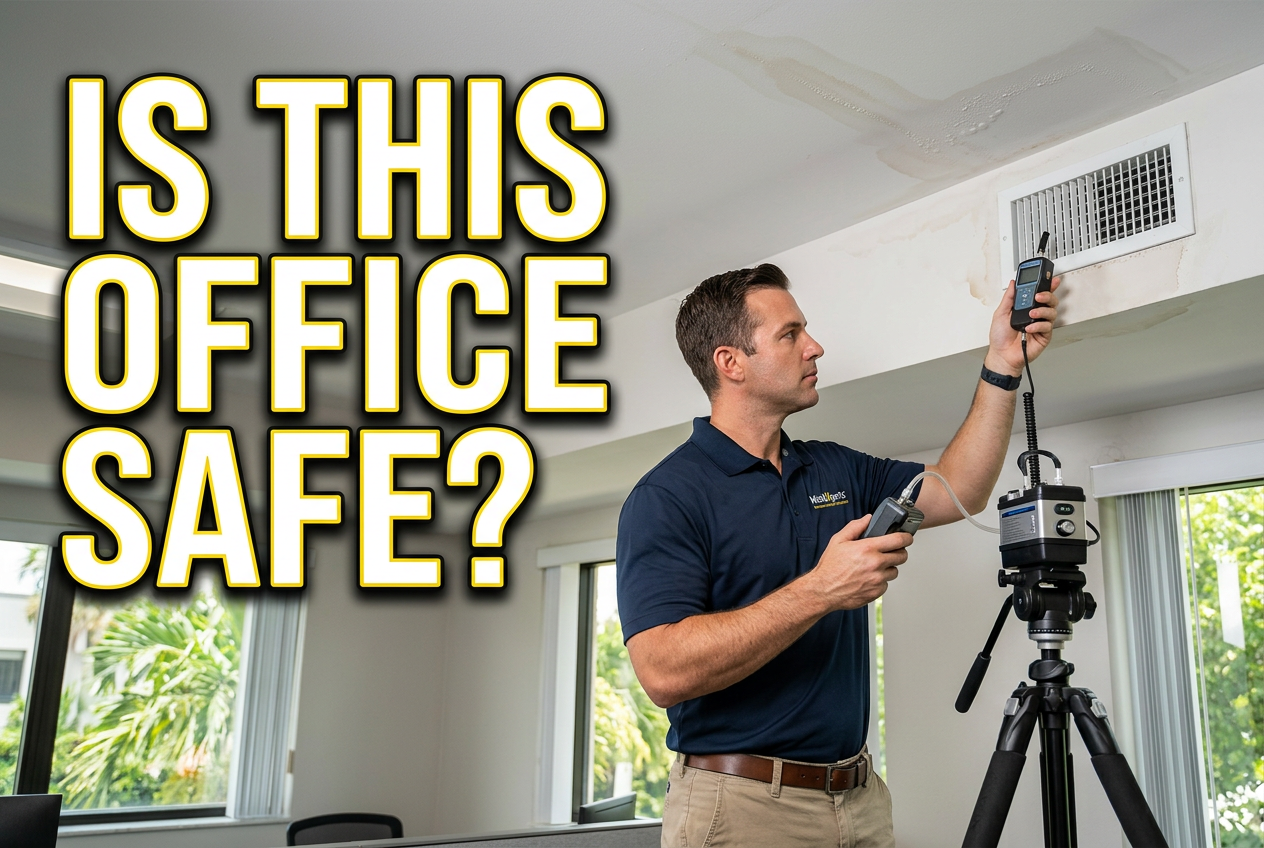
A history of water intrusion does not automatically mean an office in Plantation has a current mold or indoor air quality problem. But before signing a lease or moving employees into a space, it is reasonable to ask what happened, what repairs were completed, and whether moisture remains. Independent indoor air quality testing in Plantation, FL may be useful when the available records or a visual walkthrough leave unanswered questions.
Key Takeaways
- Ask for details about the water event, repairs, drying, and any prior inspection or testing.
- Look for current signs such as musty odors, staining, bubbling finishes, or recurring dampness.
- An inspection can assess visible conditions and moisture concerns; testing may help investigate specific questions.
- Air sampling is a snapshot and cannot prove that a building is entirely free of mold or predict health effects.
- Review access, repair responsibilities, and documentation with the landlord before leasing or occupying the space.
What a history of water damage may—and may not—mean
Water can enter an office through roof leaks, plumbing failures, windows, drainage issues, or air-conditioning systems. If wet materials are not dried promptly and thoroughly, moisture may persist behind finishes or support mold growth. Conversely, a past leak that was properly repaired and dried does not necessarily indicate a present problem.
In South Florida’s humid climate, it can be especially helpful to understand whether the original source was corrected and whether the affected materials were dried or replaced. A repaired ceiling stain, by itself, cannot establish what is behind the ceiling. Likewise, a previous mold report or a musty smell deserves follow-up, but neither one alone tells the full story of current conditions.
Questions to ask before signing or moving in
Ask the landlord or property manager for a clear account of the water event and its resolution. Useful questions include:
- When did the water intrusion occur, and what caused it?
- Was the source repaired, and were affected areas dried or materials removed?
- Are there invoices, repair records, photographs, inspection reports, or testing results?
- Has the same area had recurring leaks, odors, or moisture problems?
- Were the HVAC system or ductwork affected, and has the system been checked?
- Who is responsible for addressing a new leak or suspected moisture issue under the proposed lease?
Ask for relevant records in writing and retain copies with your lease documents. If the lease is not final, clarify whether you can arrange an inspection, what access the inspector will have, and how any concerns will be handled. Lease terms and responsibilities vary, so consider seeking legal advice for questions about your rights or obligations.
Warning signs worth noting during a walkthrough
Pay attention to persistent musty or earthy odors, recurring condensation, water staining, peeling or bubbling paint, warped flooring, swollen baseboards, and ceiling tiles that appear discolored or sagging. Check whether the odor is stronger in particular rooms, near a former leak, or when the HVAC system is running. Note visible water, damp materials, and areas that feel unusually humid.
These observations are reasons to ask questions, not proof of mold. A fresh coat of paint may conceal an old stain, while a stain may remain after a leak has been fixed. Avoid disturbing suspect materials. Photograph visible concerns and share them with the property manager or a qualified inspector.
When independent indoor air quality testing may be useful
Professional evaluation may be worth considering when there is a known history of water damage but little documentation, a persistent unexplained odor, recurring moisture, visible suspected growth, or concern about an area that cannot be adequately assessed during an ordinary walkthrough. Testing can also help when a tenant, owner, or property professional needs an independent assessment before deciding what further investigation or corrective work to discuss.
“Independent” means the inspection and testing provider is not also selling the remediation work. That arrangement can give a property owner or prospective tenant an assessment separate from a remediation proposal. It does not mean that every company offering both inspection and remediation has a conflict of interest; the important point is to understand the provider’s role, methods, and any financial interests.
For an office lease, coordinate access with the landlord or property manager. Testing should be guided by the site history and the questions that need answering, rather than ordered as a substitute for investigating a known leak. Depending on the situation, a professional may recommend inspection first and then discuss whether sampling would add useful information.
What an inspector may evaluate
A mold inspector may examine accessible areas for visible signs of water intrusion or suspected microbial growth, check for odors, and look for conditions that could allow moisture to remain. The review may include ceilings, walls, flooring, windows, plumbing areas, and accessible HVAC components, depending on the scope and access provided.
Thermal imaging may be used as part of a mold and moisture inspection to help identify temperature patterns that warrant closer attention. It does not see through walls, identify mold, or confirm that a surface is wet. Any unusual pattern needs interpretation and, where appropriate, confirmation with other observations or moisture-measuring tools.
Indoor air quality testing can include different methods depending on the concern. If mold sampling is appropriate, the inspector should explain what is being sampled, why, and how results will be interpreted. A report may document observations, test conditions, and findings, but it cannot tell you whether a particular person will experience symptoms or diagnose a health condition.
What testing can and cannot establish
Sampling captures conditions at a particular place and time. Results can be affected by building activity, ventilation, weather, and the specific sampling plan. There is no single air-sample result that proves an entire office is mold-free, and a result should not be interpreted without considering the inspection findings and property history. Testing also does not identify or repair the cause of a leak.
If the assessment identifies moisture concerns or conditions needing further attention, ask for clear documentation and discuss next steps with the responsible property representative. A qualified remediation contractor may be needed to address confirmed mold or water-damaged materials; MoldXperts does not provide remediation or mold removal.
Plan before you lease
For a Plantation office, the most useful first step is often combining a careful review of the water-damage history with a current walkthrough. If that leaves specific concerns unresolved, an independent inspection and appropriately selected testing may provide additional information to support a leasing decision. Make sure you understand the limits of the assessment and keep copies of findings, repair records, and any written agreements.
Watch: MoldXperts on YouTube
Visit the MoldXperts YouTube channel for educational information about mold inspection and testing.
Arrange an independent assessment in Plantation
If you are considering leasing a previously water-damaged office in Plantation, MoldXperts can discuss independent mold inspection and testing options for your concerns. MoldXperts serves Broward, Miami-Dade, and Palm Beach counties. Call (954) 464-4538 or visit the website to discuss scheduling.



Leave a Reply