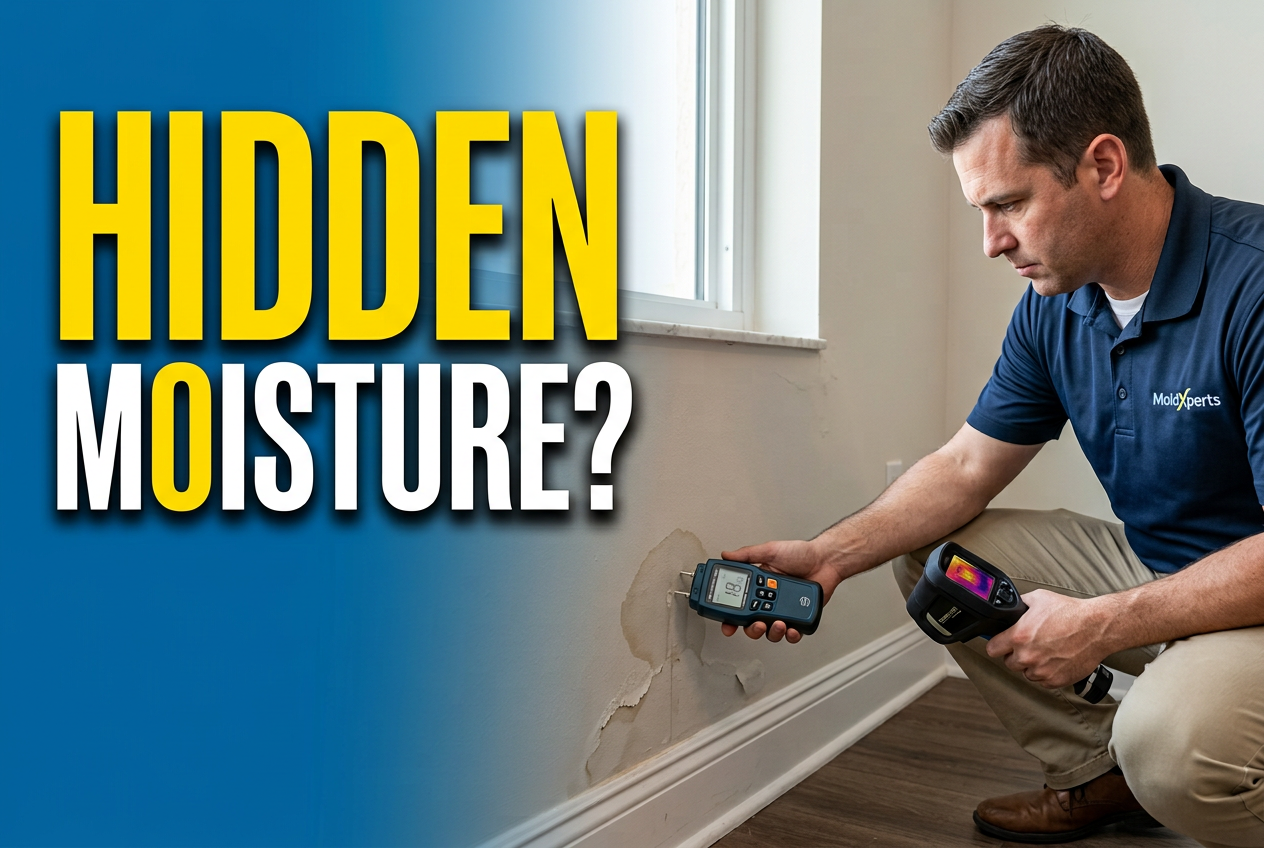
When a tenant in Davie reports a leak that keeps returning, the visible drip may be only part of the problem. Water can migrate behind walls, beneath flooring, or into a cabinet before the source is obvious. An independent mold inspection can document visible conditions and moisture concerns before repairs change the scene, while helping the property owner and tenant understand what should be evaluated next.
Key Takeaways
- Address active leaks and urgent water damage promptly; documentation should not delay necessary repairs.
- Keep dated records of the tenant’s reports, visible damage, and steps taken to address the leak.
- An independent inspector may document moisture patterns, visible conditions, and, when appropriate, mold testing results.
- Thermal imaging can help identify temperature patterns that warrant further investigation, but it does not detect mold by itself.
- Inspection and sampling describe conditions at a particular time and cannot establish every hidden condition or the cause of a person’s symptoms.
What a persistent leak may mean
A recurring leak can point to an unresolved plumbing, roof, window, appliance, or air-conditioning issue. In South Florida’s warm, humid conditions, damp materials may take longer to dry, especially when ventilation is limited or moisture repeatedly returns. A musty odor, discoloration, bubbling paint, warped trim, or soft drywall can be reasons to investigate, though none of these signs alone confirms mold growth.
Sometimes the visible stain is not directly beneath the leak. Water can travel along framing or other surfaces, so the location of a mark may not identify the source. The first priority is to find and stop the water entry and prevent additional damage. If water is near electrical equipment, ceilings are sagging, or there is another immediate safety concern, keep people away from the affected area and seek appropriate urgent help.
What tenants and property owners can do before an inspection
A tenant should report the problem promptly through the communication method normally used with the property owner or manager. Include when the leak began, whether it has recurred, where water appears, and any odor or material changes. Dated photographs or video can help show how the condition has changed. Keep copies of messages and responses.
Property owners and managers can record when they receive the report, arrange evaluation of the leak source, and document repair and drying steps. Coordinate access with the tenant and explain what areas may need to be inspected. Avoid covering, cleaning, or removing affected materials before documentation if it is safe and practical to wait; however, do not postpone necessary action to protect people or limit ongoing water damage. An inspector can document the conditions that remain accessible after emergency work as well.
Do not ask a tenant to disturb suspected mold or open building materials to investigate. If materials need to be removed or treated, that work should be handled by the appropriate qualified contractor. MoldXperts provides inspection and testing, not mold removal or remediation.
What an independent mold inspection in Davie, FL, may document
An independent mold inspection can provide a third-party record of observed conditions without the inspector also selling remediation work. This can be useful when a landlord, tenant, or property representative wants an assessment separate from the repair or cleanup proposal. It does not mean every company that offers both inspection and remediation has a conflict of interest; the important point is to understand the scope and interests involved.
Depending on the property and the inspection scope, an inspector may:
- Visually examine accessible areas related to the reported leak, such as nearby walls, ceilings, closets, or cabinets.
- Record visible staining, suspected growth, damaged materials, and musty odors.
- Use moisture-measuring equipment to check accessible building materials and compare readings across areas.
- Use thermal imaging as part of a moisture inspection to identify temperature patterns that may merit closer evaluation.
- Recommend mold sampling when it is appropriate to the question being investigated, and document the sampling locations and results.
Thermal imaging is not a mold detector and does not, by itself, confirm moisture or identify what is inside a wall. Temperature differences can have multiple explanations and may need to be checked with other methods. Similarly, a moisture reading indicates conditions at a particular location and time; it does not automatically identify the leak source.
What testing can and cannot establish
Mold testing may help characterize airborne or surface conditions in the areas sampled. Results need to be interpreted in context, including the inspection observations, sampling method, building conditions, and any appropriate comparison samples. A result represents the sample and moment in time—not every room, hidden cavity, or future condition in the rental.
Testing cannot by itself determine exactly when growth began, prove the source of a leak, or establish that a particular exposure caused someone’s health symptoms. A negative sample does not guarantee that no mold exists elsewhere or behind inaccessible materials. If the leak has been repaired or materials have already been disturbed, the inspection can still document what is present and accessible, but the record may not show the original condition.
An inspection report can help the property owner decide what further evaluation or repair is warranted. It is not a substitute for fixing the water source, and it does not guarantee that every concealed area has been examined. The owner should share relevant findings with the professionals handling repairs and any follow-up work.
When professional inspection may make sense
Consider an independent inspection when a leak recurs, dampness persists, there is a continuing musty odor, visible damage appears to be spreading, or the parties need a clear record of conditions before planned repairs. It may also help when the extent of moisture is uncertain or when an impartial assessment would assist communication between a tenant and property owner.
Before scheduling, describe the leak history, affected rooms, any repairs already completed, and the specific questions you want answered. Ask what areas will be inspected, whether mold sampling is recommended, and what the report can and cannot conclude. The right scope depends on the property and the reason for the assessment.
Watch: MoldXperts on YouTube
For more information about mold inspection and testing, visit the official MoldXperts YouTube channel.
Arrange an independent inspection in Davie
If a tenant has reported a persistent leak in Davie, a timely, clearly scoped inspection can help document accessible moisture and visible conditions while the water issue is addressed. MoldXperts provides independent mold inspection and testing, indoor air quality testing, and thermal imaging as part of mold and moisture inspections in Broward, Miami-Dade, and Palm Beach counties. Call (954) 464-4538 or visit MoldXperts to discuss an inspection for your property.



Leave a Reply